Salik Charges in Dubai: What You Pay in 2026 and How to Pay Less
Salik charges in Dubai are AED 6.30 during peak hours, AED 4.20 during off peak hours, and free from 1am to 6am. This guide explains current rates, all ten toll gates, VAT changes, fines, payment methods, and practical ways to reduce your monthly toll costs.
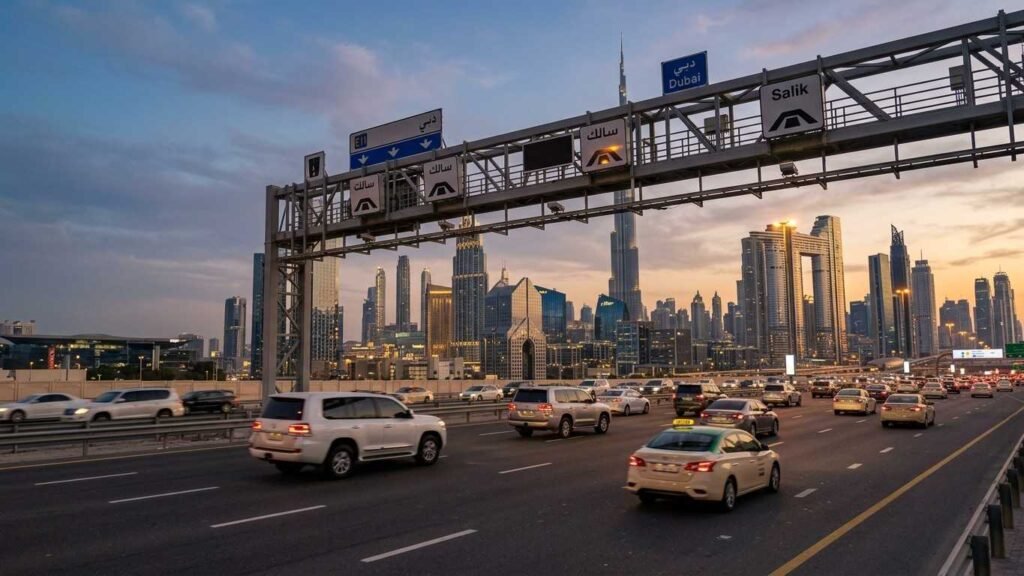
Salik is Dubai’s automatic road toll. Since 1 June 2026, one crossing costs AED 6.30 during peak hours and AED 4.20 the rest of the day, and nothing at all between 1am and 6am. Those numbers include the 5 per cent VAT that Salik began collecting on toll charges and tag activation fees this year. The underlying tariff did not change. Only the tax on top is new.
This matters because there are now ten gates spread across the emirate’s busiest roads, and the time you cross one changes the price. A driver passing four gates on the morning school run and again in the evening rush can easily spend more than AED 1,000 a year compared with the same trips made mid morning. The rules are simple once you know them, and most people are paying more than they need to purely out of habit.
Below is a plain explanation of the current rates, where the gates sit, what happens if your balance runs dry, and the small timing changes that make a real difference to the monthly bill.
What Salik Actually is
Salik means clear, or open, in Arabic. There are no booths and no barriers. A small tag sits behind your rear view mirror, cameras read it as you drive under a gantry, and the fee comes straight out of a prepaid account linked to your number plate.
The system is run by Salik Company PJSC, which holds the exclusive toll concession for Dubai and is listed on the Dubai Financial Market. Pricing policy, however, sits with the Roads and Transport Authority. That distinction matters when people ask why tariffs change: the operator collects, the RTA decides.
Salik Rates in 2026
The variable pricing model started on 31 January 2025 and replaced the old flat fee. Prices below include VAT.
Time band
Hours
Cost per crossing
Peak
6am to 10am and 4pm to 8pm
AED 6.30
Off peak
10am to 4pm and 8pm to 1am
AED 4.20
Late night
1am to 6am, every day
Free
Sunday
All day, outside public holidays
AED 4.20 flat
One point catches people out constantly. The rate applied is the rate at the moment you pass under the gantry, not when you set off. Leaving Al Barsha at 9.50am and reaching Al Safa at 10.02am means you pay the lower fee. Twelve minutes earlier and you pay the higher one.
The VAT Change Explained
From 1 June 2026, Salik applies 5 per cent VAT to toll gate usage and to tag activation fees, and passes that amount to the Federal Tax Authority. Parkin made a similar announcement for parking services on the same date. Drivers are not being charged retrospectively for past crossings, so there is nothing to settle for earlier trips.
Sundays and Public Holidays
Sunday runs at a flat AED 4.20 all day, with the free window from 1am to 6am still applying. The exception is public holidays and major events designated by the RTA, when the normal weekday schedule kicks back in. It is worth checking before Eid or National Day weekends, because a lot of people assume the holiday means the cheaper rate.
Ramadan Timings
During Ramadan the windows shift to match shorter working hours. Peak runs from 9am to 5pm, off-peak covers 7am to 9am and 5pm to 2am, and crossings are free between 2am and 7am. If you drive home after taraweeh, that later free window is genuinely useful.
Where the Ten Toll Gates Are
Eight gates operated for years. Business Bay Crossing on Al Khail Road and Al Safa South on Sheikh Zayed Road were switched on together on 24 November 2024, taking the total to ten.
Gate
Road it sits on
Al Barsha
Sheikh Zayed Road, near Mall of the Emirates
Al Safa North
Sheikh Zayed Road
Al Safa South
Sheikh Zayed Road, between Al Meydan and Umm Al Sheif streets
Al Garhoud Bridge
Crossing over Dubai Creek
Al Maktoum Bridge
Crossing over Dubai Creek
Airport Tunnel
Beirut Street, under DXB
Al Mamzar North
Al Ittihad Road
Al Mamzar South
Al Ittihad Road
Jebel Ali
Sheikh Zayed Road, near Ibn Battuta
Business Bay Crossing
Al Khail Road
Three of the ten sit on Sheikh Zayed Road, which is why a straight run from Jebel Ali to Deira in rush hour is the most expensive routine trip in the city.
The One Hour Rule at Al Safa and Al Mamzar
Al Safa North and Al Safa South are close together, as are Al Mamzar North and Al Mamzar South. Cross both gates in the same pair, in the same direction, within one hour, and you are charged once rather than twice. Directions are counted separately, so a northbound trip and a southbound trip an hour later are two charges, not one.
Getting a Tag and Keeping the Account Funded
Every vehicle needs its own registered tag linked to its plate. Buying one at an RTA customer happiness centre or a certified registration centre typically costs around AED 100, which includes an opening toll balance. Ordering online costs a little more once delivery is added.
Do not move a tag between cars. It sounds obvious, but it happens in households with two vehicles, and the mismatch between tag and plate is exactly what triggers a violation. Place it flat behind the mirror rather than tucked into a sun visor, or the reader may miss it.
Auto recharge is the single most useful setting. Link a card, set a trigger amount, and the balance tops itself up. If you also use Dubai’s integrated mobility services, understanding Salik parking payments in Dubai can make it easier to manage both tolls and parking from the same ecosystem. Otherwise you can top up through the Salik app or website, recharge vouchers sold at petrol stations, and various bank channels.
Salik Fines and How to Avoid Them
There are two common violations and both have a grace period, which many drivers do not realise.
Insufficient balance. You have five working days from the trip to top up. Miss that and a fine of AED 50 applies, capped at one per vehicle per day for as long as the balance stays short.
No registered tag. You have ten working days from the first untagged crossing to buy and register one. After that the fine is AED 100 for the first offence, AED 200 for the second and AED 400 for each one after, again capped at one per day.
Salik sends an SMS alert, but that only works if the mobile number on the account is current. Plenty of expats change numbers and forget to update it. Check violations yourself by entering your plate on salik.ae, or through the Salik app, the RTA app or Dubai Drive.
Public buses, emergency vehicles and vehicles registered to People of Determination are exempt.
Practical Ways to Cut the Monthly Bill
Small habit changes save real money here, and none of them involve driving further than necessary.
Shift flexible trips out of the 6am to 10am and 4pm to 8pm windows. Errands, gym sessions, airport drop offs and mall trips almost never need to happen at rush hour.
Late night arrivals are free after 1am. If you are collecting someone from DXB or DWC on a delayed flight, the tolls cost nothing.
Learn the toll free alternatives. Emirates Road and Sheikh Mohammed bin Zayed Road carry a lot of cross city traffic without gates, and much of Al Khail Road is still free outside the Business Bay Crossing point.
Consider park and ride. The Metro Red Line runs alongside Sheikh Zayed Road for most of its length, and a Nol fare is nowhere near what two peak crossings each way would cost. As Dubai continues expanding its public transport network, projects such as the Dubai Metro Green Line are giving commuters more alternatives to driving through toll gates.
If you use both Safa gates or both Mamzar gates, group the trip inside the one hour window so it counts as a single charge.
For a family with two cars in Arabian Ranches or Dubai Silicon Oasis, the difference between disciplined timing and no timing at all runs into the low thousands of dirhams a year. It is worth ten minutes with a calendar, especially if you are planning longer journeys where a UAE road trip safety checklist can also help you prepare your route, fuel stops and driving essentials.
Visitors, Rental Cars and Drivers from Other Emirates
If you rent a car in Dubai, the vehicle already carries a tag. The rental company pays the tolls and then recharges you, usually with an administration fee added per crossing. Ask about that fee at pick up, because it varies a lot between companies and can quietly double the cost of a day trip along Sheikh Zayed Road.
Coming in from Sharjah or Ajman on Al Ittihad Road means passing the Al Mamzar gates, so a daily commute from the northern emirates carries a toll cost on top of fuel and time. Planned Dubai Sharjah traffic relief projects could eventually improve journey times, although Salik charges will still depend on the routes you choose. Driving down from Abu Dhabi, you cross into a different system entirely: Abu Dhabi uses Darb, and a Salik tag does not work on it. Anyone commuting between the two capitals of business needs both accounts funded.
Tourists heading to Downtown Dubai, Dubai Marina or Palm Jumeirah in a rental will pass at least one gate almost every day. It is a modest cost per trip, but it belongs in the holiday budget alongside parking.
The Company Behind the Gates
Salik listed on the Dubai Financial Market in 2022 and now publishes quarterly numbers like any other listed company. First quarter 2026 revenue came in at AED 728.9 million with net profit of AED 369.3 million, broadly flat year on year, with softer traffic in March attributed to regional events.
That transparency is useful to drivers, not just investors. Tariff changes, new gates and policy shifts are announced through DFM disclosures before they reach the news, so the company’s announcements page is the earliest reliable place to see what is coming.
Final Thoughts
Salik is not complicated. It rewards drivers who pay attention to the clock and quietly penalises those who do not. Learn the two peak windows, keep auto recharge switched on, remember the free stretch after 1am, and the system becomes a minor line in the monthly budget rather than an irritation.
Rates and timings do change, and the VAT addition in June 2026 is a reminder of that. Before making any assumption about a public holiday tariff or a new gate, check the RTA and Salik announcements directly rather than relying on a forum post from two years ago.
Frequently Asked Questions
How much is Salik per crossing in 2026? AED 6.30 during peak hours and AED 4.20 during off peak hours, including 5 per cent VAT. Crossings between 1am and 6am are free.
What are the Salik peak hours? 6am to 10am and 4pm to 8pm. During Ramadan, peak shifts to a single block from 9am to 5pm.
Is Salik free on Sunday? No. Sunday is charged at a flat AED 4.20 all day, outside public holidays and RTA designated events. Only the 1am to 6am window is free.
How many Salik gates are there in Dubai? Ten, following the activation of Business Bay Crossing and Al Safa South in November 2024.
What happens if I pass a gate without a Salik tag? You have ten working days to buy and register one. After that the fines run at AED 100, then AED 200, then AED 400 for further offences, limited to one fine per vehicle per day.
What is the fine for low balance? AED 50 per day, but only after a five working day grace period from the trip date. Top up inside that window and no fine is issued.
Do I pay twice at Al Safa North and Al Safa South? No, provided you cross both in the same direction within one hour. The same rule applies at Al Mamzar North and South.
Does my Salik tag work in Abu Dhabi? No. Abu Dhabi operates a separate toll system called Darb, which needs its own registration and balance.
How do I check Salik fines? Enter your plate number in the violations section of salik.ae, or check through the Salik app, the RTA app or Dubai Drive.
Sheraz is a business focused professional who closely follows market trends, emerging technologies, growth opportunities, and modern lifestyle trends. He writes about business, technology, travel, food, wellness, and everyday lifestyle topics, helping readers make informed decisions through practical insights. His expertise lies in helping businesses understand changing consumer behavior, digital transformation, AI adoption, branding, and scalable marketing strategies. He believes every business decision should be backed by data, market demand, and long term sustainability.