Why Is Dubai Called the City of Gold? Interesting Facts & Figures
Dubai is called the City of Gold because of its global gold trading network, transparent daily pricing, and historic Gold Souk, not because it mines gold. This guide explains the nickname's origins, how gold pricing works, where to buy, VAT rules, negotiation tips, and what buyers should know before purchasing.
Dubai is called the City of Gold because it moves an enormous amount of the world’s gold without owning a single gold mine. The nickname is not marketing. It comes from a trading position the emirate built up over roughly a century, and from a retail market that still sets one published price every morning for the whole city to work from.
That last part is the piece most articles skip, and it is the piece that matters if you are actually planning to buy something. In Dubai the metal itself costs the same wherever you walk. What changes from shop to shop is the making charge, which is the labour and design fee added on top. Once you understand that split, the whole market makes sense.
This guide covers where the name came from, what keeps it accurate in 2026, and the practical things worth knowing before you spend money in Deira or anywhere else in the UAE. Knowing how buying gold in Dubai works, from pricing to making charges and negotiations, makes the experience much easier.
Dubai earned the title through trade, not treasure. Its position between Europe, Asia and Africa made it a natural transit point for gold moving between continents, and low import duties kept that flow coming. Jewellers followed the metal, then buyers followed the jewellers.
The Dubai Media Office states the UAE is the world’s second largest destination for physical gold trading, with gold exports worth 53.41 billion US dollars in 2024 to 2025. For a country with no domestic gold production, that number does the arguing on its own.
It Started With the Creek, Not the Skyline
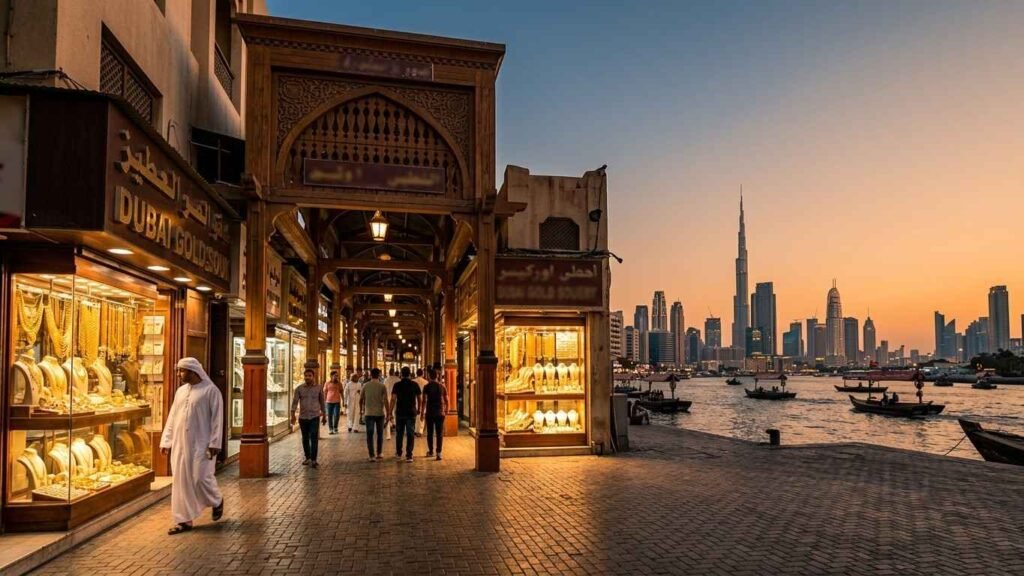
Long before the towers, Dubai Creek was the working heart of the city. Wooden dhows tied up along the water in Deira and Bur Dubai, unloading textiles, spices and gold brought in from India, Iran and beyond. Traders came because the port was easy to use and the paperwork was light.
The Deira Gold Souk grew out of that traffic in the 1940s, when Indian and Iranian merchants settled in the area and set up shop. It began as a small cluster of jewellers. It ended up as one of the most concentrated gold retail markets anywhere in the world.
Why the Trade Stayed
Plenty of ports handled gold. Dubai kept it. Government policy stayed consistent and friendly toward the trade, and later the emirate added the infrastructure that traders actually need, including refineries, secure vaults, a commodities exchange and free zone licensing through DMCC.
Regulation grew alongside it. The Dubai Jewellery Group was set up in 1996 under the direction of Dubai Economy and Tourism to represent the sector, and it now publishes the suggested retail jewellery price that shops across the city refer to daily.
What Keeps the Nickname Accurate Today
One Price, Published Every Day
This is the detail visitors find surprising. Gold in Dubai is quoted per gram in dirhams, by karat, and that rate is public. Shops display it on screens near the entrance, and it updates through the trading day as the international price moves. If you want to compare today’s prices across different purities before shopping, checking the latest gold rate in the UAE provides a useful benchmark.
Because the dirham is pegged to the US dollar at 3.6725, the Dubai rate tracks the global spot price closely. There is no hidden local premium on the metal. Two shops fifty metres apart will quote you the same figure per gram for 22 karat.
Making Charges Are the Real Variable
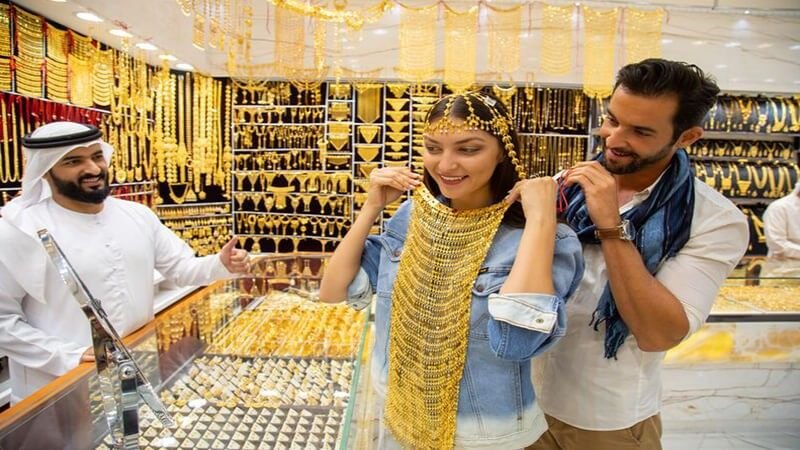
The making charge is what you pay for craftsmanship, design and the shop’s margin. It commonly runs anywhere from about 10 to 30 percent of the piece, depending on how intricate the work is and where you are shopping.
This is the number to ask about first and the number to negotiate. Machine made chains carry a low charge. Hand set, heavily detailed bridal pieces carry a high one. A polite conversation about making charges is completely normal in the souk and nobody will be offended by it.
Karats Mean Different Things to Different Buyers
Karat
Purity
Who usually buys it
24K
99.9 percent
Bars and coins for investment. Too soft for everyday jewellery.
22K
91.7 percent
Popular with South Asian buyers, especially for weddings and gifting.
21K
87.5 percent
The Gulf favourite. Common in Emirati and wider Arab jewellery.
18K
75 percent
Used for diamond settings and modern designs. Harder and more durable.
Weight is sometimes quoted in tola rather than grams, particularly in shops serving South Asian customers. One tola is roughly 11.66 grams, so it helps to know the conversion before you compare quotes.
The Gold Souk in Deira, and What It Is Actually Like
The souk sits in the old part of Deira, a short walk from Al Ras metro station on the Green Line. It is a covered network of narrow lanes lined with hundreds of shop windows, and the sheer density of gold behind the glass is genuinely hard to describe until you see it.
It is busy, loud and not especially glamorous, which catches some visitors off guard. This is a working market rather than a mall. That is also why the prices work.
Practical Timing
Most shops open mid morning, close for a few hours in the afternoon, then reopen until around 10pm. Evenings are the liveliest and the safest bet for finding everything open.
From June through September the heat is serious. Go after sunset and use the metro rather than walking in from far away.
During Ramadan, trading hours shift later and the souk stays busy well into the night.
Expect crowds around Eid, Diwali, Akshaya Tritiya and the Dubai Shopping Festival, which usually runs from December into January and brings raffles and reduced making charges.
One more thing worth knowing. You will be approached about counterfeit watches and handbags while walking the lanes. Ignore it and keep moving. It has nothing to do with the licensed gold shops.
The Dubai Gold District and the New Gold Street
In January 2026, Ithra Dubai launched the Dubai Gold District in Deira, next to the historic souk. It brings retail, wholesale trade, bullion, investment services and hospitality into one area, with more than 1,000 retailers and six hotels offering over 1,000 rooms.
The headline announcement was Gold Street, described as the world’s first street built using gold. Details are being released in phases, and at the time of writing the material specifics and opening timeline have not been confirmed.
Take the announcement for what it is. Whether or not Gold Street lands exactly as advertised, the district itself is a real commitment to keeping the trade concentrated in Deira instead of letting it drift toward the newer malls.
Buying Gold in the UAE: The Practical Rules
VAT and Refunds
The UAE introduced 5 percent VAT on 1 January 2018. For gold jewellery it applies to the full invoice, meaning the metal value and the making charges together.
Investment grade gold is treated differently. Bars and qualifying coins of 99 percent purity or higher in tradable form are zero rated, so no VAT is charged at the point of sale when the conditions are met.
Situation
What applies
Retail jewellery
5 percent VAT on the full invoice, making charges included
Investment grade bars and coins
Zero rated when purity and form conditions are met
Tourists
Can reclaim most of the VAT through the Tax Refund for Tourists Scheme
UAE residents
Not eligible for the tourist refund scheme
The refund runs electronically through Planet in partnership with the Federal Tax Authority. You need to buy from a registered retailer displaying the tax free signage, spend at least 250 dirhams per tax free transaction, and validate at the kiosks at the airport before you check your bags in. Refunds typically come back at around 85 percent of the VAT paid once processing fees are taken off.
Checking What You Are Buying
Ask to see the piece weighed in front of you. This is standard practice and any reputable shop will do it without being asked twice.
Look for the hallmark stamp indicating karat purity, and ask for the certificate on diamond or gemstone pieces.
Keep the tax invoice. You need it for the VAT refund and for any exchange or buyback later.
Ask about the shop’s buyback terms before you pay, not after.
Taking Gold Home
Buying in Dubai is the easy part. Bringing it into your home country is where people get caught out, because customs allowances and duties vary a great deal between countries and change from time to time. For some buyers, especially those focused on investment rather than carrying bullion across borders, comparing physical gold and digital gold in the UAE can help determine which option better suits their goals.
If you are travelling to India, Pakistan or anywhere else with a defined allowance, check the current limit with that country’s customs authority before you fly. A good saving in Deira can disappear at arrivals if you have not done that homework.
Gold Beyond the Deira Souk
Deira gets the attention, but it is not the only option, and for some buyers it is not the best one.
Gold and Diamond Park on Sheikh Zayed Road is quieter, air conditioned throughout and strong for custom and made to order work.
Meena Bazaar in Bur Dubai is a smaller cluster of jewellers, easier to navigate if the souk feels overwhelming.
Madinat Zayed Gold Centre in Abu Dhabi serves the capital with a similar range and a calmer pace.
Sharjah Central Souq, known locally as the Blue Souk, combines gold shops with carpets and antiques.
The rate is the same across all of them. Choose based on how you like to shop and what kind of piece you want.
So, Is the Nickname Still Deserved?
Yes, and for a more interesting reason than the shop windows suggest. Dubai does not sit on gold. It built a system around gold, including transparent daily pricing, tight regulation, a refining and vaulting industry, and a retail market where the metal price is public and only the labour is negotiable.
That system is what people are really describing when they call Dubai the City of Gold. The Gold Souk is the visible part. The trade behind it is the reason the name stuck.
Frequently Asked Questions
Why is Dubai called the City of Gold? Dubai is called the City of Gold because it became one of the world’s largest hubs for trading physical gold despite having no gold mines of its own. Its location between Europe, Asia and Africa, low import duties and the historic Deira Gold Souk built the reputation, and the UAE is now the second largest destination globally for physical gold trading.
Is gold actually cheaper in Dubai? The metal itself is priced against the international rate, so it is not dramatically cheaper. The saving comes from lower making charges compared with many other countries, no import duty built into the retail price, and the VAT refund available to tourists.
Where is the Gold Souk in Dubai? The Gold Souk is in Deira, in the older part of Dubai near Dubai Creek. The nearest metro stop is Al Ras station on the Green Line, a short walk away.
How much VAT do I pay on gold in the UAE? Retail gold jewellery carries 5 percent VAT on the full invoice, including making charges. Investment grade gold of 99 percent purity or higher in bar or approved coin form is zero rated when the conditions are met.
Can tourists claim the VAT back on gold? Yes. Tourists can claim through the Tax Refund for Tourists Scheme if they buy from a registered retailer, spend at least 250 dirhams per tax free transaction and validate the purchase at an airport kiosk before departure. UAE residents are not eligible.
Can you negotiate at the Gold Souk? You negotiate the making charge, not the gold rate. The rate per gram is fixed by the daily published price, but the labour and design fee is open to discussion and worth asking about in every shop.
What karat should I buy in Dubai? It depends on use. Choose 24K bars or coins for investment, 22K for traditional gifting and weddings, 21K if you want the common Gulf style, and 18K for diamond settings and pieces you plan to wear daily.
What is the Dubai Gold District? It is a dedicated gold and jewellery hub in Deira launched by Ithra Dubai in January 2026, sitting next to the traditional Gold Souk. It houses more than 1,000 retailers along with six hotels, and includes the announced Gold Street project.
Disclaimer:This article is for general informational purposes only. Gold prices, VAT regulations, customs rules, and market conditions may change over time. Always verify current rates, applicable laws, and retailer policies with official UAE authorities or licensed jewellers before making a purchase or investment decision.
Sheraz is a business focused professional who closely follows market trends, emerging technologies, growth opportunities, and modern lifestyle trends. He writes about business, technology, travel, food, wellness, and everyday lifestyle topics, helping readers make informed decisions through practical insights. His expertise lies in helping businesses understand changing consumer behavior, digital transformation, AI adoption, branding, and scalable marketing strategies. He believes every business decision should be backed by data, market demand, and long term sustainability.