Pavement in the UAE can sit far hotter than the air temperature ever suggests, and by July, the air alone is already past 45°C most afternoons. Dogs and cats can’t sweat the way people do. They pant, and panting only gets them so far. This guide sets out safe walk windows, the early signs of heatstroke, and what actually helps if your pet overheats.
Who this Guide is for
Every pet owner in the UAE needs this. New owners need it more. Anyone who adopted a pet in Dubai this year is still learning what their animal can and can’t handle, and summer is an unforgiving teacher. It usually isn’t neglect that causes problems. It’s just not knowing yet.
How UAE Summer Heat Affects your Pet’s Body
Panting does most of the work for dogs and cats. Paw pads help a little, but not much. People sweat across almost the entire body, which cools things down quickly and evenly, and pets simply don’t have that option.
Humidity is what breaks the system. From May through September, UAE air carries enough moisture that panting alone stops being enough, and once that happens, body temperature climbs fast. Not over hours. Over minutes.
A five-minute walk sounds harmless anywhere else. Here, it isn’t automatically. The gap between comfortable and dangerous is thinner than most people assume.
Best Times to Walk your Dog in Summer
Two windows work: before 8am, or after 7pm. Outside those two windows, pavement and sand stay hot long after the air cools down, sometimes well into the evening. Ten to fifteen minutes is plenty for the walk itself. Shade or grass over open concrete, if you’ve got the choice.
Worth glancing at the current UAE weather before you leave the house. The real feel figure tells you more than the plain forecast number does on its own.
The Pavement Test: How to Check if it’s too Hot
Press the back of your hand flat against the ground. Hold it there. Seven seconds. If that’s uncomfortable, the surface is too hot for paws, full stop. Asphalt and dark tile heat up worst. Grass, shaded sand, and pale concrete stay noticeably cooler, so take that route if it’s available.
Signs of Heatstroke in Pets
Panting that won’t slow down, heavy drooling, gums gone bright red or purple instead of pink, these show up first. Wobbling, weakness, vomiting, and collapse come later if nothing’s done.
Cats give less away. No obvious panting most of the time, so the real warning sign is usually just a cat that’s suddenly gone quiet and won’t get up.
Some animals reach danger faster than others. Pugs, French bulldogs, Persian cats, anything flat-faced really, already pant less efficiently than other breeds. Same goes for overweight pets, and for thick-coated dogs like Huskies, built for cold weather that this country never has.
What to do if your Pet Shows Signs of Heatstroke
Shade or air conditioning first, before anything else. Small sips of cool water, never ice-cold, and cool water over the paws, neck, and belly.
Call your vet after that, and don’t skip this step just because your pet looks like it’s coming around. Heat can keep doing damage internally after the outward signs fade, and that’s the part people underestimate most. Save your vet’s number now, plus a backup, so you’re not scrambling for it later. Keeping the UAE emergency numbers list bookmarked covers exactly this kind of moment.
Keeping Pets Cool Indoors
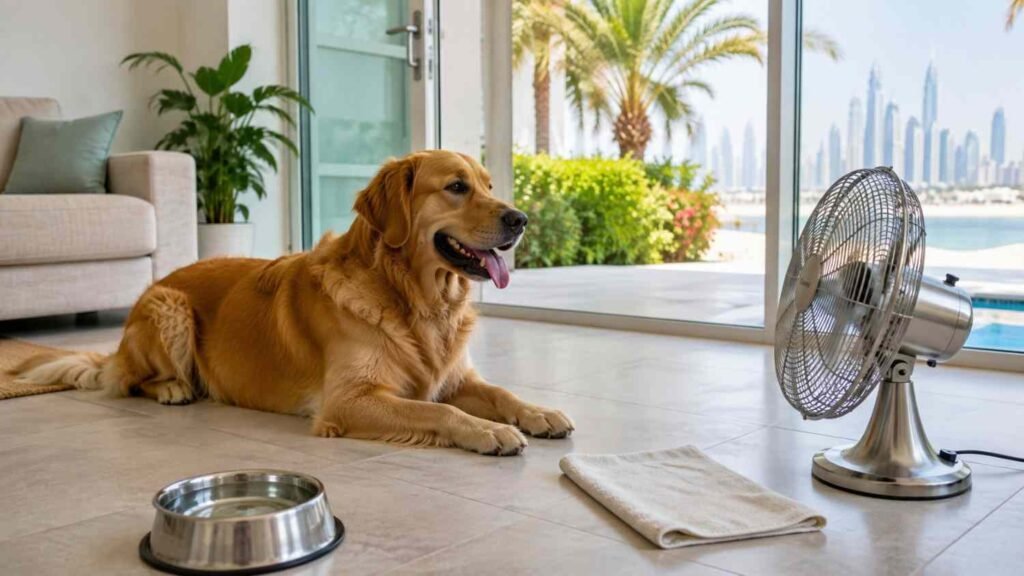
AC handles most of it indoors. But only if it actually reaches every room your pet uses, not just the ones you sit in. Pets already know this, by the way, you’ll usually find them stretched out on tile rather than carpet, since tile stays cooler.
Humidity indoors is the part people miss. A room can feel sticky even with the AC blasting, and a dehumidifier fixes that faster than turning the AC down further ever will. Curtains matter too. Draw them on anything facing direct afternoon sun, because a cooled room can still end up with one patch of floor that’s warmer than the rest of it.
Hydration Tips for Summer
Spread a few water bowls through the house and refresh them often. Water sitting in a warm room warms up itself, and pets drink less of it once that happens. A couple of ice cubes buy it more time before that sets in.
Cats get a good share of their fluid from food, not the water bowl. Swap in some wet food over summer and their water intake goes up without you doing much else.
Never Leave Pets in a Parked Car
Windows cracked or not, engine running or not, a parked car heats up fast in UAE summer regardless. A “quick errand” isn’t really an exception here. Best option: the pet stays home.
Frequently asked questions
How hot does it need to be for a pet to get heatstroke in the UAE?
Past 40°C air temperature, and humidity drops that number lower still. Pavement is always hotter than the air reading, which is where most of the real damage happens, not the air itself.
Is it safe to walk my dog in the afternoon during UAE summer?
No, not between 9am and 7pm from May through September. Early morning or after sunset, nothing in between really works.
What are the first signs of heat exhaustion in a cat?
Heavy panting, sudden stillness, no interest in moving. Cats hide it well, so don’t wait around once you notice a change.
Can I leave my pet in the car for a couple of minutes with the AC on?
No. Doesn’t matter what the AC is set to, car interiors climb fast regardless.
Do I need to shave my dog’s coat in summer to keep it cool?
Shaving can do more harm than good. A dog’s coat regulates body temperature and shields the skin from sun exposure. Regular brushing to prevent matting works better than a shave ever would.
What should I do if my pet collapses from the heat?
Cool, shaded, or air-conditioned space immediately, small sips of water, and a call to your vet or nearest emergency clinic without delay. Waiting to see if it passes on its own isn’t worth the risk.