Understanding UAE Culture: What You Actually Need to Know
Understanding UAE culture helps visitors avoid common mistakes. Respect for family, hospitality, modest dress, Islamic traditions, and Ramadan customs shape everyday life, while practices such as serving Arabic coffee, wearing kanduras and abayas, and valuing trust in business reflect the country's strong cultural identity.
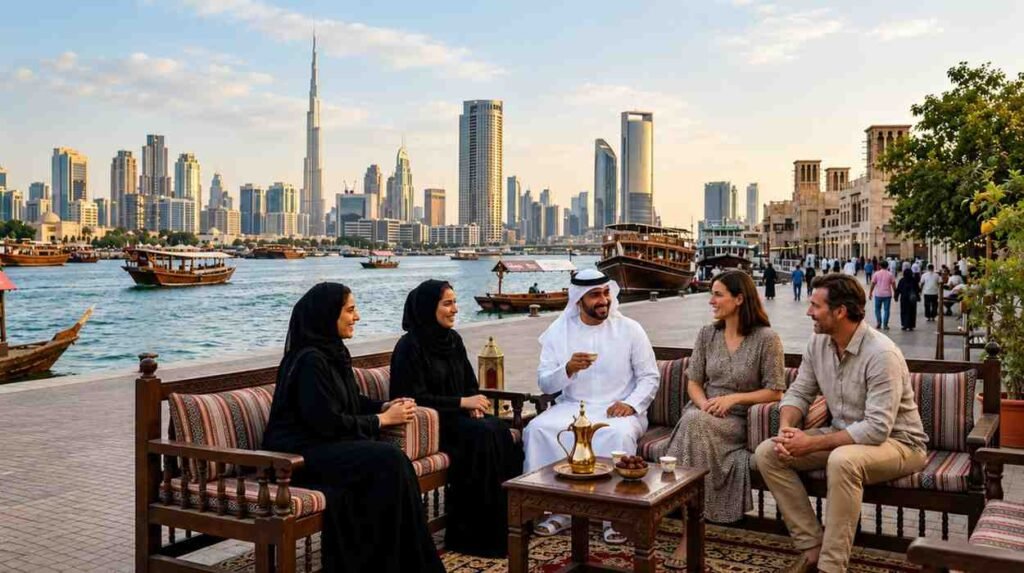
So the UAE is this crazy mix of old and new. You walk around Dubai or Abu Dhabi and you see these massive buildings next to old souks. People in traditional clothes working in offices. It’s strange but it works somehow. The locals here actually want to keep their traditions going even though everything is changing so fast. That’s pretty rare honestly.
If you’re planning to move here or just spending time, you gotta understand how things work. The culture isn’t just decoration. It actually affects everything. How people do business. How they interact with each other. What you can and can’t do in public. All of it.
What People Actually Value
Respect is a big one. Seriously. You mess that up and things get awkward quick. Family is everything here. Not just your parents and siblings. Your cousins, aunts, uncles, everyone. When something important happens, the whole family talks about it. One person doesn’t just decide for everyone.
Hospitality and Community Life
Hospitality is real. Not the fake kind. If someone invites you somewhere, they actually want you there. They’ll make sure you’re comfortable. When you go to someone’s house or a majlis, they give you coffee and dates. That’s just what happens. The coffee comes in these tiny cups, like a third full. You drink it and then shake the cup when you’re done. That means you’re finished. Keep the cup and they’ll keep pouring. It’s a small thing but people definitely notice if you know how to do it or not.
Respect and Family Values
Family life here is different. Extended family lives close by. Older people get real respect, not just people being polite. When something needs to happen, families figure it out together. This whole community thing goes beyond just blood relatives too. There’s this national pride that’s pretty strong among Emiratis.
What People Wear
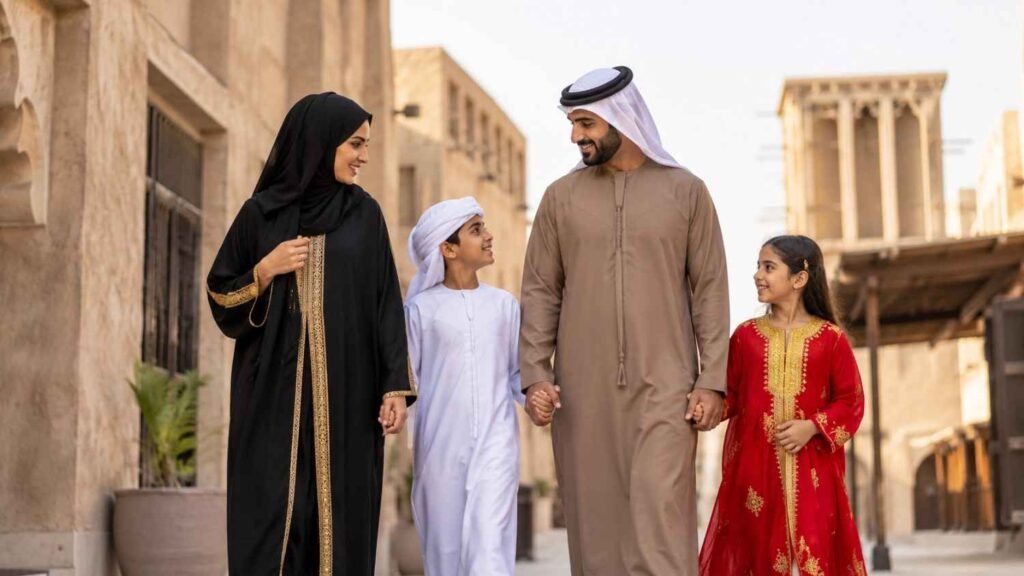
Men wear this long robe called a kandura. In summer it’s white because of the heat. When it’s cooler or for formal stuff, you see brown, navy, grey, other colors. The head covering is a ghutra which is checkered, usually white or red and white. There’s a black cord called an agal that keeps it on. This isn’t some historical costume thing. Guys wear this to work, to the grocery store, to meetings. It’s just normal clothes. Makes sense for the weather and also fits with Islamic ideas about modesty.
Traditional Clothing for Women
Women wear an abaya which is basically a black cloak over their regular clothes. A lot of them are actually really nice now with embroidery and designs. They also wear a headscarf called a shayla. Some older women wear a burqa which is that shiny face covering. Younger women don’t wear it as much anymore but it’s still around.
The thing is traditional dress isn’t disappearing here. It’s not some old thing people only wear for special occasions. People wear it every day. You see businesswomen in abayas in offices. Men in kanduras at restaurants. It’s just what people wear.
Food
The food here is a mix of different influences because this place was always a trading center. You get Arabian, Persian, Indian stuff all mixed together. Saffron, cardamom, turmeric, rose water. That’s just normal ingredients.
Traditional Emirati Dishes You Should Know
Harees is something you see a lot especially during Ramadan. It’s meat and wheat cooked down until it’s like porridge basically. Machboos is rice with meat or fish and spices. Luqaimat are fried dough balls with date syrup. There’s other stuff too. Thareed which is stew with bread in it. Shawarma. Lots of options.
The way people eat here is communal. You share food. It’s not about individual portions. That’s how it works. Even though you can get any food you want in the UAE now, traditional Emirati food still shows up at family stuff and celebrations. People care about it.
Traditional Stuff
Al Ayyala is a dance you see at weddings and events. Two rows of men with bamboo canes facing each other. They move to drums. It’s about courage and unity and connects to the region’s past.
You’ll also see these traditions during major celebrations and national events. Some of the biggest cultural gatherings happen during the country’s public holidays, when communities come together for festivals, family visits, and celebrations.
Poetry is a big deal here. Nabati poetry specifically which is in the local dialect. People use it for stories and expressing feelings. People still write it and perform it. It’s not dead.
Traditional crafts are still done. Pottery, weaving, boat building. You can see people doing this work at heritage villages and festivals. The government supports this stuff because it’s important to the culture.
Mixing Old and New
The UAE didn’t just throw out its heritage to become modern. There’s an actual effort to keep both going. You’ve got the Louvre Abu Dhabi which is a major museum. You also have heritage villages where you can see how things used to work. Museums about history and culture. The government funds this.
One thing people often don’t expect is that culture isn’t limited to museums. Places such as Quranic Park in Dubai combine history, religion, nature, and education in a way that’s easy for visitors and residents to experience for themselves.
How the UAE Preserves Its Cultural Identity
The country is pretty focused on tolerance and people getting along. Over 200 different nationalities live here. There’s this thing called the Abrahamic Family House in Abu Dhabi with a mosque, a church, and a synagogue all in one place. That’s on purpose.
Younger Emiratis are dealing with something weird. They’re growing up with global culture and tech. But they’re also connected to their traditions and families. Both things are happening at the same time for them.
Actually Acting Right Here
Dress modestly in public. Shoulders and knees covered. That’s not optional. Don’t do public stuff with your partner like kissing or holding hands a lot. During Ramadan, don’t eat, drink, or smoke in public during the day. That goes for everyone not just Muslims.
When you meet someone, men shake hands with men. With women, wait to see if they offer their hand. If they don’t, just nod. That’s fine.
Ramadan is intense. The whole country changes. Work days are shorter. Evenings are for family and food. If you’re here during this, pay attention to what’s going on around you.
A lot of newcomers are surprised by how much the calendar changes during Ramadan and Eid. Keeping track of the UAE public holidays helps because celebrations often affect working hours, school schedules, and business operations.
Work Stuff
If you’re doing business in the UAE, understanding the culture helps. Business relationships are about trust and respect. Being on time matters. Formal greetings are normal. But there’s also warmth in how business happens here.
Business Etiquette and Professional Relationships
Weekends are Friday and Saturday not Saturday and Sunday. People forget that a lot. Alcohol exists but people don’t drink it much. You wouldn’t drink it in public. Laws are based on Islamic law so know what’s okay and what’s not.
Living in a Multicultural Society
Women here have more opportunities than in other parts of the region. They work in government, business, schools. But there are still cultural expectations about modesty and family. It’s changing but it’s not like Western countries.
Tons of expats live here. People from everywhere. That creates this weird dynamic where traditional Emirati culture exists with all these other cultures. It works because everyone is supposed to respect local customs.
If someone invites you somewhere or does something nice, do something back. Hospitality goes both ways. If an Emirati invites you to their home, bring a gift. If you’re doing business with someone, build the relationship first before getting into specifics. That’s how it works.
The culture here is complicated. You won’t get it all figured out in a few weeks. But if you pay attention to what people value and respect how things work, it makes a difference in your experience.
FAQs
What do Emiratis care about? Respect, family, hospitality, Islamic stuff. Being generous. Community. These aren’t just nice words. They actually affect how people live.
How does the UAE keep its heritage? Festivals, museums, heritage villages, government money for traditional arts. Falconry and camel racing still happen. They’re not just old things.
What about the clothes? Men wear kanduras and ghutra. Women wear abayas and shaylas. These are everyday clothes. They’re practical and connected to culture and religion.
How much does religion matter? Islam is the official religion. It affects daily routines, laws, how people interact, holidays. Ramadan and Eid are big celebrations. Islamic ideas about charity, modesty, and respect are part of how society works.
Is the UAE good for outsiders? Yeah. The culture is about tolerance and people getting along. But you’re supposed to respect local customs. Modest dress, appropriate behavior, knowing about Ramadan. That’s what’s expected.
Sheraz is a business focused professional who closely follows market trends, emerging technologies, growth opportunities, and modern lifestyle trends. He writes about business, technology, travel, food, wellness, and everyday lifestyle topics, helping readers make informed decisions through practical insights. His expertise lies in helping businesses understand changing consumer behavior, digital transformation, AI adoption, branding, and scalable marketing strategies. He believes every business decision should be backed by data, market demand, and long term sustainability.