Dubai Crocodile Park: What to Know Before You Go in 2026
Planning a visit to Dubai Crocodile Park? Find everything you need, including ticket prices, opening hours, feeding sessions, baby crocodile encounters, must see attractions, the museum, best times to visit, transport options, nearby places to explore, and practical tips for a smooth family day out.
The park has become one of Dubai’s most unique wildlife attractions, offering visitors the chance to see around 250 Nile crocodiles in spacious natural style habitats, an underwater viewing area, and a museum exploring millions of years of crocodilian history. What really makes the experience memorable, though, is knowing the best time to visit so you can catch the feeding sessions and baby crocodile encounters.
When it does open again, you’re looking at AED 95 for an adult and AED 75 for a child. Gates run 10am to 8pm. The address is Tripoli Street in Mushrif, which is out past Mirdif in a quiet residential stretch of Dubai that almost no tourist ever sets foot in. That’s honestly part of why it works.
Around 250 Nile crocodiles live there, split between a big outdoor lake habitat, an underwater viewing tank and a small natural history museum. It sits at five stars on Tripadvisor off more than 720 reviews, and it’s currently ranked seventh out of 740 things to do in Dubai. For a place that opened barely three years ago and gets almost no advertising, that’s a strange and rather good result.
What follows is the stuff the official pages don’t tell you. Mainly: what time to walk in so you don’t waste your money.
So When Does It Actually Reopen?
15 September 2026. Mark it and move on.
The reason people keep turning up anyway is that the park’s homepage still has a big Get Tickets button sitting there with nothing to warn you. The closure notice only shows up once you click through to the ticket page. I’d guess a fair few families have driven out there this summer and found a locked gate.
Summer closures are normal for open air venues in the Emirates and nobody should be surprised. Several seasonal attractions across the city follow similar schedules, particularly during the hottest months, as seen with other Dubai attractions reopening throughout the year.
What It Costs
Book on the park’s own site and it’s AED 95 for adults, AED 75 for kids. One ticket, everything included. You don’t pay again to go into the aquarium or the museum, which surprises people who are used to how the bigger attractions in Dubai bundle things.
You’ll find the same visit on tour sites for somewhere between USD 35 and USD 39. Convert that and you’re paying a bit more for the privilege. The ones with hotel pickup included run past USD 50. Fine if you’re a tourist with no car and you’re staying on the other side of town. Otherwise, book direct.
A useful detail that’s easy to miss: the ticket stays valid for 14 days from whatever date you pick. So if it rains, or somebody gets sick, or you just can’t face the drive, you haven’t lost the money. You can also just buy at the desk when you arrive.
The Small Print That Catches People Out
Three rules live in the terms and conditions and none of them are on the booking page where you’d want them.
Kids under three go in free, but there has to be a ticket holding adult over 16 with them.
Nobody under 12 gets in unless someone 16 or older is with them.
Tickets can’t be refunded, swapped, transferred or resold to anyone.
That second one is worth reading twice if you had ideas about leaving the kids there while you shop at Mirdif City Centre down the road.
The Timing Thing, Which Is the Whole Article Really
Here’s what goes wrong for most visitors. The park is open ten hours a day. The two things people remember afterwards happen at fixed times. Land in the gap between them and you’ll spend an hour looking at very still crocodiles wondering what everyone was excited about.
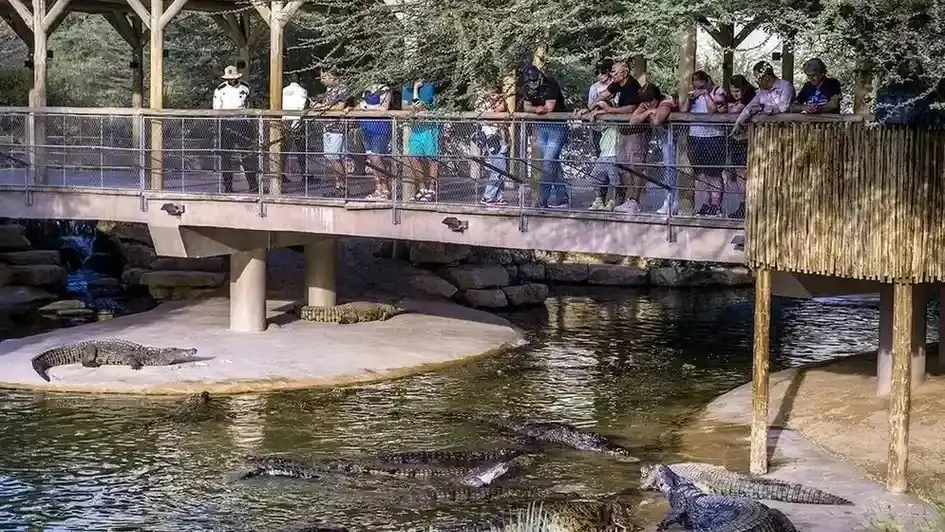
The baby crocodile encounter, where you get to hold one, runs every day. The official listing puts it at 11:30am and 4:30pm.
Feeding is the other one, and it happens on the back half of the week, roughly Thursday to Sunday. Timing moves with the season. In the cooler months visitors report it around 4pm. When it’s hotter it shifts later, closer to 5:30pm.
I want to be straight with you here: those times have changed more than once since the park opened, and reviewers from different months quote slightly different schedules. The park’s own social posts don’t all agree with each other either. Call them, or send a WhatsApp, on the morning of your visit. Thirty seconds of effort, and it’s the difference between a great afternoon and a mediocre one.
When to Walk In
Around 3pm, on a Thursday, Friday, Saturday or Sunday.
That buys you an hour to do the outdoor lake and cool off in the aquarium, then the feeding, then the baby crocodile session straight after it. One neat run, nothing missed.
There’s a review from a visitor who arrived somewhere between the 11:30am encounter and the 4pm feeding. Missed both. Never got to touch a crocodile. Someone else showed up at 3pm in January and said the timing was perfect. Same park, completely different day out.
Late afternoon is also when it’s quietest, going by what people write, and when the animals are actually moving. Midday, even in winter, they’re basically ornaments.
What’s Actually In There
The Lake
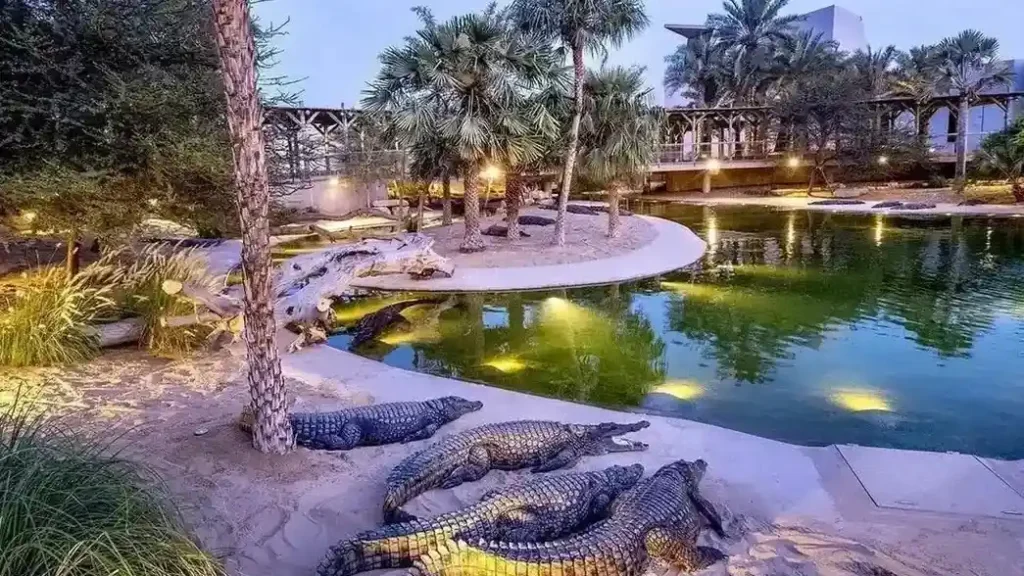
The main enclosure is built to look like an African lake system. Water, waterfalls, little islands, sandbanks. Some of the adults are around five metres long and the path takes you round so you’re looking at them from a few different angles rather than one fixed window.
The landscaping is better than it has any right to be. Reviewers keep reaching for the word tranquil, which is not a word you expect anyone to use about a crocodile attraction. There’s a gazebo and shaded seating and people genuinely sit there with a coffee for a while.
The Glass Tank
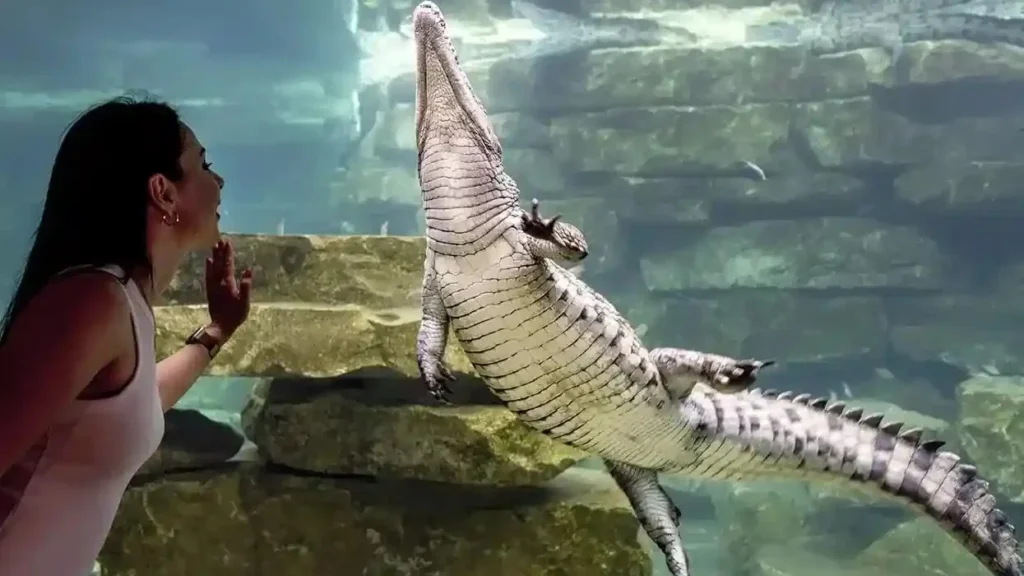
This is the bit that photographs well. A big underwater viewing panel puts you at eye level with them while they swim. You can see how they steer with their back feet, and how they can just hang there under the surface not moving at all.
It’s climate controlled, so it’s also the obvious place to slow down halfway through. The tank holds around half a million litres and the team dives in twice a week to clean it, which tells you a bit about how these animals are handled day to day.
The Museum, Which Nobody Mentions
Strangest thing about this park is that the museum is the most praised part and the marketing barely acknowledges it exists.
It runs through 200 million years of crocodilian history, including how they got through the extinction event that finished off the dinosaurs. There are casts of Sarcosuchus imperator, which hit about 14 metres, and Deinosuchus, another monster from the same family.
The part that shows up in review after review, though, is smaller than that. Staff hand you a real crocodile egg shell and a tooth and let you hold them. People remember that far longer than they remember the big lake outside.
If you’ve got a nine year old who’s into animals, give this room more time than you planned to.
How Long You Need
Tripadvisor’s listing says under an hour. That’s wrong, or at least it’s only right if you skip everything worth showing up for. The tour operators sell it as two hours and they’re closer.
Realistically: two to two and a half hours if you’re timing your arrival around the feeding and the encounter. Forty five minutes if you’re just walking through, in which case you’ve paid full price for about half of it.
Add another half hour if you eat there. Plenty of people do, because the terrace looks straight out over the crocodiles.
Getting Out There
Mushrif isn’t on the Metro. There’s no station near enough to walk from, so it’s a car or a taxi, and the ride hailing apps cover the area fine.
Coming from Deira or Downtown it’s an easy run out on Sheikh Mohammed Bin Zayed Road or Al Khawaneej Road. From Marina or JBR it’s a long way across the city, so I wouldn’t do it as a standalone trip from that side. Tack it onto something else you’re doing east.
Use the map pin from the park’s website rather than typing the name into your app. There’s more than one crocodile listing floating around in that area and drivers do occasionally take people to the wrong place.
Food, Souvenirs and the Stuff Nobody Publishes
Two places to eat. The Okavango room is the indoor restaurant, and the Okavango terrace is the outdoor one, done up like an African lodge, looking over the water. People mention iced coffee and a proper sit down meal rather than the usual theme park hot dog counter, which is a fair point in its favour.
The curio shop sells handmade African pieces alongside the soft toys. The small plush crocodile seems to be the thing everyone walks out with.
Now the honest gap. There’s almost nothing published about prayer rooms, baby changing, wheelchair access or lockers. The site is small and flat, which helps if you’ve got a stroller, but I’m not going to tell you it’s all sorted when nobody has confirmed it. Message them on WhatsApp beforehand if any of that matters to your group.
Winter, Or the September Reopening?
Between mid September and April this is a comfortable outdoor visit. December, January and February are the sweet spot. Mild afternoons, and you can wander slowly instead of hunting for shade.
If you’re going right after it opens in September, it’ll still be warm. If the weather feels too hot for a full outdoor afternoon, many visitors combine the trip with some of Dubai’s popular indoor activities before heading to the park later in the day.
The crocodiles don’t much care either way. Their water is temperature controlled all year, so their behaviour stays fairly steady. It’s the humans who need managing.
Where It Sits Against the Rest
Dubai has plenty of family attractions, but they’re not all the same experience. While Dubai Crocodile Park offers a focused wildlife visit, places like Aquaventure World Dubai are better suited if you’re looking for a full day of rides and water attractions.
Attraction
Best for
Worth knowing
Dubai Crocodile Park
A focused couple of hours
One species, done properly. Staff make it
Dubai Safari Park
Half a day with small kids
Far bigger, lots of walking, about two miles away
The Green Planet
Peak summer, indoors
Fully air conditioned rainforest
Dubai Aquarium and Underwater Zoo
Pairing with a mall day
Downtown, busier, costs more
Here’s the fair warning. This place is small. The people who come away disappointed are the ones who booked it expecting a full day. Go in knowing it’s a tight, well done, two hour thing and it punches well above AED 95.
Schools
The education programme here is quietly one of the better school trip options in Dubai and it has never been given its own page on the website, which is why nobody knows about it.
Sessions cover kindergarten right through to Grade 12 and run about 75 minutes, with an educator staying with the group the whole way round. One teacher gets in free for every ten students, and every student gets a gift at the end.
It’s booked through the education team by phone, WhatsApp or email. Ask about the museum specifically when you call, because that’s where the curriculum links are strongest and it’s the part they’ll build the session around if you tell them what you’re teaching.
What Else Is Out That Way
Two hours doesn’t justify a cross city drive on its own, so pair it with something.
Mushrif National Park is less than two miles away and good for a walk or a barbecue after.
Dubai Safari Park is roughly two miles off, though doing both in one day with small kids is ambitious.
City Centre Mirdif for lunch, indoor play and air conditioning.
Quranic Park and Dragon Mart are both in the same general direction if you want to keep going.
The version that works best for families: Mushrif National Park in the morning, lunch at Mirdif, then the crocodiles timed for the afternoon feeding.
Should You Go At All?
Worth addressing, because people do ask this about wildlife attractions and it usually gets dodged.
The crocodiles here are captive bred rather than pulled out of the wild, and visitors have noted the population has grown on site since it opened. The enclosures are big, planted, built around water instead of concrete. The team posts its own husbandry and tank cleaning work publicly. And the keepers are out on the floor talking to people, which in my experience is usually a decent sign of a place that isn’t hiding much.
The baby crocodile handling is the part some people won’t be comfortable with, and that’s a personal call rather than something I’ll argue you out of. Skip it if you’d rather. The rest of the visit stands up perfectly well without it.
Quick Tips
Ring or WhatsApp on the day to confirm feeding and encounter times. They move.
Aim to be inside by 3pm on a Thursday to Sunday and you’ll catch both.
Book direct unless you actually want the hotel transfer.
Hat and water even in January. A good chunk of the route is open sky.
Talk to the guides. Nearly every five star review names one of them. They’ll tell you things no sign board covers.
Don’t treat the museum as the way out. It’s arguably the best part.
Final Thoughts
This is a planned visit, not a spontaneous one. It works especially well if you’re putting together a weekend itinerary, alongside other popular weekend activities across the UAE, rather than treating it as a standalone trip.
So: 15 September in the calendar. Check the feeding time the morning you go. Pair it with Mushrif National Park or Mirdif so the drive earns its keep. The crocodiles will still be there when it cools down, and that’s when the place is at its best anyway.
Frequently Asked Questions
How much is a ticket? AED 95 for adults and AED 75 for children booked direct. Under threes are free with a paying adult aged 16 or over.
What time does it open? 10am to 8pm daily during the open season.
What time is the crocodile feeding? Usually Thursday to Sunday in the late afternoon. Around 4pm in the cooler months and later, nearer 5:30pm, when it’s hot. Confirm on the day because it shifts.
Can you hold a baby crocodile? Yes. The encounter runs daily, listed at 11:30am and 4:30pm, and it’s included in your entry ticket.
How many crocodiles are there? Roughly 250 Nile crocodiles, all bred in captivity. Recent visitors reckon the number has climbed since opening.
How long does a visit take? Two to two and a half hours if you want the feeding and the encounter. Under an hour if you’re only walking through.
Where is it exactly? Tripoli Street, Mushrif, out near Mirdif and Al Warqa. No Metro station nearby, so drive or take a taxi.
Is it good for young children? Yes, families rate it highly. Anyone under 12 has to be with someone aged 16 or above.
How long is a ticket valid? 14 days from the visit date you choose at booking.
Sheraz is a business focused professional who closely follows market trends, emerging technologies, growth opportunities, and modern lifestyle trends. He writes about business, technology, travel, food, wellness, and everyday lifestyle topics, helping readers make informed decisions through practical insights. His expertise lies in helping businesses understand changing consumer behavior, digital transformation, AI adoption, branding, and scalable marketing strategies. He believes every business decision should be backed by data, market demand, and long term sustainability.