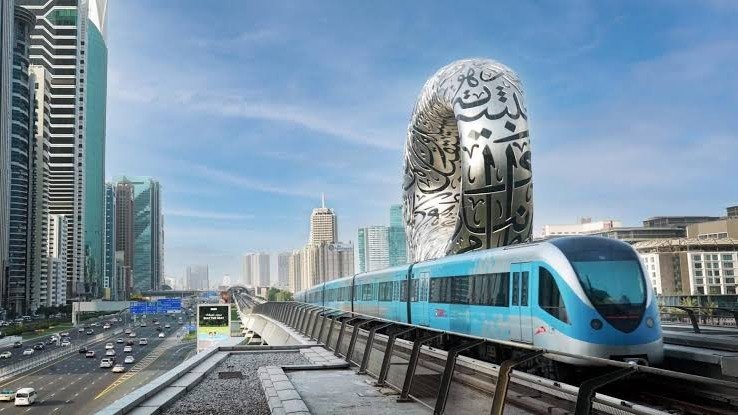
So Dubai is building a new metro line. It’s 30 km. That’s the total length. Two routes that meet up at one station. That’s basically it.
Why does it matter? Well, a lot of people live in areas that don’t have metro access. Like Silicon Oasis. That’s where a bunch of tech companies are. Academic City has universities. Dubai Creek Harbour is where people live. These places are getting bigger but the metro doesn’t reach them yet. You have to drive to get to a metro station. It’s annoying.
The Blue Line fixes this. You’ll have a metro station near where you live or work. You won’t need to drive somewhere first.
First Route Details
21 km long. 10 stations on it.
Starts at Al Jaddaf. That’s where it hooks up with the Green Line. Starts at Al Jaddaf, where it connects with the Dubai Metro Green Line. If you’ve ever changed trains here, you’ll know it’s already an important interchange, and the Blue Line will make it even easier to travel between older neighbourhoods and Dubai’s fast growing eastern communities.
Then International City. That’s a big area. Lots of people live there. Lots of businesses too. The Blue Line has three stations there because it’s so big. After that is Dubai Silicon Oasis. Companies have offices there. Tech stuff. Then it ends at Dubai Academic City where the universities are.
So basically this route covers the east side. Residential areas, business areas, shopping, schools. All on one line.
Second Route Details
9 km. 4 stations.
Starts at Al Rashidiya. That’s where it connects to the Red Line. Then it goes through Mirdif. People live there. Apartments, villas, houses. Then Al Warqa’a. Also residential. Families live there. Then it meets up with the first route at International City 1. That’s the big station.
International City 1 Station
This is the big one. 44,000 square meters. Huge. Biggest underground metro station in Dubai. Probably the biggest you’ll see. It’s built to handle 350,000 people a day going through it. That’s a lot. Why? Because it’s where the two routes meet. People transfer here. Some people get off one route and get on the other. Some people might transfer to the Red Line or Green Line from here too.
It’s basically the center of everything for the Blue Line. All the main connections happen here.
Dubai Creek Harbour Station
This one is tall. 74 meters. That’s the tallest metro station in the world. Nowhere else has a metro station that tall. The same architects who did the Burj Khalifa designed it. Skidmore, Owings & Merrill. They do big projects. This station is 11,000 square meters. It’s designed to look good, not just work. It’s supposed to be a landmark.
Dubai Creek Harbour has about 40,000 people living there now. That number will go up. By 2040 they think 70,000 people will use this station every day. It can handle up to 160,000 if it needs to. So it’s built for the future.
It serves the people living in Dubai Creek Harbour. It connects them to the rest of the metro.
How They’re Building It
They finished the first phase of digging tunnels in two months. That’s fast. They use a machine called Al Wugeisha. It’s big. 2,000 tonnes. 163 meters long. It’s not just a drill. It does everything. It digs the tunnel. It removes the dirt and rocks. It puts in the tunnel walls. All at the same time. One continuous thing. Not separate steps like the old way.
The old machines from 2007 dug about 12 meters a day. This one does 30 meters a day. More than double. Technology got better.
Who Gets Helped By This
People in eastern Dubai. Your commute gets shorter. You don’t drive to a station. You walk. That saves time. Saves money. No parking. No gas. Just walk and take the metro.
Property in these areas will change value. Metro access makes areas more valuable. If you’re thinking about moving or investing, this matters. Areas on the Blue Line route become more desirable.
Businesses benefit too. Employees can get there easier. Customers can get there easier.
More About The Routes
The first route is really the main one. It covers more distance and has more stations. 21 km is a lot. It goes through different types of areas. Shopping centers, residential, business, education. That’s why it has 10 stations.
The second route is shorter but still important. 9 km. It brings people from the north side into the system. Mirdif and Al Warqa’a don’t have metro access now. This gives it to them.
When the two routes meet at International City 1, that’s where things get interesting. You’ve got a massive interchange. Lots of capacity. Lots of connections.
The Tunnel Boring Machine
Al Wugeisha is the name. It’s a tunnel boring machine but it’s more than that. It’s a whole system. It weighs 2,000 tonnes. It’s 163 meters long. That’s longer than a football field. It’s massive. What it does: it cuts through the ground. It removes all the dirt and rock. It puts concrete segments in place to make the tunnel walls. All in one go. No stopping. No separate operations.
The old machines from 2007 couldn’t do this. They dug slower. They required more steps. This is more efficient. 30 meters a day is the rate. That’s fast for this type of work. The first phase took two months because of this speed.
Why This Matters For Dubai
Dubai is growing. More people are moving here. New areas are being developed. But the metro system didn’t reach all these new areas. That was a problem.
If you’ve driven through Silicon Oasis, Academic City, or International City during the morning or evening rush, you’ve probably noticed how busy these roads can get. The Blue Line is one of several Dubai public transport upgrades aimed at improving connectivity, reducing traffic congestion, and making it easier for people to rely on public transport instead of driving every day.
The Blue Line solves that. It extends the metro to places that need it. Silicon Oasis, Academic City, Dubai Creek Harbour. These areas are important for the city. They needed metro access. Now they’ll get it. That makes these areas more attractive. More connected. More accessible.
For people living there, it’s a big deal. Your daily life gets easier. Your commute gets shorter. You have options. For the city, it’s about growth. You can’t grow if people can’t get around. The Blue Line helps people get around.
International City 1 In Detail
This station is massive. 44,000 square meters. To give you an idea, that’s about six football fields. It’s huge. Why so big? Because it’s the meeting point. The two routes come together here. Lots of people transfer here. Lots of people pass through.
It’s designed to handle 350,000 people daily. That’s a lot of traffic. The station has to be big enough for that. Wide corridors. Multiple entrances. Lots of escalators and elevators. Everything designed for volume.
It’s the heart of the Blue Line. Everything connects here. It’s the most important station on the line.
Dubai Creek Harbour Station Details
74 meters tall. That’s really tall for a metro station. Most metro stations are underground or at ground level. This one goes up.
The Burj Khalifa architects designed it. They’re famous. They do major projects. This station is their work. It’s designed to look impressive. It’s a landmark for the area.
11,000 square meters. That’s a big station. It serves Dubai Creek Harbour which has 40,000 residents. By 2040, 70,000 people daily. It can handle 160,000 if needed. It’s built for growth. The area is growing. The station is designed for that growth.
Final Thoughts
The Blue Line is a big project. 30 km. Two routes. Lots of stations. It connects areas that needed connection. It helps people get around. It helps the city grow. Construction is moving fast. Two months for the first phase. That’s quick. The machine is efficient. The technology is good.
For people in eastern Dubai, this is important. Your commute gets better. Your area becomes more connected. Your property becomes more valuable. For the city, it’s about infrastructure. It’s about growth. It’s about making Dubai work better.
Questions People Ask
When does it open?
Nobody knows exactly. The first phase took two months. People guess a couple years based on that. But there’s no official date.
Which areas have stations?
Route 1: Al Jaddaf, Dubai Festival City, Dubai Creek Harbour, Ras Al Khor, International City (three stations), Dubai Silicon Oasis, Dubai Academic City. Route 2: Al Rashidiya, Mirdif, Al Warqa’a.
How does it connect to other lines?
Two places. Al Jaddaf connects to Green Line. Al Rashidiya connects to Red Line. You can switch lines without leaving the metro.
How big is International City 1?
44,000 square meters. Biggest underground station. Where the two routes meet. 350,000 people a day.
What’s special about Dubai Creek Harbour station?
74 meters tall. Tallest metro station anywhere. Burj Khalifa architects did it. Serves Dubai Creek Harbour. 70,000 people daily by 2040.
How fast does the tunnel machine work?
30 meters a day. Double the speed from 2007. Does digging, debris removal, and wall installation all at once.