Six months. That is how long buyers, developers, and real estate agents sat in limbo after Saudi Arabia passed a law letting foreigners own property inside the Kingdom. The law was real. The intent was clear. But nobody could actually close a deal because the government had not yet published the rules on where foreigners could buy or how the process would work.
Elena Boheme, a property adviser at Coldwell Banker, called it “very painful.” She watched deals fall apart not because buyers backed out, but because the legal ground beneath those deals had not been laid yet.
That ground is now laid. The Real Estate General Authority published the full foreign ownership framework, and the market is finally able to move.
Who Is This For? Understanding the Saudi Real Estate Foreign Ownership Law
This is not a law written for someone sitting in London or New York with a passing interest in Gulf real estate. At least not yet.
The people best placed to act right now are expats already living and working in Saudi Arabia, GCC nationals, and investors who have spent time doing business in the region. These buyers already know the market, they have contacts on the ground, and they have been waiting for exactly this kind of legal clarity before committing.
Ryan Dougan, who advises wealthy clients at Bayut Wealth in Riyadh, says almost every institutional investor or family office he works with that is looking at Saudi real estate has either a family connection or a business history in the country. The handful that do not are mostly interested in hospitality projects, which is a different kind of play entirely.
International buyers with no Saudi ties are starting to pay attention, but they are still in research mode. The regulations have put the Kingdom on their radar. Actual purchases will take longer.
How Does Buying Property in Saudi Arabia as a Foreigner Actually Work?
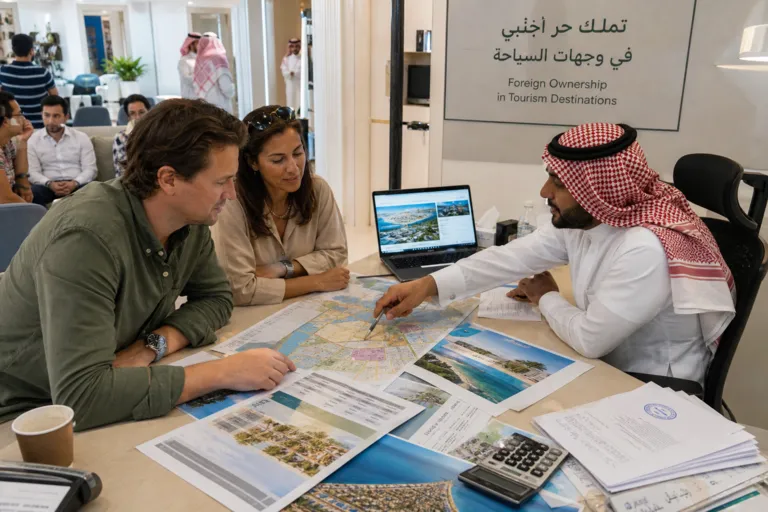
You cannot pick any property you like and make an offer. The law limits foreign purchases to specific approved zones, and those zones are concentrated in major cities and within the large development projects Saudi Arabia has been building.
Within those zones, the purchase process runs through a regulated framework. Both sides of a transaction, buyer and developer, now have a clear set of rules to follow. That alone is a massive change from six months ago, when developers were pausing construction because they did not know if they would even be allowed to sell to foreign buyers once the buildings were finished.
Some of those developers slowed their timelines on purpose. They wanted to know the rules before they decided which projects to push hard and which ones to hold back. Now they know. Decisions that were frozen are getting made.
For a buyer, the practical steps are straightforward once you know which zone you are targeting. You find the property trends, confirm it sits inside an approved area, and go through the purchase process under the published legal framework. The harder part is the homework beforehand: figuring out which zones fit your goals, whether you want a home to live in or a property to generate returns.
Why Has the Market Not Taken Off Yet?
Because nobody walks into a brand new market and starts signing contracts on day one.
Saudi Arabia has never had a foreign ownership market before. Buyers who are interested need to get familiar with how things work here. Which developers are reliable? Which zones have the best long-term outlook? What does the resale market look like? These are questions that take time to answer, and most serious buyers will not move until they have answers they trust.
Susan Amawi at Knight Frank’s Saudi office said it plainly: activity will build as people go through the process and as the framework becomes more familiar. That is not a criticism of the law. It is just how new markets work.
There is also a geopolitical layer to this. Some international investors are watching the region carefully before committing capital. That caution is real, and it is slowing some decisions. But it is not stopping them entirely. The interest is there. It is just moving carefully.
Dougan put it well: the detailed regulations have put Saudi property on the radar of people who were not thinking about it before. Getting on the radar is step one. The rest follows.
Where Should You Be Looking If You Want to Buy?
Start with the designated zones in major cities. Riyadh and Jeddah have established infrastructure, active expat communities, and developers with track records you can actually research. If you are buying a home to live in rather than an property investment, these are the areas where daily life is most practical.
For investors, the giga-projects are worth serious attention. Saudi Arabia is building entire cities and resort destinations from scratch, and a portion of that development is specifically designed to attract international buyers and residents. These projects carry more risk than established urban zones, but they also carry more upside if the government’s 2030 targets hold.
Hospitality is its own category. The Kingdom has committed to a major expansion of hotel capacity by 2030, and that pipeline of development creates real opportunities for investors who want commercial exposure rather than residential. If you are looking at Saudi real estate purely as a financial play, this is where the most active development is happening right now.
So Should You Be Moving on This Now?
If you have been sitting on the fence waiting for the rules to get published, the fence is gone. The framework is public, the zones are confirmed, and developers are actively marketing to foreign buyers for the first time.
The buyers who do their homework now, build relationships with the right advisers, and understand which zones match their goals will be in a much stronger position than those who wait until the market is fully mature and prices reflect that maturity.
Saudi Arabia is not going to stay a quiet market. The government has committed to growing the real estate sector significantly, the infrastructure investment is real, and the foreign ownership law was not passed as a gesture. It was passed because the Kingdom needs international capital and international residents to hit its 2030 targets.
The clarity is there. What you do with it is up to you.
Frequently Asked Questions
Can foreigners buy property in Saudi Arabia right now?
Yes, they can. The Real Estate General Authority has published the full ownership framework, and foreign nationals can legally purchase real estate inside the approved zones across the Kingdom.
What are the designated zones where foreigners can buy property in Saudi Arabia?
The approved zones sit within major Saudi cities and inside the large-scale development projects the government has been building. The complete list is published by the Real Estate General Authority.
Do I need to live in Saudi Arabia to buy property there?
Not necessarily, though expats and GCC nationals are the most active buyers right now. The regulations are built to allow broader international participation, and the requirements can vary depending on the zone and property type.
Why is the Saudi real estate market picking up slowly after the new rules?
New markets take time. Buyers need to understand the zones, vet the developers, and get comfortable with a legal process they have not used before. A slow start is normal and expected.
Is Saudi Arabia worth looking at for foreign real estate investment right now?
For buyers with regional ties, the timing is genuinely good. The legal framework is in place, early buyers have more choice, and the government’s investment in the sector creates a clear long-term case.
What kinds of properties can foreigners actually buy in Saudi Arabia?
Residential and commercial properties within the designated zones are both available. Hospitality-linked real estate is also attracting strong interest given the Kingdom’s major push to expand its tourism and hotel capacity before 2030.