Buying Gold in Dubai: A Practical Guide for UAE Residents
Buying gold in Dubai can save you money if you understand how pricing works. Focus on the daily gold rate, negotiate the making charge, check the karat hallmark, and keep your invoice for VAT refunds and customs. This guide explains exactly how to buy confidently and avoid common mistakes.
Gold in Dubai is cheaper than most places, and the reason is simple. The metal is priced straight off the world market, the local margin is thin, and no one loads a big markup onto the gold itself. On jewellery you pay a 5% VAT and a making charge for the workmanship. That’s the lot. So a chain or a bangle that costs a small fortune at home often comes in well under that here.
That’s the short version. The longer one is worth a few minutes before you go, because the souk runs by its own habits and first-timers tend to overpay. They haggle over the per-gram price, which barely moves from shop to shop, then forget the VAT refund form, which is where the real saving hides.
So here is how buying gold in Dubai actually works. Where to go, how the price is built, what that tiny karat stamp means, how to get your tax back at the airport, and how much you can legally carry home.
One thing to keep in your head. A huge amount of the world’s physical gold moves through Dubai every year, roughly a quarter of it by most counts. That trading activity is one of the many reasons Dubai’s economy has developed into a major global commercial hub. All that trade sits behind the shop windows in Deira, which is why the shops deal in real supply and slim margins, not tourist prices on the metal.
Why They Call it the City of Gold
Traders were dealing gold along Dubai Creek back in the early 1900s, moving it between India, the Gulf and East Africa. The Deira Gold Souk grew out of that, and it never slowed down.
The market today has two layers. There’s the retail side you can see, the souks and the mall counters. And there’s the wholesale and investment world built around the Dubai Multi Commodities Centre in Jumeirah Lakes Towers, with its refineries, vaults and the commodities exchange. Most shoppers never touch that second layer, and they don’t need to.
Where to Buy
You are not stuck with the famous souk. A few options, and each one suits a different buyer.
Deira Gold Souk
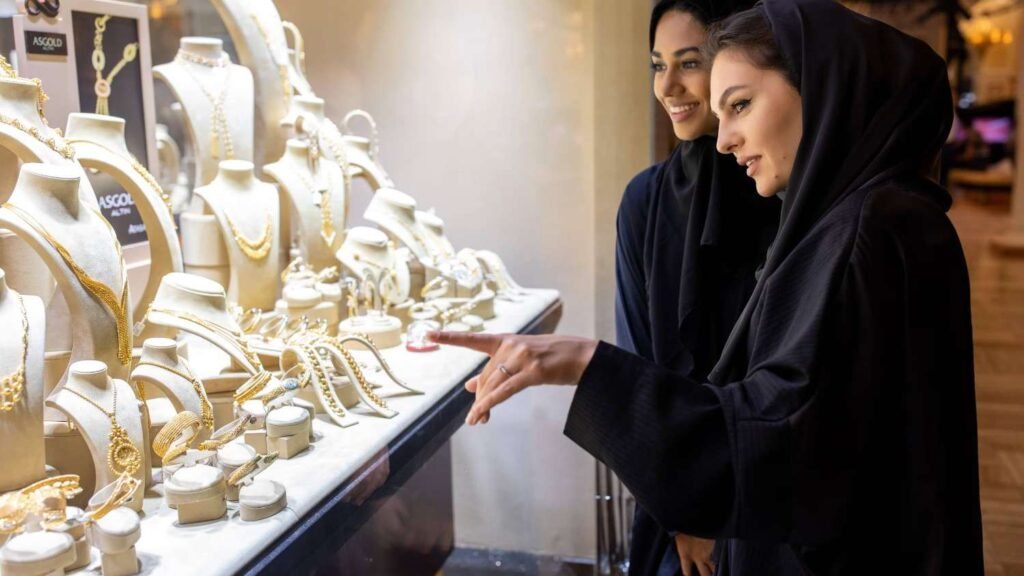
This is the postcard. Covered lanes off Sikkat Al Khail Street, window after window stacked with bangles and chains, hundreds of shops inside a five-minute walk. Prices stay sharp because everyone competes in plain sight, and a lot of the wholesale trade runs quietly from offices on the floors above the shops.
Go in the evening. It’s cooler, the place fills up after dark, and the lighting does the gold justice. Walk past three or four shops before you commit. Nobody expects you to buy at the first counter.
Gold and Diamond Park
Sitting on Sheikh Zayed Road, this one is indoors and air-conditioned, which matters in July. It’s quieter than Deira, the shops do more branded and custom work, and you can park without circling the block. You might pay a little more on the making charge for the calm.
Malls and brand-name shops
Dubai Mall, Mall of the Emirates and most big malls have gold floors with the familiar names, Malabar, Joyalukkas, Damas and the rest. You’ll pay a bit extra for the polish, but you get fixed prices, proper warranties and painless returns. Good if haggling isn’t your thing.
If you want bars and coins
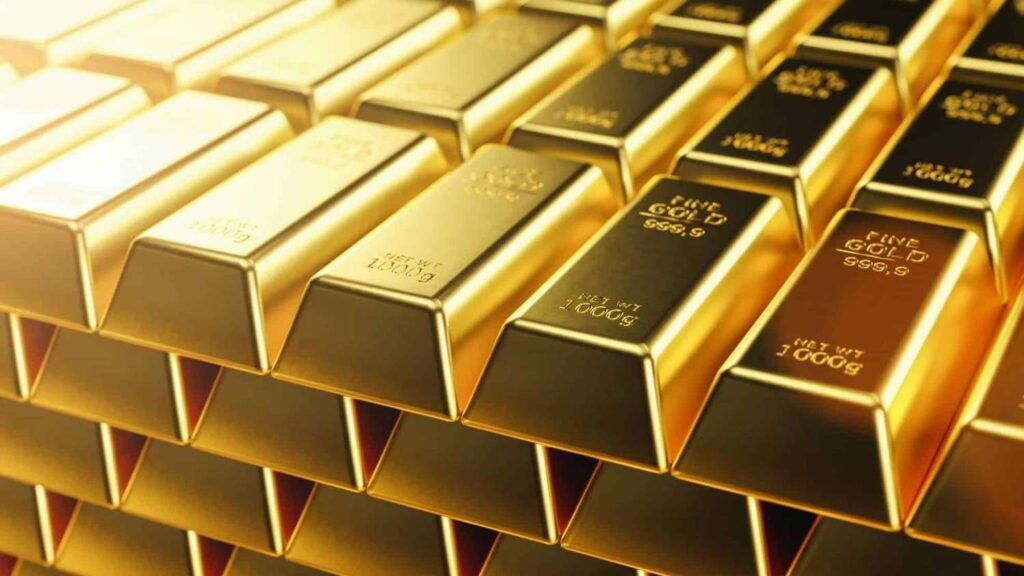
For investment gold rather than jewellery, go to established dealers and refinery shops like Emirates Gold, Al Etihad Gold and SAM Precious Metals, several of them around DMCC. Bars and coins of 99% purity and up are taxed differently, which changes your final bill. I’ll get to that below.
And it isn’t only Dubai. Sharjah’s Blue Souk (the Central Souk) and the Madinat Zayed gold souk in Abu Dhabi are both worth the trip, and often a little cheaper than the busiest tourist spots.
How the Price is Put Together
This is the bit that catches people out. Any gold price splits in two, and once you see the split the whole thing makes sense.
The first part is the gold value. That’s the weight in grams times the day’s gold rate for whatever karat you’re buying. The Dubai Jewellery Group sets a retail rate twice a day, once in the morning and once in the afternoon, quoted in dirhams per gram. Nearly every shop works off that same number, so the metal costs about the same wherever you stand. You can’t really talk this part down.
The second part is the making charge, the fee for the workmanship. It runs either as a flat rate, say AED 10 to 20 a gram, or as a percentage of the gold value, often somewhere between 6 and 14%. A plain machine-made chain is cheap to make. A detailed handmade piece is not. This is the part that moves, and this is where you bargain.
So push on the making charge and leave the gram rate alone. Ask the shopkeeper to show you the per-gram rate and the making charge as two separate numbers. If they only give you one big figure, ask them to break it down. A decent shop will, no fuss.
Karats, in Plain Terms
Karat is just how pure the gold is. Everything sold legally in the UAE is stamped, so find the hallmark and read it.
24k is 99.9% pure. Rich yellow, very soft, mostly used for bars, coins and gifting.
22k is 91.6% pure. The regional favourite for jewellery.
21k is 87.5% pure, and you’ll see it a lot in Gulf and Arabic designs.
18k is 75% pure. Harder wearing, common for diamond settings and modern pieces.
Higher purity means a higher price per gram, but it also means softer gold that dents and scratches sooner. For something you’ll wear every day, 22k or 21k is the sensible middle. The UAE also runs its own quality scheme, the UAE Good Delivery standard, which vets refiners so you can trust what a bar claims to be.
VAT and Getting it Back
Jewellery carries 5% VAT here, charged on the gold value and the making charge together. Investment gold at 99% purity and above, the proper bars and coins, is zero-rated, so no VAT on those.
Tourists can claim most of that 5% back. Whether you’re visiting on a short holiday or using Dubai’s five year multiple entry tourist visa to travel regularly, the refund process is the same as long as you meet the eligibility requirements. The steps are easy enough:
You have to be a visitor, not a UAE resident, on a non-GCC passport.
Buy from a shop in the Tourist Refund Scheme, and spend more than AED 250.
Ask for the tax-free tag and hang on to the invoice.
Do the refund at the airport before you fly out, and carry the gold with you.
Don’t expect the whole 5% back, though. There’s an admin fee skimmed off, so you land around 85% of the VAT, and the gold has to leave the country inside 90 days. Residents get nothing back. The VAT on the making charge often isn’t fully refundable either, so treat the refund as a handy discount, not a clean rebate.
What You Can Actually Fly Home With
Buying is the easy part. Getting it home without a customs headache is where people slip up, especially anyone flying to India, and the rules there changed not long ago.
India’s Baggage Rules 2026 came in this February. For gold jewellery, the duty-free allowance now goes by weight:
Women: up to 40 grams, duty-free.
Men: up to 20 grams, duty-free.
You need to have lived abroad for more than a year to qualify.
The old rupee value cap on jewellery is gone, so it’s weight alone that counts now. Coins, bars and biscuits get no duty-free allowance at all, so budget for duty if that’s what you’re carrying. You can bring up to 1 kg in total, but everything over the free limit gets taxed, and you have to declare it on the red channel when you land. Keep the invoices where you can reach them.
Flying somewhere else? Every country sets its own limit, so check yours before you buy a suitcase full.
A Few Things that’ll Save You Money
Look up the day’s rate before you leave the hotel, so you know the baseline going in.
Walk into three shops, not one. The metal price barely differs, the making charge really does.
Ask them to weigh the piece in front of you. Every counter has a calibrated scale.
Keep every single invoice. You’ll want them for the airport refund and for customs back home.
If it’s savings you’re after, buy bars or coins, not jewellery. No VAT, and the premium over spot is far smaller.
Small habits, real savings.
When to Go
Timing counts for a bit. During the Dubai Shopping Festival in winter, plenty of souk shops trim or drop the making charge and run gold raffles. Indian buyers pile in around Dhanteras, Diwali and Akshaya Tritiya, and the whole region buys around Eid, so those weeks bring higher prices and thicker crowds. Want space to haggle and a quieter shop? Skip the festival dates.
Final Suggession
None of this is complicated once the two-part price clicks. Price the metal off the daily rate, argue the making charge down, read the karat stamp, and keep your invoice for the refund and customs. Whether you see gold as jewellery or as part of a broader investment strategy alongside assets shaped by Dubai’s crypto regulations, understanding how the market works helps you make a smarter purchase. Do that and you’ll leave with a fair price on something real, from a full wedding set out of Deira to a single one ounce bar tucked in your bag.
FAQ
Is gold actually cheaper in Dubai? Most of the time, yes. The gold is priced off the live world rate with a thin local margin, and there’s no import duty on bullion coming into the UAE. You still pay 5% VAT on jewellery plus a making charge, but the final number often beats home prices, especially for buyers from India and Africa.
Do tourists pay VAT on gold in Dubai? Yes, jewellery has 5% VAT on it. As a tourist you can claim most of it back at the airport through the Tourist Refund Scheme, as long as you bought from a participating shop, spent over AED 250, and take the gold out within 90 days. Investment bars and coins at 99% purity and up are zero-rated.
How much gold can I take from Dubai to India? Under the 2026 rules, women can carry 40 grams and men 20 grams of jewellery duty-free, but only after living abroad for more than a year. Coins and bars don’t get the allowance. You can bring up to 1 kg in total if you pay the duty and declare it.
22k or 24k, which should I buy? For anything you’ll wear, go 22k or 21k. It’s harder and holds its shape. 24k is purer and better as a bar, a coin or a gift, but it’s soft and marks easily.
Where’s the cheapest gold in Dubai? The Deira Gold Souk, usually, because the shops sit side by side and undercut each other. Sharjah’s Blue Souk and Abu Dhabi’s Madinat Zayed souk can come in a touch lower too. Malls charge a bit more but give you fixed prices and easy returns.
Can you haggle over gold prices in Dubai? You haggle the making charge, not the gold. The metal follows the twice-daily Dubai rate, so ask for the gold value and the making charge as separate numbers, then push on the making charge.
Disclaimer: The information in this article is provided for general informational purposes only and is based on publicly available sources, industry practices, and regulations available at the time of writing. Gold prices, VAT rules, customs regulations, import duties, exchange rates, and government policies may change without notice. Always verify current rates, legal requirements, and eligibility with the relevant UAE authorities, your destination country’s customs department, or the retailer before making a purchase or travelling with gold. This article should not be considered financial, tax, investment, or legal advice.
Aqib Ijaz is an SEO specialist with over 15 years of experience in digital marketing, focusing on cryptocurrency, forex, stocks, equities, and fintech. He has helped finance brands worldwide improve their online visibility through strategic on page SEO and high quality link building.
Aqib has secured authoritative backlinks for crypto and forex clients from trusted websites across the globe, strengthening their search rankings and domain authority. Passionate about financial markets and blockchain technology, he combines industry knowledge with SEO expertise to create valuable, search focused content that helps businesses and readers stay ahead in the fast changing world of finance.