DIFC Dubai Explained: What It Is, How It Works and Why People Keep Talking About It
DIFC is more than Dubai's financial district. It operates under its own common law system, making it a preferred base for global businesses while also offering excellent dining, art galleries, and public spaces. This guide explains how DIFC works and what visitors and companies should know before going.
DIFC stands for Dubai International Financial Centre. It is a financial free zone sitting right in the middle of the city, and the thing that makes it unusual is that it runs its own commercial laws, its own courts and its own financial regulator. Everything else around it follows UAE federal and Dubai law. Step across the boundary of this one district and the rules governing your company change.
That matters for two very different groups. If you run a business, DIFC gives you a legal system built on English common law, which is one reason the district has become a major contributor to Dubai’s GDP growth. Most international banks, law firms and investment firms operating in the emirate rely on this legal framework because it is already familiar to them.
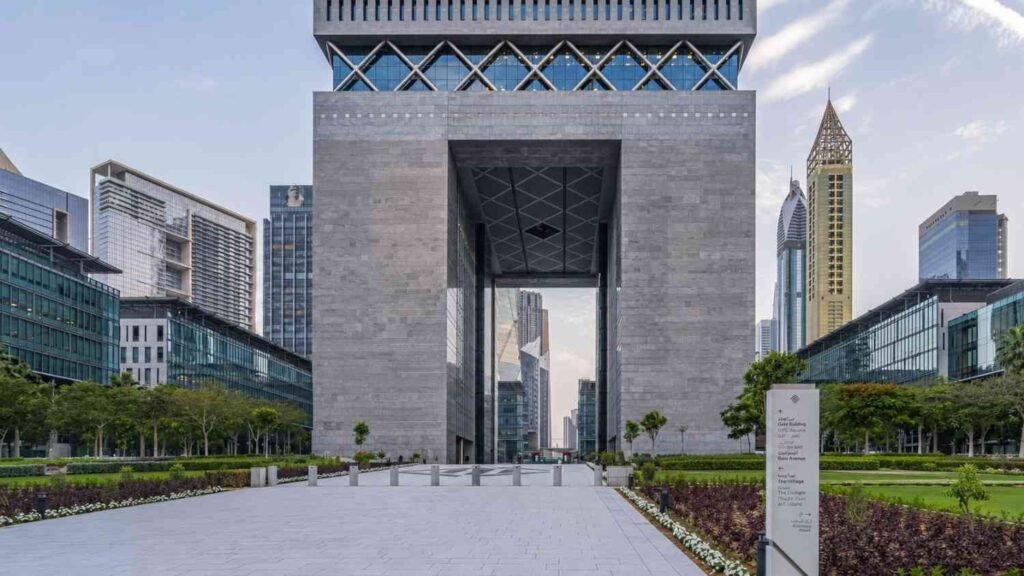
If you have driven along Sheikh Zayed Road near Emirates Towers, you have already seen it. The large arch shaped building at the head of the district is the Gate Building, and it has been the visual shorthand for Dubai finance since the centre opened in 2004.
What DIFC Actually is
DIFC was set up in 2004 as one of the UAE federal financial free zones. It covers a compact patch of land in the Trade Centre and Zabeel area, bordered roughly by Sheikh Zayed Road on one side and Za’abeel on the other. You can walk from one end to the other in about twenty minutes.
Inside that boundary, the centre has its own set of civil and commercial laws, written in English and modelled on common law rather than the civil law used across the rest of the country. Criminal law is not part of this. Dubai Police and UAE criminal law apply in DIFC exactly as they do anywhere else in the emirate.
Two bodies do most of the work. The Dubai Financial Services Authority regulates banks, funds, insurers and anyone else doing financial business there. The DIFC Courts handle civil and commercial disputes, and they hear cases in English with judges drawn from common law jurisdictions.
The Legal System is the Real Difference
People often assume DIFC is just another free zone with a nicer address. It is not. Most free zones in the UAE give you a licence and an office, but your contracts still sit under UAE civil law. In DIFC the contract law, employment law, insolvency law and data protection law are all separate.
This is why so many international firms pick it. A fund manager in London or Singapore reading a DIFC employment contract recognises the structure immediately. Disputes are argued in English, judgments are published, and case law builds up over time in a way that lawyers from common law countries find familiar.
There is a practical side to this that has nothing to do with banking. The DIFC Wills Service lets non Muslim residents register a will under common law rules for their UAE assets, including property and guardianship of children. Plenty of expat families use it without ever having a company in the district.
Who Sets up in DIFC and Who Probably Should Not
The obvious tenants are banks, asset managers, insurers, family offices and law firms. Beyond those, the centre licenses non financial businesses too, from consultancies and holding companies to retail and restaurants operating on site.
The Innovation Hub houses technology and fintech companies, reinforcing DIFC’s position at the centre of Dubai’s fintech ecosystem. Today, startups, digital banks and payment providers continue choosing the district because it offers direct access to investors, regulators and one of the region’s strongest financial networks.
It is not the right fit for everyone. Setup and annual costs run higher than mainland Dubai or a low cost free zone, and office space in the district is priced accordingly. A small trading company with no international counterparties usually gets nothing extra for the money. The value comes from the legal framework, so if you do not need that framework, you are paying for something you will not use.
Costs and Tax
Company setup in DIFC involves an application fee, a licence fee, a share capital requirement that varies by activity, and a real office address inside the district. Financial firms regulated by the DFSA pay more and go through a longer approval process than a simple consultancy would.
On tax, two things are true at once. The UAE has no personal income tax, which is unchanged. Federal corporate tax at 9 percent came in from June 2023, and free zone companies can still qualify for a 0 percent rate on qualifying income if they meet the conditions set out in the law. Those conditions are detailed and they depend on what your business actually does, so treat any blanket claim of tax free status with caution and get advice specific to your activity.
Fees are published on the DIFC website and they do change, so check current figures before budgeting rather than relying on an article or a forum post from two years ago.
Getting to DIFC
By Metro
Financial Centre station on the Red Line is the closest stop and connects by a covered walkway. Emirates Towers station also works, and from there you are a short walk from the Gate Building side. On a weekday morning the metro is genuinely faster than driving, because Sheikh Zayed Road backs up badly between about 7.30 and 9.30.
By Car
Parking in DIFC is paid and it fills up early on working days. The basement car parks under Gate Avenue are the easiest option, and valet is available at several entrances. Weekends and evenings are far easier, and if you are coming for dinner you will usually find space without circling.
On Foot from nearby
The district sits close to Dubai World Trade Centre, Emirates Towers and the Museum of the Future, which is directly across Sheikh Zayed Road. If you’re planning to visit both, it’s worth checking the latest Museum of the Future updates before your trip, as exhibitions and visitor experiences occasionally change.
What DIFC is Like to Visit
Food
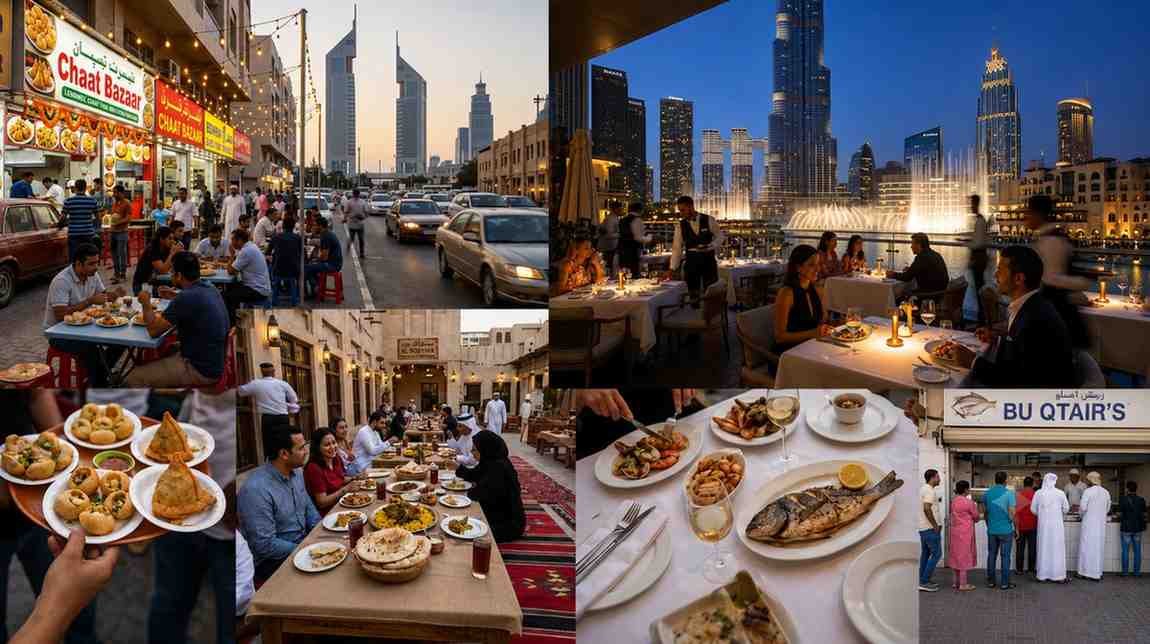
The restaurant scene here leans upmarket and international, and it splits into two moods. Gate Village and the Gate Building surroundings hold the formal end, with restaurants that fill with suits at lunch. Gate Avenue is more casual, with cafes, bakeries and quicker options that stay busy in the evening.
Weekday lunch between 12.30 and 2 is the busiest window by a wide margin. If you want a table at a well known place without booking, come after 2.30 or on a weekend.
Art
DIFC has quietly become one of the strongest places to see art in Dubai. Gate Village holds a cluster of commercial galleries across several buildings, and you can walk between them in an afternoon at no cost. There is public sculpture placed around the district as well, which is easy to miss if you are rushing to a meeting.
DIFC Art Nights is the event to plan around. It usually runs in March and turns the galleries into a late evening open house, timed to sit near the wider Dubai art season. It gets crowded, but it is the one night the district feels like a street festival.
The Best Time of Year to Walk Around
From late October to April, the outdoor sections of Gate Village and the plazas are comfortable, and evenings are the nicest part of the day. In summer, stick to Gate Avenue. It is a long air conditioned walkway that links a large part of the district, so you can move between offices, shops and restaurants without stepping outside.
During Ramadan, opening hours shift and many restaurants adjust their service during daylight. Iftar and suhoor menus appear across the district, and evenings get noticeably busier than usual.
Living in DIFC
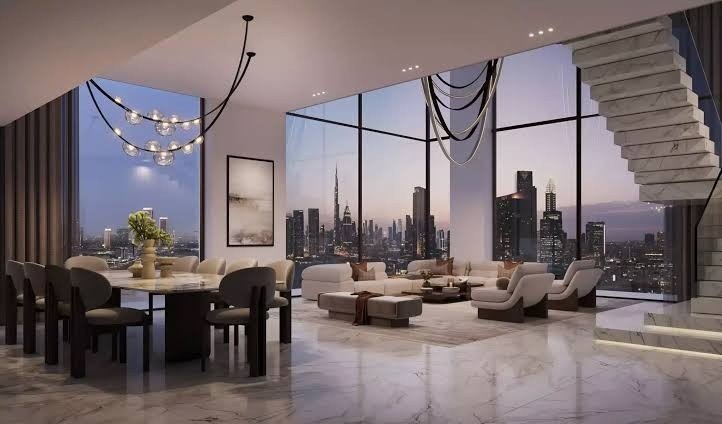
There is residential stock inside and immediately around the district, and the appeal is obvious for people who work there. Walking to the office in a city built for cars is rare in Dubai, and it saves a daily fight with Sheikh Zayed Road.
The trade off is noise and price. Rents in and around the district sit at the higher end of the Dubai market, and the area is built for work first, so it is quieter on weekends than a family neighbourhood would be. Schools and large supermarkets are not on your doorstep, which is worth checking against your routine before signing anything.
What is Being Built Next
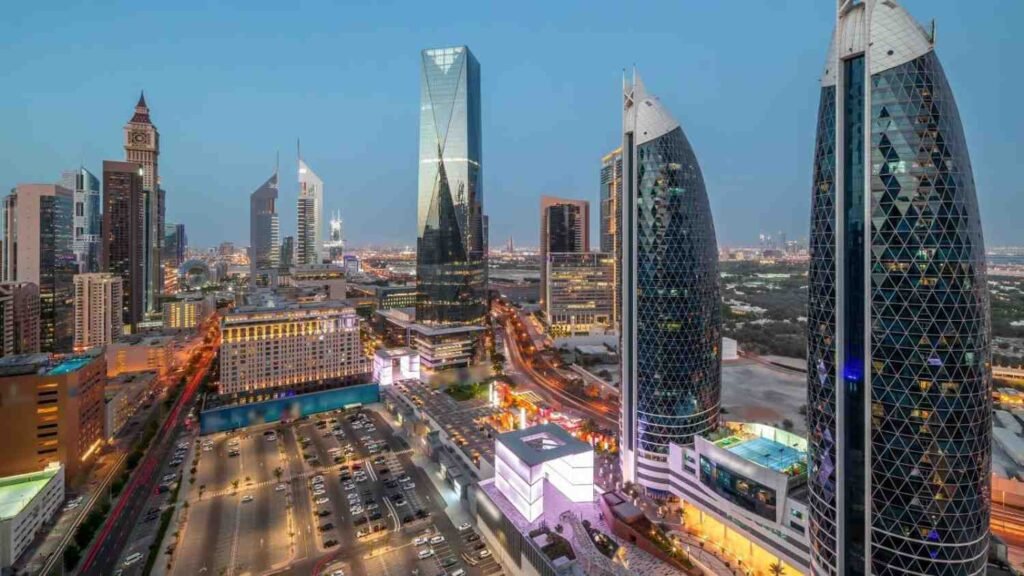
Projects announced by the centre include DIFC Square, Immersive Tower, DIFC Living and DIFC Heights Tower, reflecting the wider ambitions of the Dubai 2040 urban master plan, which focuses on creating more business districts, residential communities and connected public spaces across the city.
For visitors this mainly means changed traffic routes and hoarding in places. For businesses looking at office space, it means supply is coming, which is useful context when you are negotiating a lease.
DIFC Compared with other Options in the UAE
The closest comparison is Abu Dhabi Global Market on Al Maryah Island, which is the other UAE financial free zone running a common law system and its own courts. Companies choosing between the two usually decide on where their clients are and which regulator suits their activity, not on the legal framework alone, since both are broadly similar in design.
Against mainland Dubai or general purpose free zones such as those in Jebel Ali or Dubai South, the comparison is different. Those are cheaper and often faster to set up, and mainland gives you the right to trade directly across the UAE market. DIFC gives you the legal system and the address. Pick based on which of those you actually need.
Practical Tips people Rarely Mention
● Meetings in the district run tight because everything is walkable, so people often book back to back. Build in ten minutes if you are coming from outside.
● The Gate Avenue walkway is the fastest way to cross the district on foot in summer, and it is signposted better at the ends than in the middle.
● Prayer rooms are available across the district, and Friday afternoons are quieter than the rest of the week.
● The DIFC public register is open online and lets you check whether a company you are dealing with is actually licensed there. It takes a minute and it is worth doing.
● If you are visiting for art, go on a weekday afternoon. Galleries are calm, and staff have time to talk properly about the work.
Is DIFC the Right Choice for You?
DIFC is easier to understand once you stop thinking of it as a business park. It is a small legal jurisdiction with restaurants on top, and the two sides rarely get talked about together.
If you are weighing it up for a company, the question is not whether the address looks good. It is whether an English language common law system and access to the DIFC Courts will change how your contracts and disputes play out. For many international businesses the answer is yes, and the cost makes sense. For others it does not, and that is a perfectly reasonable conclusion to reach.
If you are simply curious, pick a cool evening between November and March, park at Gate Avenue, and walk. The galleries, the food and the architecture make more sense in person than any description of them does.
Frequently asked questions
What does DIFC stand for? DIFC stands for Dubai International Financial Centre. It is a financial free zone in Dubai, established in 2004, with its own commercial laws, courts and financial regulator.
Is DIFC part of Dubai? Yes. It sits inside Dubai and is part of the UAE. What makes it different is that its civil and commercial laws are separate and based on English common law. Criminal law and immigration remain under UAE and Dubai authorities.
Can anyone visit DIFC? Yes. The restaurants, cafes, shops and galleries are open to the public and there is no entry fee. You only need a pass for the office floors of individual buildings.
Do you pay tax in DIFC? There is no personal income tax in the UAE. Federal corporate tax of 9 percent applies from June 2023, and free zone companies may qualify for a 0 percent rate on qualifying income if they meet the legal conditions. Advice specific to your business activity is essential here.
How do I get to DIFC by metro? Take the Red Line to Financial Centre station, which connects to the district by a covered walkway. Emirates Towers station is the other nearby stop.
Is DIFC expensive to set up a company in?It costs more than mainland Dubai or a low cost free zone. You pay for the common law framework, the DIFC Courts and the address. If your business does not need those, cheaper options will serve you better.
What is there to do in DIFC besides business? Art galleries in Gate Village, a wide range of restaurants and cafes, retail at Gate Avenue, public sculpture around the district, and events through the year including DIFC Art Nights in March.
Is DIFC good for families? It works well for dining and art with older children. It is less suited to young families as a residential choice, since schools, parks and large supermarkets are not immediately within the district.
Sheraz is a business focused professional who closely follows market trends, emerging technologies, growth opportunities, and modern lifestyle trends. He writes about business, technology, travel, food, wellness, and everyday lifestyle topics, helping readers make informed decisions through practical insights. His expertise lies in helping businesses understand changing consumer behavior, digital transformation, AI adoption, branding, and scalable marketing strategies. He believes every business decision should be backed by data, market demand, and long term sustainability.