I keep having the same conversation. Someone in Dubai asks where to go for a weekend that isn’t a staycation deal or another brunch. If you’re always looking for new weekend activities in the UAE, Al Ain is usually my first recommendation, even if people pull a face before they actually go.
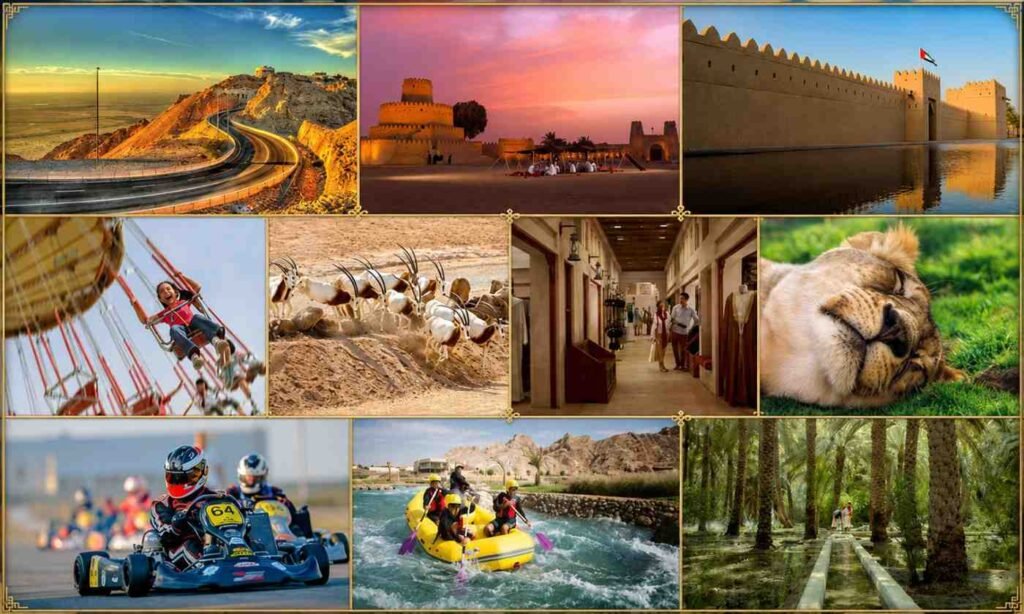
So let me save you the back and forth. Al Ain is about an hour and a half from Dubai or Abu Dhabi. The three things you shouldn’t miss are the oasis in the middle of town, Al Jahili Fort, and the drive up Jebel Hafeet timed for sunset. All three cost nothing. If you’ve got kids, the zoo and the hot springs at Green Mubazzarah slot in easily. That’s the answer.
Everything below is the longer version, including the stuff I wish someone had told me the first time. Like the guys at the camel market. We’ll get to them.
First, Why Al Ain at All
Because it’s the one city in the UAE that wasn’t built in a hurry. It grew around water, around the oases, and it still feels like it. Farms inside the city. Roundabouts full of trees. Speed limits people mostly respect.
It’s also older than everything else here in a way you can actually touch. The oases and the archaeological sites around Hafit and Hili got UNESCO World Heritage status in 2011, the first in the country. And Sheikh Zayed ran the whole Eastern Region from Al Ain for decades before he became President, which is why half the interesting buildings in town have his family’s name attached.
What I’d Actually Do, In Order
The Oasis
Start with the Al Ain Oasis because it resets your expectations for the whole city. You walk in off a hot street and the temperature just drops. Date palms overhead, water running through the old falaj channels beside the path, and these are working farms, someone owns those trees and harvests them.
Entry’s free. Paths are paved. You’ll walk further than you meant to, so wear proper shoes. And if you can be there around 5pm when the light goes low and gold through the palms, do that. I’ve taken the same photo four times and I’ll take it again.
Jebel Hafeet
People drive to Al Ain just for this road, and fair enough. It climbs to a bit over 1,200 metres in a series of long, smooth curves with the desert falling away behind you. Motoring magazines have been raving about it for years.
Go up for sunset. Yes, everyone does. There’s a reason. Just know that on winter weekends the summit car park fills up a good hour before the sun goes, so leave earlier than feels necessary. The little cafeteria at the top sells tea and snacks when it feels like it. Bring your own water. And a jacket between December and February, because the top is properly cold once the sun drops, which nobody believes until they’re up there shivering in a t-shirt.
Green Mubazzarah
This is the park at the bottom of the mountain where warm spring water runs through little channels in the grass. Families park themselves along the edges, feet in the water, karak in hand, kids going feral on the lawns. There are pools and chalets if you want to make a longer thing of it.
Fridays in winter it’s heaving. Tuesday afternoon, you’ll have whole stretches to yourself. Both versions are good, just different.
Al Jahili Fort
Free, gorgeous, and quick. Twenty minutes covers it, an hour if the Thesiger exhibition grabs you. Wilfred Thesiger crossed the Empty Quarter by camel in the late 1940s and photographed everything, and the prints hanging inside the fort show a version of this country that was gone within a generation. The fort itself, with that famous round layered tower, went up in the 1890s. Stand in the courtyard for a minute and let it be quiet.
The Zoo
Sheikh Zayed opened Al Ain Zoo in 1968 and it’s aged well. It sits right under the mountain, it’s huge, and on a cool morning it’s a genuinely lovely few hours. The giraffe feeding is the bit the kids remember.
One rule: gates open, you’re there. By 11am the animals are asleep in the shade and you’re paying to look at rocks.
The Palaces, If You Have Time
Two smaller stops I’d add on a second visit, or a first one if history’s your thing. Qasr Al Muwaiji, where Sheikh Khalifa was born, has a slick modern exhibition dropped inside the original mudbrick walls. And the Al Ain Palace Museum by the oasis is the old Zayed family home. What strikes you there is how modest it all is. Plain rooms, a courtyard, a majlis. This was the home of the family that would go on to build Abu Dhabi.
Hili Archaeological Park
A 4,000 year old Bronze Age tomb, sitting in a public garden, surrounded by families having picnics. Only in Al Ain. The Grand Tomb still has carved human and animal figures visible on the entrance stones, it’s part of the UNESCO listing, and most days you’ll have it more or less to yourself. Free. Weirdly moving, if you let it be.
The Camel Market
Near Bawadi Mall, mornings only if you want to see actual trading. It’s one of the last real camel markets in the country and nobody has dressed it up for tourists, which is exactly why it’s worth going. Pens of racing camels, traders shouting, trucks backing in.
Now, the warning. Within about ninety seconds of arriving, a man will appear at your elbow and start guiding you around. You didn’t ask. He’ll expect payment anyway. Say no thank you at the start, firmly, and mean it. After that you’re fine to wander on your own. Ask before you photograph people and you’ll mostly get a yes.
Wadi Adventure
Man made rafting, kayaking and surfing near the base of Jebel Hafeet. Honestly? Skip it on a first trip. But if you’re there two days with teenagers who’ve hit their limit on forts, it exists and it’s decent, and in the cooler months it’s a fun half day.
Timing Your Trip
November to March. That’s it, that’s the advice.
But if summer is what you’ve got, Al Ain is still doable because it’s dry heat, not the swamp air you get on the coast. Do the oasis or zoo at 8am, hide somewhere air conditioned through the afternoon, then head up the mountain around 5.30 and let the altitude do the work. The top of Hafeet in a summer sunset is several degrees kinder than the city, and it feels like cheating.
Small Things Worth Knowing
- Drive, don’t taxi. The sights are scattered and you’ll burn money and patience hopping between them. A quick check of a UAE road trip safety checklist before leaving makes the journey smoother, especially if you’re driving from Dubai or Abu Dhabi for the first time.
- Watch the speed cameras on the Dubai to Al Ain road. They are plentiful and they are patient.
- Money-wise, almost everything good is free. Zoo tickets and Wadi Adventure are the only real spends unless you count petrol and karak.
- Dress slightly more conservatively than Dubai. Knees and shoulders covered goes a long way, especially at heritage sites and the market.
- Stay overnight if you can swing it. Sunset up the mountain plus the camel market at 7am the next day is the proper Al Ain double, and it doesn’t work as a day trip.
Final Thoughts
Al Ain won’t chase you. No light shows, no world records, nothing trying to go viral. If you enjoy quiet destinations with mountains and greenery, it’s the same kind of peaceful atmosphere that makes the Hanging Garden Kalba such a popular escape for nature lovers.
FAQ
Is Al Ain worth visiting?
Yes. It’s the easiest weekend escape in the UAE and most of the best things there are free. If you’ve done Dubai and Abu Dhabi to death, this is the obvious next trip.
How far is Al Ain from Dubai?
About 120 to 130 km, call it 90 minutes of easy driving. From Abu Dhabi it’s much the same.
Is the Al Ain Oasis free to enter?
Yes, completely free, open daily. The palm shade keeps it comfortable later into the year than most outdoor spots.
Can you do Al Ain in one day?
You can. Oasis in the morning, fort after lunch, mountain for sunset. The zoo and camel market are what push it into an overnight.
When is the best time to visit Al Ain?
November through March. Summer works if you keep mornings and sunsets outdoors and hide through the middle of the day.
Why is Al Ain called the Garden City?
The oases and farms that the city literally grew around, plus street after street of trees. Its oases and ancient sites hold UNESCO World Heritage status, the UAE’s first.