17 Best Tourist Places in Sharjah (2026): A Local's Honest Guide
Planning a trip to Sharjah? This guide highlights the emirate's top attractions, including heritage sites, museums, beaches, desert adventures, and East Coast escapes. It also covers entry fees, timings, travel tips, seasonal advice, and practical recommendations to help you plan a memorable and budget friendly visit.
Sharjah gets overlooked a lot. Most people think Dubai’s the only place worth visiting in the UAE, but that’s not really true. If you actually spend time in Sharjah, you’ll find it’s got its own vibe. The museums are solid, the beaches are nice, and honestly? Everything costs way less than Dubai.
The thing about Sharjah is it kept its character. The souqs still feel real. You’re not fighting crowds everywhere. Parking doesn’t stress you out before you even get out of the car. Back in 1998, UNESCO called it the Cultural Capital of the Arab World. They weren’t just throwing that around either.
There’s basically three parts to Sharjah. The city itself, then the desert area inland around Mleiha, and then the east coast by Khorfakkan. Each one’s different. I’ve split this up by area so you know what you’re getting into.
The Heritage and Culture Side
1. Heart of Sharjah
This is the old part of town. They fixed it up properly without making it all fake and shiny. You’ve got the old stone walls, the wind towers, narrow streets with shade. Souq Al Arsah is in here somewhere and locals say it’s the oldest souq in the country. Whether that’s true or not, it definitely feels old. The coffee’s good.
There’s like five or six museums just walking distance from each other. Al Hisn is a fort from 1820 that talks about the Al Qasimi rulers. Bait Al Naboodah shows you how a pearl merchant’s family lived, with the courtyard and everything. There’s also a Calligraphy Museum that’s pretty small but worth checking out. Each one costs just a few dirhams. You can hit three of them before lunch no problem.
Fair warning though – some close in the middle of the day. Go early morning or later in the afternoon.
2. Sharjah Museum of Islamic Civilization
You can’t miss this one. There’s a huge gold dome right on the creek. Inside they’ve got seven different galleries with 14 centuries of Islamic science, art, coins, old manuscripts, textiles – basically everything. The astronomy section is actually interesting. They’ve got astrolabes, old maps, medical texts. It’s cool seeing where modern science actually came from.
Spend about two hours there. It’s completely air conditioned which is honestly a lifesaver in July.
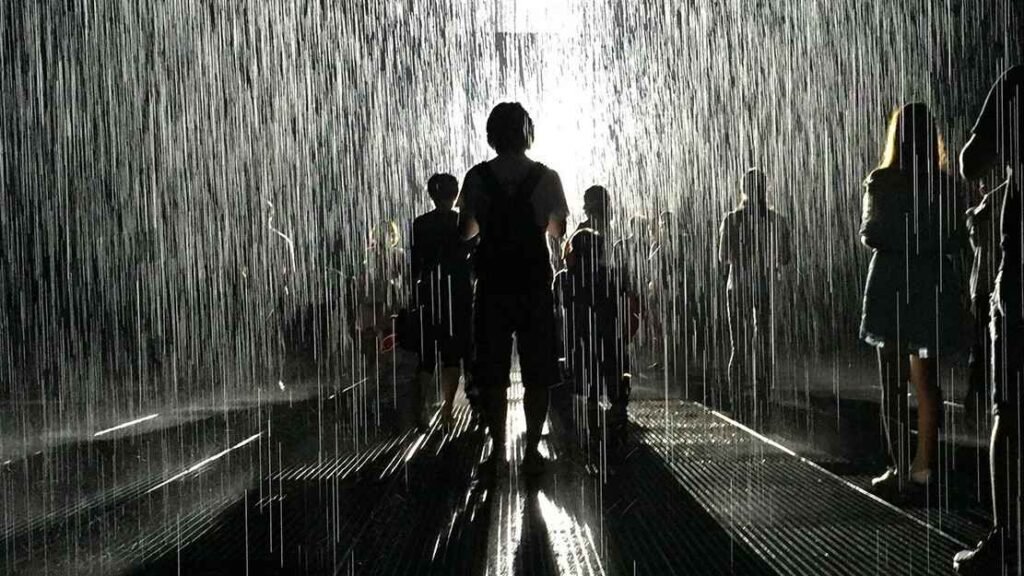
3. Rain Room
This is the Instagram spot. You walk into a dark room and it’s raining everywhere. But sensors track where you are and stop the water right above you. So you’re standing in rain but you’re totally dry. It messes with your head in a good way.
Only seven people go in at a time. Adults pay about 25 dirhams, students less, kids under five are free. Walk slowly though. If you rush the sensors can’t keep up and you’ll get soaked. Weekends fill up quick so book ahead on the Sharjah Art Foundation site.
4. House of Wisdom
It’s a library but honestly it’s one of the nicest buildings in the whole country. Foster and Partners designed it. The roof looks like it’s floating. Out front there’s this spiral sculpture called The Scroll that everyone photographs.
It’s free to get in. Thousands of books, study areas, kids section, decent cafe. University students basically live there during exams. If you like quiet and coffee and books, this is your place.
5. Sharjah Art Museum and the Art Foundation
Also free. It’s got one of the biggest art collections in the Gulf and not many people know about it. Good Orientalist paintings, modern Arab art. Around the corner in Al Mureijah the Sharjah Art Foundation restored some old buildings. They do the Sharjah Biennial every two years and international curators come for it. Between those there’s usually something happening. The art world takes Sharjah way more seriously than tourists do.
Family Stuff and Waterfront Places
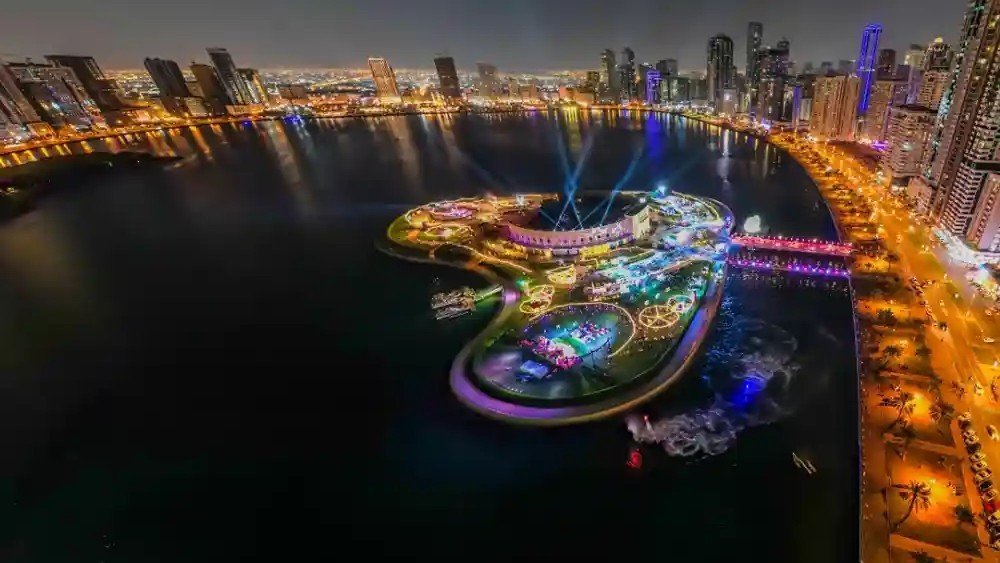
6. Al Noor Island
Small island in Khalid Lagoon. You get there over a footbridge. Gardens, art stuff scattered around, butterfly house with about 20 species. During the day it’s nice. At night the lights come on and it’s actually pretty cool.
Open till 11 PM. Adults 35 dirhams, kids 20. Extra for the butterfly house. The butterfly house closes early though so if that’s the main thing, get there before sunset.
7. Al Majaz Waterfront
This is where Sharjah families hang out on Saturday nights. Promenade around the lagoon. Mini golf, splash areas, play zones, fountain show at night. Tons of food options from shawarma stands to restaurants. Free to get in, parking’s easy. Gets busy on weekends but it’s the good kind of busy. If you’re driving around newer communities like Aljada, it’s useful to know that several areas now operate paid parking, so checking the local parking rules beforehand can help you avoid unnecessary fines.
8. Al Qasba and the Eye of the Emirates
Canal area a few minutes from Al Majaz. Cafes on the water, boat rides, the Eye of the Emirates wheel. On a clear night you see the lagoon and Dubai’s skyline glowing. Weird feeling seeing Dubai as the scenery.
Don’t go at 2 PM in August. It’s dead till sunset.
9. Sharjah Aquarium and Maritime Museum
Down in Al Khan where the fishing boats are. The aquarium’s honest about what it shows. No fancy imported stuff, just what actually lives in the Gulf. Reef sharks, rays, morays, clownfish. About 20 tanks. They weave the pearl diving history through it. Maritime Museum’s next door and comes with the same ticket. Spend the extra time there. The old dhows are worth it.
About 25 dirhams for adults. Go on a weekday morning if you can. Kids love standing at the tanks and it’s less crowded.
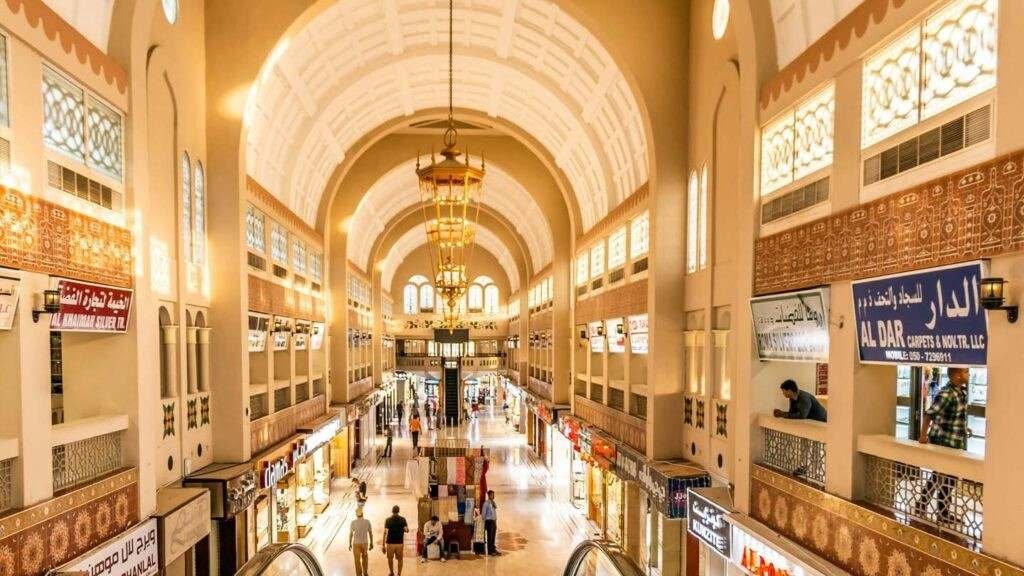
10. Blue Souk
The blue tiled building. You’ve seen it on postcards. Ground floor is gold and jewelry. Upstairs is the fun part – carpets, pashminas, antiques, old coins. Shopkeepers expect you to negotiate. Offer half, look unsure, let them talk you up. Everyone knows how it works. Open late so combine it with an evening walk around the lagoon.
11. Al Noor Mosque
Ottoman style mosque on Khalid Lagoon. Looks beautiful lit up at night. It’s the only mosque in Sharjah that does tours for non-Muslims, usually Monday mornings. The guides answer anything you ask. Dress modest, shoulders and knees covered. They give women abayas and headscarves at the entrance.
Desert Stuff
12. Mleiha National Park and Archaeological Centre
About an hour inland. You’re standing where people lived 130,000 years ago. The stuff they found in the Faya caves is some of the earliest evidence of humans outside Africa. The visitor center’s built around an actual Bronze Age tomb. They made it interesting enough that kids actually pay attention.
That’s half of it. The other half is desert fun. Dune buggies, horse rides, hiking, sunset drives to Fossil Rock. Winter’s got stargazing and overnight camps. If you’re doing one paid tour, get the combo with archaeology and desert. History first, dunes after, home by dinner.
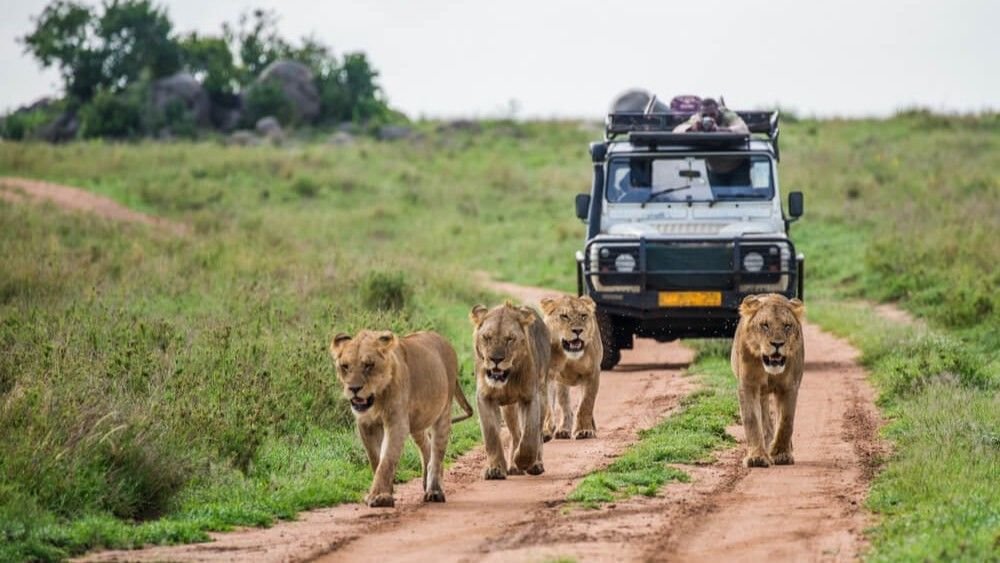
13. Sharjah Safari
Past Al Dhaid, about 40 minutes inland. Way bigger than you’d think. Open reserves with giraffes, rhinos, antelope, big cats. Basic entry around 40 dirhams. Pricier options put you in a safari truck for close-up viewing. With kids the extra cost is worth it.
If you’re planning to spend more time there, it’s worth checking the different safari experiences, ticket options, and the best times to visit before you go. Go in the morning. By noon the animals are napping in the shade and you’re just looking at empty desert.
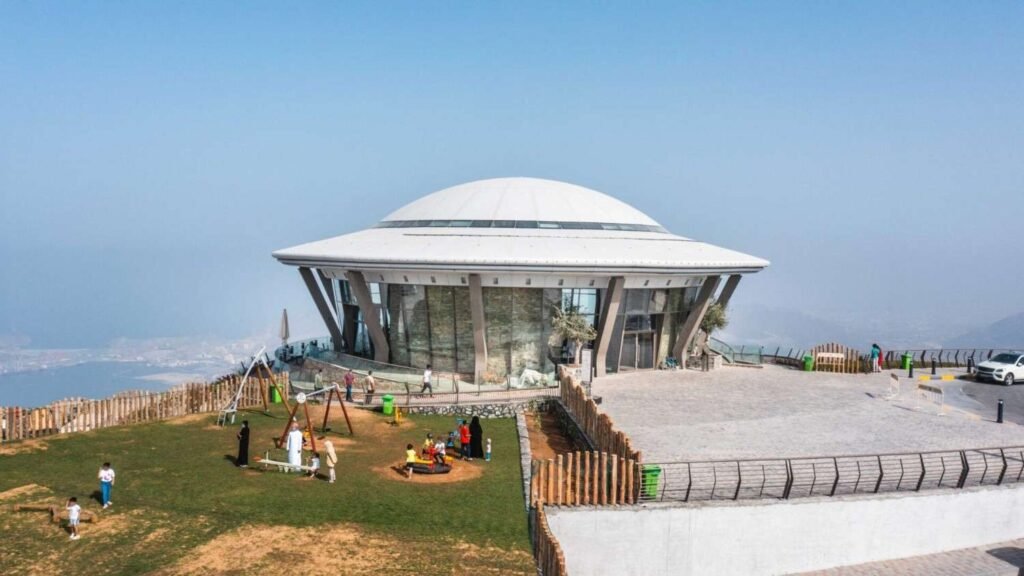
14. Buhais Geology Park
On the Mleiha road at the base of Jebel Buhais. Pod-shaped buildings. The story is this whole desert used to be the ocean floor and the rocks have marine fossils from 65 million years ago. Small, interesting, never crowded. Don’t plan a whole day around it but throw it in if you’re doing Mleiha.
East Coast Stuff
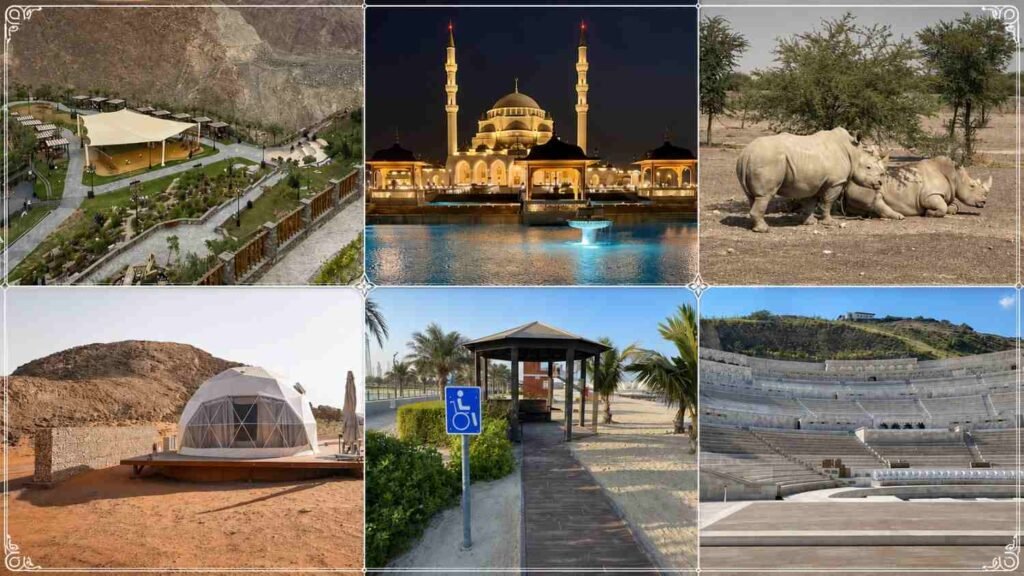
15. Khorfakkan Beach and the Waterfall
About an hour from Sharjah. The drive goes through tunnels cut into the Hajar mountains. Then the road drops and you see the Gulf of Oman. The beach has clear calm water, soft sand, plenty of space. Families grilling in the shade. The artificial waterfall by the amphitheater became the photo spot the week it opened. The bay’s actually one of the best snorkeling and diving spots in the country. Boat trips go to Shark Island.
16. Al Rafisah Dam and Al Suhub Rest House
Just before Khorfakkan. Al Rafisah Dam has green water, mountains everywhere, kayaks and pedal boats to rent, restaurant overlooking the lake. There’s a hiking trail above it, steeper than it looks from the parking lot. Wear proper shoes and start early.
Then there’s this 5.6 km road carved into the mountainside that goes up to Al Suhub Rest House at 580 meters. Locals call it the cloud lounge because on humid mornings it actually is. Cafe, kids play area, views of Khorfakkan and the coast in every direction. Sunset from up there is the best free view in the emirate.
17. Kalba Mangroves and Al Hefaiyah
South of Khorfakkan. Oldest mangroves in the UAE. At high tide you can kayak through the channels. Just you, herons, and if you’re lucky the Arabian collared kingfisher, a bird that barely exists anywhere else. Al Hefaiyah Conservation Centre nearby keeps Arabian leopards, wolves, other mountain animals in a big reserve. Between the two Kalba’s the most nature-focused day you can have in Sharjah. Also the quietest.
If you’re continuing your journey through Kalba, Hanging Garden Kalba is another worthwhile stop, offering landscaped terraces, walking trails, waterfalls, and panoramic mountain views that pair perfectly with a nature focused day.
Stuff You Should Know
When to go: November through March is best for outdoor stuff, beaches, desert. June through September stick to indoor places – museums, aquarium, House of Wisdom.
Getting there: Dubai to Sharjah usually takes 20 to 30 minutes, although weekday evenings can be much slower, especially along Al Ittihad Road. Ongoing Dubai Sharjah traffic relief projects are expected to improve travel times over the coming years.
What to wear: Dress conservative. Shoulders and knees covered in public. Swimwear’s just for the beach.
Alcohol: Sharjah doesn’t serve it. No bars, no restaurants. Plan around that.
Money: Keep cash for souqs and small museums. Everywhere else takes cards.
Museum hours: Heritage museums close midday sometimes. Go early or late afternoon.
February: The Sharjah Light Festival projects onto mosques and landmarks for about two weeks. Free to watch.
Questions People Ask
What is Sharjah famous for? It’s the Cultural Capital of the Arab World. Museums, the restored Heart of Sharjah, traditional souqs, the Rain Room, ancient sites at Mleiha, beaches around Khorfakkan.
Is Sharjah worth visiting from Dubai? Yeah. 20 to 30 minutes from Dubai, way cheaper than Dubai, totally different vibe. Half a day in the Heritage Area, Blue Souk, and Al Majaz shows you something completely different.
Which places in Sharjah are free? Al Majaz Waterfront, House of Wisdom, Sharjah Art Museum, Khorfakkan Beach, the corniche, Flag Island, Heritage Area streets. Museums charge 5 to 15 dirhams.
How many days in Sharjah? Two full days covers the main stuff. One day for city museums and waterfronts, another for Mleiha or Khorfakkan. Three days if you want to do everything without rushing.
Is Sharjah family-friendly? Yeah. Aquarium, Al Noor Island butterfly house, Sharjah Safari, Al Majaz play areas, science museums. All built with families in mind. Entry’s cheap for families.
When’s the best time to visit? November to March. Weather works for everything. February has the Light Festival. Summer works if you stick to indoor stuff.
Sheraz is a business focused professional who closely follows market trends, emerging technologies, growth opportunities, and modern lifestyle trends. He writes about business, technology, travel, food, wellness, and everyday lifestyle topics, helping readers make informed decisions through practical insights. His expertise lies in helping businesses understand changing consumer behavior, digital transformation, AI adoption, branding, and scalable marketing strategies. He believes every business decision should be backed by data, market demand, and long term sustainability.