Sharjah Property Market 2026: Local Investors Lead the Way
Emirati investors drove 50.6% of Sharjah's AED 14.9 billion property market in H1 2026, signalling strong local confidence, stable demand, and long term growth. Rising participation from women and younger buyers, alongside sustained foreign investment opportunities, makes Sharjah one of the UAE's most resilient real estate markets.
Look at the numbers from the first half of 2026 and something becomes pretty obvious. Emirati investors are the ones actually buying property in Sharjah. They’re not just dabbling either. Half of everything that trades hands in the emirate comes from local money. We’re talking about AED 14.9 billion moving around. That’s not chump change.
Around 9,655 different investors made moves in the first six months. They grabbed 22,599 properties between them. That’s a lot of activity. More importantly, it’s local activity. When you see those kinds of numbers coming from people who actually live in the place they’re investing, it tells you something about the market’s foundation.
The Local Money Story
There’s a reason locals keep throwing money at Sharjah property. The market isn’t some wild casino where people gamble on appreciation. It’s more straightforward than that. People buy homes. They buy commercial space. They hold onto it. The rules are clear, the government doesn’t mess around with sudden changes, and rental income is predictable.
Why Local Confidence Matters for Investors
Compare this to some other markets where everything depends on the next big development or foreign investor sentiment. Sharjah doesn’t work that way. The people buying are the people who have to live with their decisions. That changes how they think about risk. They’re not trying to time the market or catch a wave. They’re building wealth the old fashioned way.
If you’re looking at how to actually do business in the UAE, understanding this local confidence matters. It’s one thing to read about regulations. It’s another to see citizens putting their own capital into the market. That’s real validation.
Women Are Taking Over More Than People Realize
The gender breakdown gets interesting when you dig into it. Men still do more deals. That part’s obvious. 72 percent of transactions have a man’s name on them. But here’s what matters: women are handling 28 percent. And that number keeps climbing.
Look at ownership distribution and the picture shifts. Emirati women own 40.7 percent of the market against men’s 59.3 percent. That’s not some tiny sliver. That’s a real chunk of the market. When you look at the money changing hands, women account for 24.7 percent of transaction value.
More Women Are Driving Long Term Property Investment
The trend is what matters here. More women are buying investment properties, not just family homes. They’re not waiting for someone else to make the decision. They’re putting their own money in. That’s reshaping the market in ways people don’t always notice. More women making decisions means different priorities, different development choices, different everything.
Age Groups and Who’s Actually Buying
Younger people are getting into the market earlier than they used to. People under 35 are buying property. Men in that age bracket do 65.5 percent of the deals, women do 34.5 percent. They’re not waiting until they’re 50 to start investing.
The 36 to 53 Age Group Leads Market Activity
The 36 to 53 crowd is where most of the activity happens. That’s people with established careers, some money saved up, and a clear idea of what they want. Men handle 71.2 percent of transactions in this group, women 28.8 percent. These are the people who actually understand the market and aren’t just following trends.
Experienced Investors Continue to Shape the Market
Then there’s the older group, 54 and up. These are people who’ve been through multiple market cycles. They know what works. Men account for 77.6 percent of their demographic’s trades. They’re still moving serious capital. The fact that you’ve got all three groups active at the same time means the market isn’t dependent on one generation or one type of buyer. That’s actually pretty healthy.
What Developers Are Actually Building
When locals are the main buyers, developers have to pay attention to what locals actually want. You can’t just throw up cookie cutter units and hope someone buys them. People are going to live there. They care about the layout, the finishes, and the community.
Quality and Family Focus Are Shaping New Projects
So you see better quality construction. Developers are putting in smart home features because people want them. Communities have actual amenities because families are going to use them. It’s not just about maximizing units per square meter. It’s about building something people actually want to own.
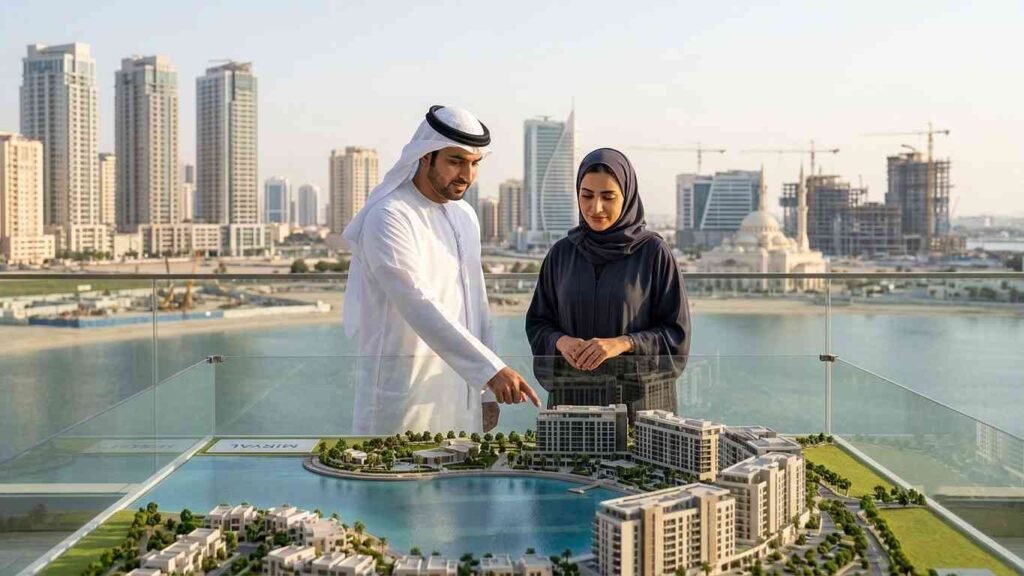
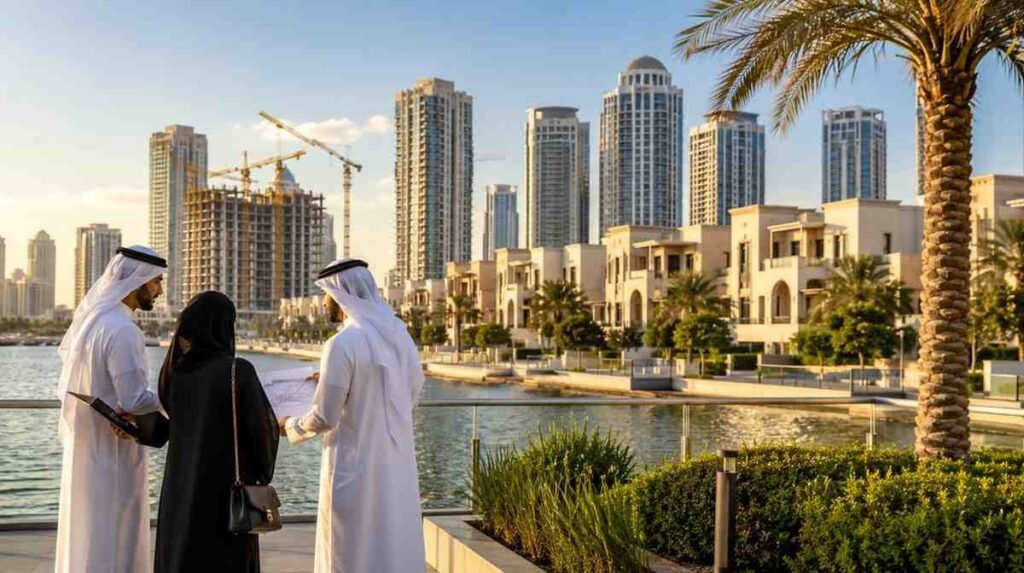
This is different from markets driven by foreign speculation or short term flipping. When the buyer is someone who’s going to live there for years, the whole development calculus changes. The waterfront homes going up in Sharjah reflect this. They’re built to last, built to appeal to families, built with actual thought behind the design.
If You’re Not Emirati and Want to Invest
Here’s the thing about foreign investors in Sharjah. The local dominance isn’t a barrier. It’s actually a good sign. It means the market isn’t built on hype or foreign money chasing returns. The fundamentals are solid because locals wouldn’t be investing otherwise.
You can absolutely buy property in Sharjah. The market is open. But knowing that locals are the primary drivers helps you make better decisions. You’re not competing against speculators trying to flip units. You’re investing in a market with real demand from people who actually know the place.
Understanding how the rental market works across the UAE gives you more context. Different emirates have different dynamics. Sharjah’s dynamic is built on local participation and long term ownership. That’s worth knowing when you’re deciding where to put your money.
What People Actually Want to Know
How much of Sharjah’s real estate market is Emirati investors? About half. In the first half of 2026, Emiratis accounted for 50.6 percent of the total trading value. They invested AED 14.9 billion. That came from roughly 9,655 different investors buying 22,599 properties.
Are women actually buying property in Sharjah? Yeah. They’re doing 28 percent of the deals. When you look at ownership, women hold 40.7 percent of the market. They’re putting 24.7 percent of the money into transactions. The numbers are growing, not shrinking.
Does it matter how old you are if you want to invest? Not really. You’ve got young people buying their first properties. Middle aged people with capital to deploy. Older investors still making moves. All age groups are in the market. That means there’s demand across different buyer types.
Why would someone choose Sharjah over other emirates? Stability. The local investor base is strong. The market doesn’t swing wildly on sentiment. You get more predictable pricing and fewer boom and bust cycles. If you want long term property investments, Sharjah’s fundamentals work.
Can foreigners actually invest in Sharjah? Completely. The market is open. The fact that locals dominate doesn’t lock out international buyers. It just means you’re investing in a market with proven demand and solid fundamentals.
How does local investor dominance affect prices? Prices reflect actual value instead of speculation. You get more stable pricing. The market moves based on real demand, not investor hype or sentiment. That’s actually what most serious investors want anyway.
Sheraz is a business focused professional who closely follows market trends, emerging technologies, growth opportunities, and modern lifestyle trends. He writes about business, technology, travel, food, wellness, and everyday lifestyle topics, helping readers make informed decisions through practical insights. His expertise lies in helping businesses understand changing consumer behavior, digital transformation, AI adoption, branding, and scalable marketing strategies. He believes every business decision should be backed by data, market demand, and long term sustainability.