Do You Need a Dehumidifier in Your UAE Home? A Complete Guide
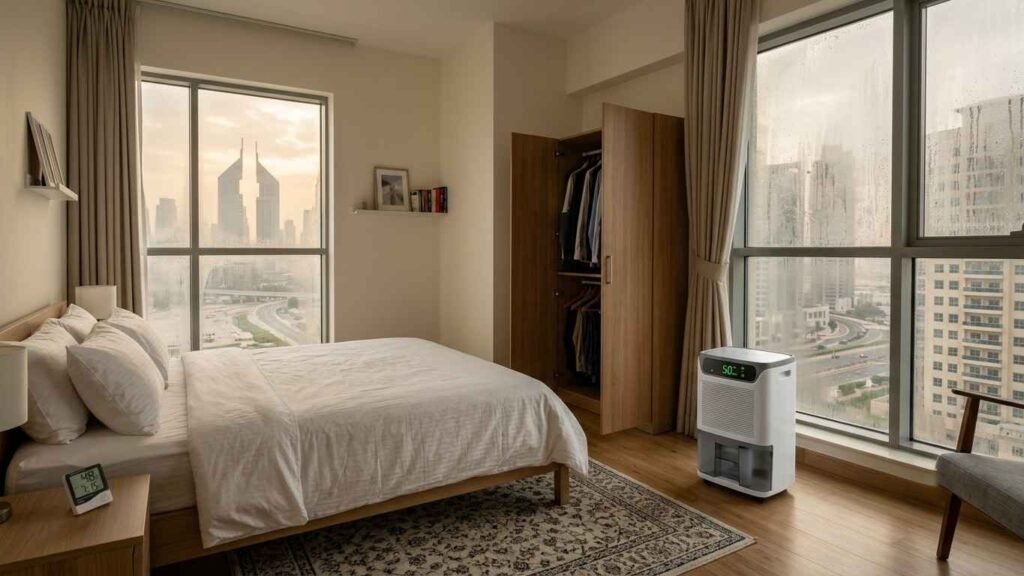
High overnight humidity in the UAE can cause mould, damp odours, condensation, allergies, and damage to clothes and furniture. If indoor humidity regularly exceeds 60%, a dehumidifier can help maintain a healthy 40 to 50% range and prevent moisture related problems.
Everyone complains about the heat here in UAE. That’s fair. But what people don’t really talk about is what happens inside your place when it gets dark. The humidity gets crazy. Like, actually crazy. You start seeing black spots in the bathroom. Your clothes won’t dry. There’s this smell, you know the one, that just hangs around and won’t go away. It’s not your AC being broken or anything. It’s just moisture. Too much of it.
What Even Is a Dehumidifier?
Basically it pulls moisture out of the air. That’s it. It sucks in the humid air, cools it so the water turns into actual water droplets, then it pushes out dry air. The water goes in a tank you empty or it drains. You can get them for like 115 dirhams on Amazon if you want a basic one. Some people spend way more but honestly the cheap ones work fine.
Dehumidifier vs Air Purifier: What’s the Difference?
People always mix these up with air purifiers which is wrong. Air purifiers clean dust. They don’t do anything about moisture. If your problem is dampness then buying an air purifier is pointless. You need something that actually removes water vapor from the air. That’s what this does.
Why Is It So Humid at Night in UAE?
OK so the humidity here is really strange. During the day when it’s 45 degrees the humidity is actually low. Like 45 percent or even 29 percent when it’s really hot. But then the sun goes down and boom it goes up to 60 percent or higher. That’s when everything gets damp.
How Night Time Humidity Leads to Mould
You don’t need it to be wet all day for mold to start. Just a few hours every night above 55 percent and you get problems. The moisture sits on cold surfaces in places where air doesn’t move. Behind your wardrobe. Bathroom corners. Places your AC never reaches. After like a few months you see damp patches.
Most people don’t know this is happening until they open their wardrobe one day and it smells like a basement. Everything’s damp. You look it up and realize oh the humidity was going crazy at night. Check what the humidity is doing in your area and you’ll probably see the same thing.
I actually noticed it over one of the long UAE public holidays when I had time to clean out the wardrobes and move some furniture. That’s when the damp smell and hidden moisture became obvious.
How to Know If You Have a Moisture Problem
You don’t need to buy anything to figure this out. Just look around. Smell is usually first. That stale damp smell that won’t go away no matter what. Open your wardrobes. Check your bathroom. If it smells like that then moisture is there for sure.
Common Signs of Too Much Humidity Indoors
Windows get condensation. You wake up and there’s water on the glass. AC units get wet on the outside. That’s moisture collecting on cold stuff. Black spots on walls and ceilings. Especially in bathrooms and corners. That’s mold. It grows where it’s damp.
Your clothes take forever to dry. Or they come out of storage smelling wet. That’s the humidity doing that. People in the house get more allergies. Sneezing more. Eyes get itchy. Harder to breathe inside. High humidity means more dust mites and mold spores. That’s what causes it.
If you want the actual number get a humidity meter. They’re cheap. Anything over 60 percent all the time means you have a real problem.
If you’re looking for something useful to do over the weekend, checking the humidity in your home and dealing with damp spots is one of those small jobs that can make a big difference, even if it doesn’t sound as exciting as other weekend activities in the UAE.
What Happens When You Get Rid of Moisture?
When you get humidity down to 40 to 50 percent mold stops growing. Dust mites can’t survive. If anyone in your family has allergies or asthma they usually feel better. You notice the difference pretty quick honestly. Your stuff doesn’t get ruined. Dampness destroys furniture and clothes over time. Wood gets damaged. Fabric gets messed up. Keeping it dry protects your stuff.
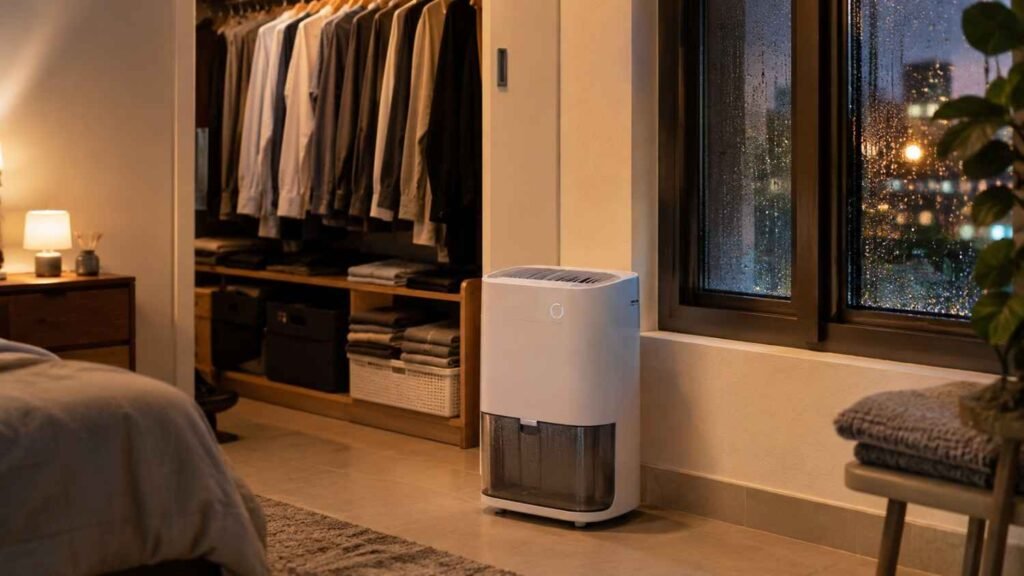
The smell goes away because you’re actually removing the moisture not just covering it up with spray. But like a dehumidifier isn’t going to fix everything. Your AC and ventilation do most of the work. Use a dehumidifier in the rooms where you’re actually seeing moisture problems. Your bathroom. That bedroom that’s always damp. Your walk-in wardrobe. It’s not going to dry out your whole house.
If you already have serious mold on the walls you need to call someone who knows what they’re doing. That’s not a dehumidifier job.
FAQ
Q: What humidity level should I aim for? A: 40 to 50 percent. Mold won’t grow. Dust mites don’t like it. Air doesn’t feel dry.
Q: Does it cool the room? A: No. It removes moisture so it feels less sticky. Sometimes that makes it feel cooler even though the temperature is the same.
Q: Can I run it at night? A: Yeah. Humidity is worst at night here. Running it while you sleep helps.
Q: How much do they cost? A: Like 115 dirhams for basic ones. Fancier ones cost more. Cheap ones work fine though.
Q: Air purifier or dehumidifier for mold? A: Dehumidifier. Air purifiers catch mold spores but don’t stop mold from growing. You need to remove moisture to prevent it.
Q: Do I need one in every room? A: No. Just use it where you’re seeing moisture problems. Bathrooms and bedrooms usually need it most.
Q: What size should I get? A: Depends on the room size. Smaller ones for bedrooms and bathrooms. Bigger rooms need something larger.
Q: How often do I empty the water? A: In summer could be every day or every other day. Some have drain hoses so you don’t have to empty anything.
Q: Will it use a lot of power? A: Not really. They’re efficient. Running one at night won’t mess with your power bill much.
Q: Portable or built-in? A: Most people use portable ones. They’re cheap and you can move them. Built-in ones are permanent but way more expensive and need professional installation.
Sheraz is a business focused professional who closely follows market trends, emerging technologies, growth opportunities, and modern lifestyle trends. He writes about business, technology, travel, food, wellness, and everyday lifestyle topics, helping readers make informed decisions through practical insights. His expertise lies in helping businesses understand changing consumer behavior, digital transformation, AI adoption, branding, and scalable marketing strategies. He believes every business decision should be backed by data, market demand, and long term sustainability.