Sharjah Fishing Program Teaches Emirati Youth Traditional Skills
Sharjah's new Fishing Training Programme helps Emirati youth learn traditional fishing skills before that knowledge is lost. Through hands-on lessons in boat preparation, sea safety, sustainable fishing, and heritage techniques, the Al Nokhadha Fishermen Preparation Programme preserves local knowledge while preparing a new generation for life at sea.
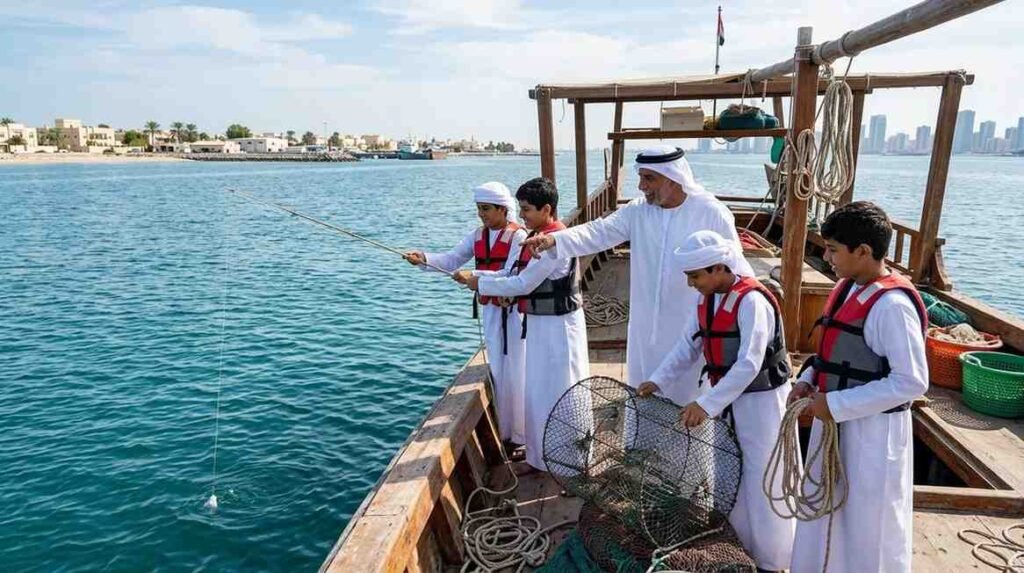
Sharjah ran its first fishing training programme for young Emiratis in July. Four days. Real boats, real weather, real fishermen teaching it. The Al Hamriyah Fishermen Cooperative Society put a group of local youth through boat prep, sea safety, and the traditional methods still used off Sharjah’s coast. Here’s what the programme covers, who it’s built for, and what happens next.
What is the Al Nokhadha Fishermen Preparation Programme
Al Nokhadha means captain of the ship. The name fits: the course teaches young Emiratis to run a fishing trip from start to finish, not just watch one. The Al Hamriyah Fishermen Cooperative Society ran the first edition from July 6 to July 9, 2026. Classroom sessions covered the rules and paperwork behind the profession. The rest happened on the water, with local fishermen supervising directly. The point of the whole thing is simple: get this knowledge into younger hands before the fishermen who hold it retire.
Who this Training is for
This is built for Emirati children and young people from the Al Hamriyah community in Sharjah. Not tourists. Not weekend hobbyists. The programme targets youth who already have some pull toward the sea but no formal way to learn the trade from someone who actually fishes for a living. Some of them may go on to fish professionally. Others just want to understand a profession that shaped where they grew up.
How the Four Day Programme Works
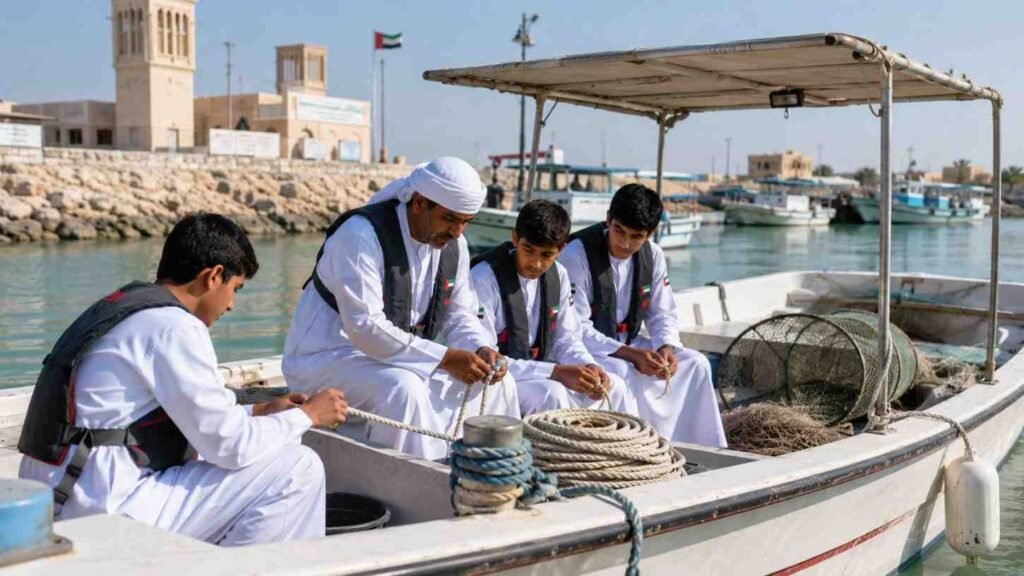
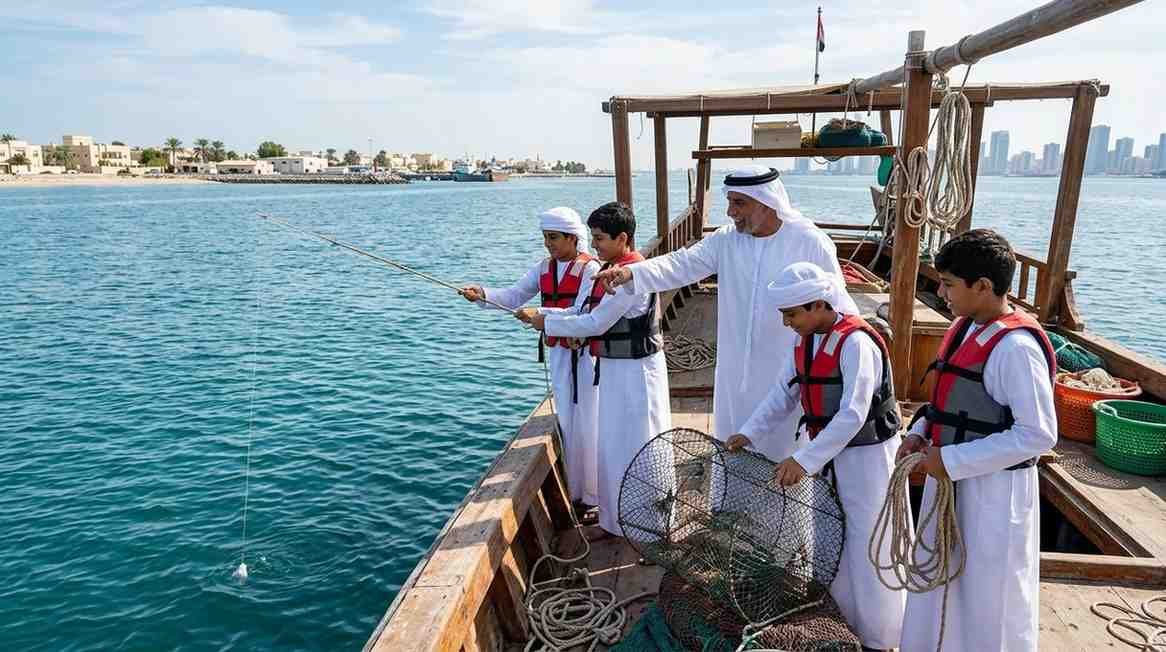
Two parts, roughly split between rules and real work. The classroom half covers regulatory procedures, the paperwork side of fishing that most people never think about until they need it. The sea half is where the actual training happens. Students prep the boat themselves, work under a fisherman’s direct supervision, and get taught traditional methods hands-on rather than watching a demonstration. That includes line fishing, gargoor trap fishing, and Al Daghwa, one of the oldest fishing methods still used in Al Hamriyah.
What Skills Participants Actually Learn
By the end of the four days, participants can expect to walk away with:
Prepping a boat before heading out
Maritime safety and emergency response at sea
Reading the weather and handling strong winds
Traditional fishing methods: line fishing, gargoor fishing, and Al Daghwa
Cooling and preserving the catch so it stays safe to eat and sell
That last skill matters more than it looks on paper. Fish loses value within hours of leaving the water. Get the handling wrong and a good catch turns into a wasted one. Anyone curious where that catch ends up can see it firsthand at Dubai’s Waterfront Market in Deira, the country’s main hub for fresh local seafood.
Why Sharjah is Investing in this Training
Jamal Majid Al Shamsi, the cooperative’s chairman, said the aim is to keep this knowledge from skipping a generation. That’s not an abstract worry here. Fishing has shaped daily life on this coast long before oil or real estate did, and most of what keeps the trade alive still sits with older fishermen rather than in any textbook. A structured programme gets that knowledge to younger fishermen while the people who hold it can still teach it directly. There’s a practical payoff too.
Preserving Traditional Fishing Knowledge for Future Generations
Fishermen trained properly tend to fish more sustainably, and that matters for a coastline the UAE has been trying to protect. Sharjah has put money and attention into heritage work elsewhere, including the archaeological research underway at the Faya Palaeolandscape.
Students said they felt more confident about the trade by the end of the four days, and the organisers called the pilot a success. That’s a modest bar for a first attempt, but it’s the right one to clear. A camp nobody wants to repeat tells you nothing about whether the idea actually works.
How to Find Out About Future Editions
The cooperative plans to run more sessions, but there’s no fixed schedule yet. This was organised locally, not through a government portal with open applications, so the safest bet is to follow the Al Hamriyah Fishermen Cooperative Society directly for updates. Other youth skills programmes are turning up across the UAE outside the standard school-to-job path, so it’s worth watching that space too, starting with the country’s approach to future-ready education. And if you’re planning a trip out to see where this all happens, Al Hamriyah sits close to some of Sharjah’s better known coastal spots.
FAQs
What is the Al Nokhadha Fishermen Preparation Programme? It’s a four day fishing training course in Sharjah that teaches young Emiratis how to prep a boat, read the weather, follow safety procedures, and fish using traditional methods under the guidance of experienced local fishermen.
Who organised the Sharjah fishing camp? The Al Hamriyah Fishermen Cooperative Society organised and ran the programme, with local fishermen supervising the practical training at sea.
How long does the fishing training programme last? The first edition ran four days, from July 6 to July 9, 2026, split between classroom instruction and hands-on training at sea.
What traditional fishing methods do participants learn? Participants learn line fishing, gargoor trap fishing, and Al Daghwa, one of the oldest and most recognised fishing methods in Al Hamriyah.
Is the fishing training programme open to non-Emiratis? The first edition was aimed at Emirati children and youth from the Al Hamriyah community. No public applications for non-Emirati participants have been announced.
When is the next edition of the programme? No official date has been set. The cooperative has said it plans to run more sessions, so following its updates directly is the best way to hear about it first.
Sheraz is a business focused professional who closely follows market trends, emerging technologies, growth opportunities, and modern lifestyle trends. He writes about business, technology, travel, food, wellness, and everyday lifestyle topics, helping readers make informed decisions through practical insights. His expertise lies in helping businesses understand changing consumer behavior, digital transformation, AI adoption, branding, and scalable marketing strategies. He believes every business decision should be backed by data, market demand, and long term sustainability.