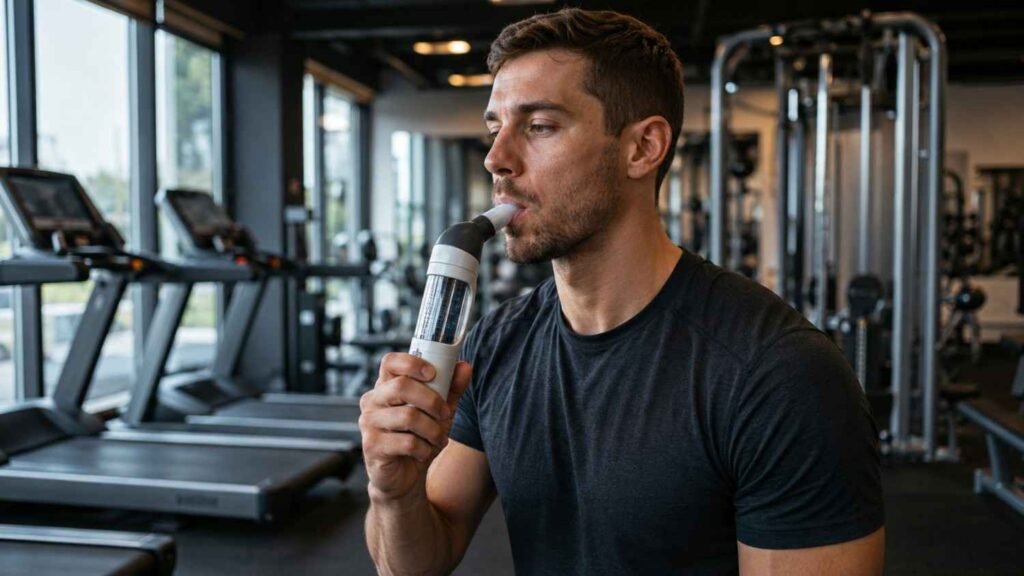
Lungsmaxxing Trend: What Really Improves Lung Capacity
The lungsmaxxing trend has gone viral, but doctors say breathing devices do not increase lung size. While they may strengthen breathing muscles, lasting improvements in stamina and endurance still come from regular exercise, proper training, and healthy lifestyle habits.
You see it constantly now. Someone’s doing breathing exercises with a handheld device, claiming they’re building bigger lungs. Their followers believe it. They buy the device. Three months later, they’re wondering why they’re not running marathons. The whole thing is based on a pretty big misunderstanding about how your body actually works.
What’s Going On With Lungsmaxxing?
These breathing devices create resistance. When you breathe in, you’re working against something. Your diaphragm has to push harder. Your intercostal muscles get a workout. It’s resistance training for your breathing muscles. Sounds logical. Stronger muscles usually mean better performance. But that logic doesn’t quite apply here.
Stronger Muscles Are Not Bigger Lungs
Your breathing muscles can definitely get stronger. That part’s legit. You can feel it too. After a few weeks of using one of these devices, breathing feels easier. Your diaphragm is more powerful. But here’s the thing nobody talks about: that’s not the same as having bigger lungs. Not even close.
What Lung Capacity Actually Means
Lung capacity is basically how much air your lungs can hold. That’s it. It’s a volume measurement. And here’s what nobody wants to hear: it’s mostly locked in by the time you’re done growing. Your age determines a lot of it. Your genetics matter. Your body size matters. Your ribcage structure matters. None of that changes because you spent 10 minutes a day breathing against resistance.
Why People Misunderstand Lung Capacity
People throw around the term “lung capacity” online like it means everything. They use it when they mean endurance. They use it when they mean breathing control. They use it when they mean cardiovascular fitness. But actual lung capacity? That’s just volume. And it doesn’t change much.
Who’s Actually Using These Things?
Swimmers sometimes use them. Freedivers definitely use them. These are sports where breath control is literally part of the game. For those athletes, there might be something there. Endurance runners occasionally mess with them too. But your typical person at the gym? The benefits are basically nothing.
Why Doctors Still Recommend Traditional Training
Doctors are pretty blunt about this. A breathing device won’t replace real training. It won’t replace having a good coach. It definitely won’t replace cardio. If you want to get better at something, you need to actually train for it. A device that makes your breathing muscles stronger doesn’t cut it.
What Research Says About Breathing Devices
The evidence just isn’t there for regular people. Weightlifters don’t see improvements. Casual gym-goers don’t see improvements. People doing general fitness don’t see improvements. The marketing says otherwise, but the actual science doesn’t back it up.
The Real Talk About Lung Size
Your lungs aren’t getting bigger. That’s the bottom line. I know people want a different answer. They want to believe there’s some hack that’ll make them better at working out. But your lung volume is what it is.
The Factors That Influence Lung Capacity
Age plays a huge role. Your lungs actually get slightly smaller as you get older. Genetics are massive. Some people are just born with bigger lungs. Body size matters too. Taller people tend to have bigger lungs. The structure of your ribcage matters. All of this is pretty much set in stone by adulthood.
How Your Body Becomes More Efficient
What does change is efficiency. Your heart gets better at pumping. Your muscles get better at using oxygen. Your body becomes more efficient at extracting oxygen from the air you breathe. You can do more work without feeling as exhausted. But your lungs? They stay roughly the same size.
Why Bigger Lungs Don’t Always Mean Better Performance
Two runners could have completely different lung sizes. One might have bigger lungs. But that doesn’t mean they’re faster. The other runner might be way more efficient. They might have better cardiovascular fitness. They might have trained smarter. Lung size is just one variable in a much bigger equation.
The Marketing Game
Companies selling these devices make wild claims. They say they’ll detoxify your lungs. They promise your oxygen levels will permanently increase. They claim you’ll transform your athletic ability in weeks. None of it holds up. It’s just marketing.
Why Quick Fixes Are So Popular
The fitness industry thrives on selling hope. Quick fixes. Easy solutions. It’s way more profitable than telling people the truth: you need to work consistently over months to see real changes. That doesn’t sell devices. So they don’t say it.
Be skeptical of anything promising rapid transformation. Be skeptical of products claiming to permanently change your body’s basic functions. If it sounds too good to be true, it probably is.
What Actually Gets Results
Cardio works. That’s the unsexy truth. Running, swimming, cycling, rowing, brisk walking. Pick something. Do it regularly. Start at a level that’s challenging but doable. Then gradually do more. More distance. More intensity. More often. That’s the formula.
Yoga and Pilates have a place. They teach breathing awareness. They help you understand your body better. They can make you more conscious of how you breathe during exercise. But they’re not magic. They’re not replacements for actual cardio. They’re supplements to a real training program.
Breathing techniques matter. Slow breathing helps. Diaphragmatic breathing helps. But again, these work best alongside real training. They’re not standalone fixes.
The boring truth is that consistency beats everything else. Three months of regular training will do more for you than any device. Six months of consistent cardio will transform your fitness level. A year of steady work will make you unrecognizable. But there’s no shortcut. There’s no device that replaces that.
For more on health and lifestyle in the UAE, check out DigiFlow’s Lifestyle section. You can read about UAE culture or the plastic bag ban.
Frequently Asked Questions
What exactly is lungsmaxxing? It’s a trend where people use breathing devices and do breathing exercises thinking they’ll build bigger lungs and better endurance. The reality is way less exciting.
Do these breathing devices actually work? They can strengthen your breathing muscles. That’s real. But they don’t make your lungs physically bigger. They don’t permanently boost your oxygen levels. For most people, the actual benefits are pretty minimal.
Who might actually get something out of these devices? Swimmers and freedivers might see some benefit since breath control is central to those sports. Endurance athletes could see small improvements. But for regular gym-goers? Don’t expect much.
How do you actually build better stamina? Consistent cardio. Running, swimming, cycling, rowing. Start where you are. Push yourself gradually. That’s it. That’s the whole thing.
Does yoga help with breathing? Yeah, yoga and Pilates teach better breathing awareness. They’re useful as part of a bigger training program. Just don’t think they’ll replace actual cardio.
Are these products dangerous? Not really. They’re just not effective. The main problem is wasting money on something that won’t do what it promises.
How long until you see actual results? A few weeks if you’re consistent with real training. Noticeable improvements take months. But it’s worth it.
Should I buy a breathing device or just exercise? Exercise. Every time. If you have to choose, pick exercise. A breathing device might help a tiny bit if you’re already training hard. But it’s not a substitute.
Disclaimer: This article is intended for informational and educational purposes only and should not be considered medical advice. Breathing exercises, fitness routines, and respiratory training devices may affect people differently. Always consult a qualified healthcare professional before beginning a new exercise program or using any breathing device, especially if you have asthma, heart disease, or another underlying health condition.
Sheraz is a business focused professional who closely follows market trends, emerging technologies, growth opportunities, and modern lifestyle trends. He writes about business, technology, travel, food, wellness, and everyday lifestyle topics, helping readers make informed decisions through practical insights. His expertise lies in helping businesses understand changing consumer behavior, digital transformation, AI adoption, branding, and scalable marketing strategies. He believes every business decision should be backed by data, market demand, and long term sustainability.