How the UAE is Turning Desalination Waste Into Valuable Minerals
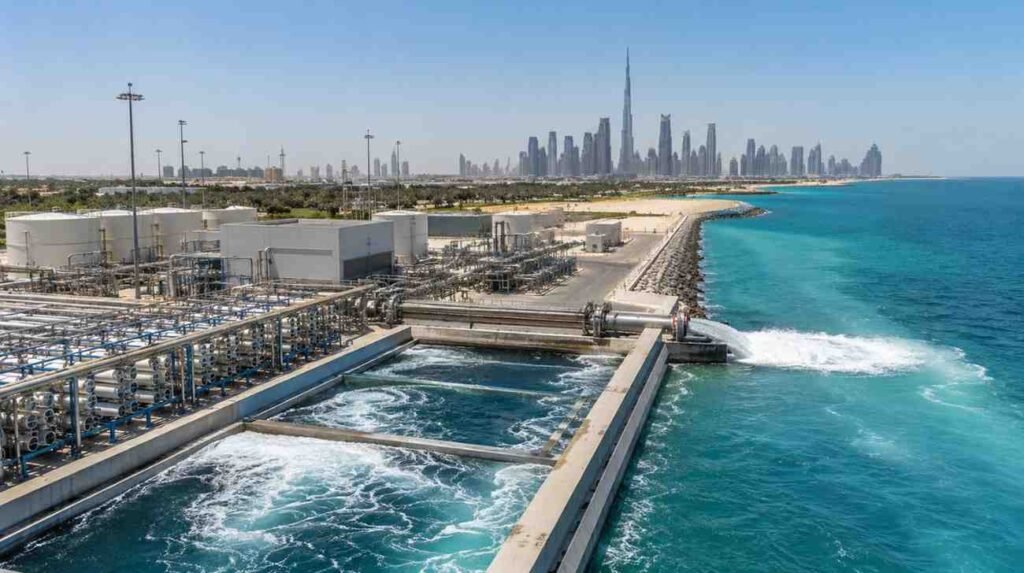
The UAE is transforming desalination brine from an environmental burden into a valuable resource by extracting minerals such as magnesium and lithium. This approach reduces marine pollution, strengthens local supply chains, supports the circular economy, and creates new opportunities for sustainable industrial growth.
Desalination plants across the UAE have been operating for decades. Every single day, they process massive volumes of seawater. The fresh water gets distributed. Everything else? It used to just go back into the ocean. Nobody questioned it much. But lately, people started paying attention to what’s actually in that leftover brine. Turns out it’s worth money.
Understanding Brine and Why It Matters
When seawater goes through desalination, you end up with two things. One is drinking water. The other is concentrated saltwater called brine. This isn’t just slightly salty. It’s heavily concentrated. The salinity levels are way higher than regular seawater. Temperature-wise, it’s also elevated because of the desalination process itself.
The Environmental Cost of Brine Disposal
For years, plants discharged this directly back into the sea. The environmental impact was significant. Marine organisms struggle with the sudden salinity changes. Corals are particularly vulnerable. Fish populations get disrupted. The localized ecosystems around discharge points suffer real damage. In a region like the UAE where water security depends entirely on desalination, this was an accepted trade-off. But acceptance doesn’t mean it’s ideal.
The Mineral Content Nobody Was Using
Brine contains dissolved minerals. Lots of them. Magnesium, calcium, potassium, lithium, bromine, strontium. These aren’t trace amounts either. The concentrations are substantial. Industrial sectors need these materials. Pharmaceutical companies, agricultural operations, manufacturing facilities. They all source these minerals from somewhere. Usually through mining or imports.
Why Extracting Minerals Is So Challenging
The challenge was extraction. Getting these minerals out of brine requires specific technology and processes. It’s not straightforward. Different minerals need different approaches. But researchers started tackling this problem seriously. The economics began to make sense. If you could extract minerals efficiently, you’d have a revenue stream. You’d also reduce environmental damage. That’s a compelling combination.
What Gets Produced From Brine Minerals
Magnesium extraction is the primary focus currently. It’s versatile and valuable. Here’s what researchers are producing:
Beyond magnesium, other minerals have their own markets. Calcium works in construction materials and chemical processes. Lithium is critical for battery technology and electronics. Potassium serves agricultural needs. Bromine has pharmaceutical and chemical applications. The point is straightforward. These materials have commercial value. Brine is essentially a source of raw materials that’s been treated as waste.
Who Benefits From This Development
Manufacturing companies gain access to locally sourced materials. That reduces import costs and supply chain complexity. Agricultural operations get fertilizers without expensive shipping. Water treatment facilities access needed chemicals. Pharmaceutical manufacturers source ingredients. All of these industries currently depend on traditional mining or international suppliers. Local brine-based mineral recovery changes that equation.
Sustainability Benefits Beyond Mineral Recovery
There’s also the sustainability angle. Companies increasingly face pressure to demonstrate environmental responsibility. Sourcing materials from brine recovery instead of destructive mining operations looks better. It appeals to environmentally conscious clients. It attracts investors who care about ESG metrics. It aligns with regulatory trends favoring sustainable practices. This broader shift is one reason the UAE continues to strengthen its environmental performance initiatives, focusing on cleaner industries, resource efficiency, and long term sustainability goals.
The Circular Economy Framework
Circular economy thinking means materials stay in use rather than becoming waste. Traditional linear models take resources, use them once, dispose of them. Circular approaches find ways to keep materials cycling through systems. Brine mineral recovery exemplifies this. One process generates brine as a byproduct. Another process uses that brine as raw material input. The waste stream becomes a resource stream.
How the UAE Applies Circular Economy Principles
The UAE has been implementing circular economy principles across multiple sectors. Transportation infrastructure incorporates electric vehicles. Water management systems prioritize efficiency and recovery. Development projects incorporate sustainability considerations. The mineral recovery initiative fits naturally into this broader framework. When you examine how Dubai’s economy grows through tourism and investments, you see that sustainable practices and economic growth reinforce each other rather than compete.
Marine Restoration Through Innovation
Research teams are exploring additional applications. They’re investigating whether materials derived from brine processing could support coral reef restoration. The concept involves 3D printing structures designed to facilitate coral growth. These structures would be manufactured from sustainable materials, potentially including brine-derived components.
This represents a shift in environmental thinking. Rather than just preventing further damage, scientists are actively working on ecosystem restoration. The technology remains experimental. Success isn’t guaranteed. But the potential exists. If viable, it could establish new approaches to marine conservation and habitat recovery.
Current Status and Future Trajectory
The technology isn’t fully mature yet. Scaling remains a challenge. Economic viability at larger scales requires further development. But the direction is clear. The UAE has consistently demonstrated willingness to invest in solutions that address resource challenges while creating economic opportunities. Water scarcity drove desalination development. The UAE has spent years experimenting with different solutions to strengthen water security, from desalination projects to cloud seeding programmes designed to increase rainfall. Desalination created the brine problem, and mineral recovery is now helping solve it. It’s a logical progression.
Related developments are already underway. Monitoring systems track water quality and marine conditions more precisely. Transportation networks increasingly incorporate green technologies. Research funding continues expanding. The mineral recovery initiative represents one component of a comprehensive sustainability strategy that also drives economic development.
Within the next several years, expect to see expanded implementation. Some desalination plants will develop in-house mineral recovery capabilities. Others will partner with specialized companies. The technology will improve. Costs will decrease. Profitability will increase. What’s currently experimental will become operational.
Frequently Asked Questions
What makes brine problematic for marine environments? The salinity concentration is significantly higher than normal seawater. Temperature elevation compounds the problem. Marine organisms can’t adapt to these sudden changes. Ecosystems suffer disruption.
How do researchers separate minerals from brine? Different extraction methods work for different minerals. The process involves specialized separation technologies. Chemistry varies depending on target mineral.
Is brine-derived magnesium equivalent to mined magnesium? Chemically identical. Source doesn’t affect product quality or performance.
Could this approach work in other regions? Yes. Any location operating desalination plants faces identical challenges. The technology adapts to different contexts and scales.
What’s the realistic timeline for widespread adoption? Five to ten years seems reasonable. Pilot projects are running now. As technology matures and costs decline, broader implementation will follow.
Which other minerals can be recovered from brine? Calcium, lithium, potassium, bromine, strontium. Each presents different extraction challenges and market opportunities.
Does mineral recovery increase desalination costs? Initially, yes. Additional equipment and processes require investment. As efficiency improves, recovered mineral sales offset expenses. Some operations may eventually generate profit from mineral sales alone.
How does this support UAE’s broader sustainability objectives? Reduces waste streams, creates local resource availability, protects marine ecosystems, strengthens circular economy development. Multiple objectives align simultaneously.
Sheraz is a business focused professional who closely follows market trends, emerging technologies, growth opportunities, and modern lifestyle trends. He writes about business, technology, travel, food, wellness, and everyday lifestyle topics, helping readers make informed decisions through practical insights. His expertise lies in helping businesses understand changing consumer behavior, digital transformation, AI adoption, branding, and scalable marketing strategies. He believes every business decision should be backed by data, market demand, and long term sustainability.