Emirati Genome Project: Abu Dhabi is Building a Biotech Powerhouse
Abu Dhabi's Emirati Genome Project has sequenced more than 900,000 genomes to address gaps in Arab focused medical research, enabling precision medicine, supporting CRISPR therapies, expanding local expertise, strengthening biotechnology infrastructure, and reducing dependence on imported treatments while supporting long term economic growth.
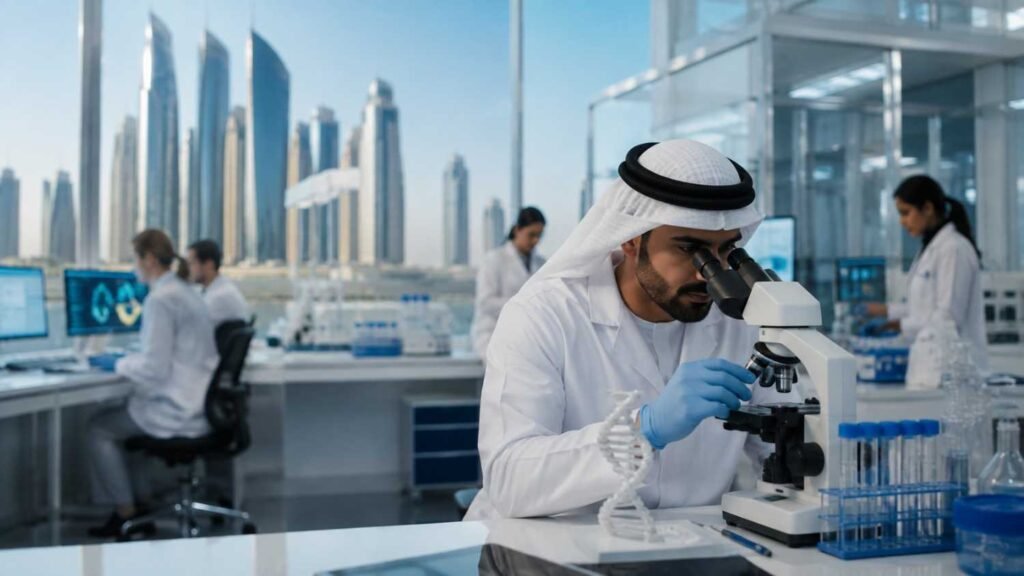
Abu Dhabi’s making waves in biotech. Not just throwing money at hospitals anymore. They’re actually doing something different. The Emirati Genome Project is kind of the centerpiece of this whole thing. Over 900,000 genomes sequenced so far. That’s a ton of genetic data from actual people living here. And now they’re running trials with gene editing. Real CRISPR treatments. The kind of stuff that seemed impossible ten years ago. By 2045, they want a $26 billion biotech industry. Sounds wild, but they’re actually building it.
Who Needs This Stuff?
People with genetic diseases, obviously. But we should talk about which ones. Persistent chylomicronemia is one. Sickle cell. Beta-thalassemia. These aren’t small problems. Pancreatitis attacks. Constant pain. Blood transfusions every few weeks. These people need better options. Gene therapy could actually help them.
Here’s something most people miss though. Arab people haven’t been part of most medical research. Most drug trials happen in Western countries. Most studies use Western populations. So treatments get designed for Western genetics. That doesn’t work as well for everyone else. The Emirati Genome Project changes that. You’ve got 900,000 people’s genetic info from the actual region. Doctors can build treatments that work for these specific genetics. It’s a big deal.
Researchers obviously benefit. They get real data from the population they’re studying. Companies see opportunity. Investors get interested. More jobs appear. The whole region benefits.
How This Gene Editing Thing Works
Old gene therapy was messy. Take cells out of the patient. Edit them in a lab somewhere. Put them back after chemo. Multiple steps. Lots of time. Lots of risk.
New approach is different. Gene editing tools go straight into the body. They travel to the bone marrow. Editing happens inside the patient’s cells. No removal. No lab. No delays. Still experimental. Still needs regulatory approval. But it’s way simpler.
The UAE has been steadily investing in connected healthcare technologies for years, so this move feels less like an isolated experiment and more like part of a larger transition toward advanced healthcare technologies in the UAE, where real time monitoring, precision medicine, and data driven treatment are becoming increasingly common.
Mammoth Biosciences came up with this. Jennifer Doudna started the company. She got the Nobel Prize in Chemistry in 2020 for CRISPR research. Their tech uses smaller editing tools. Smaller means you can get them to places older systems couldn’t reach. Opens up new possibilities.
Training Doctors Here Instead of Importing Them
M42 and Mammoth aren’t just running trials and leaving. They’re teaching local doctors. That’s the plan. International experts come to Abu Dhabi at first to train local clinicians. They teach how to give these therapies. How to watch for problems. The goal is to build expertise inside the UAE system. You can’t keep flying in specialists every time someone needs treatment. Costs too much. Doesn’t scale. Training people locally means the knowledge stays. Capability builds up. Abu Dhabi becomes independent.
Finding the Right Patients
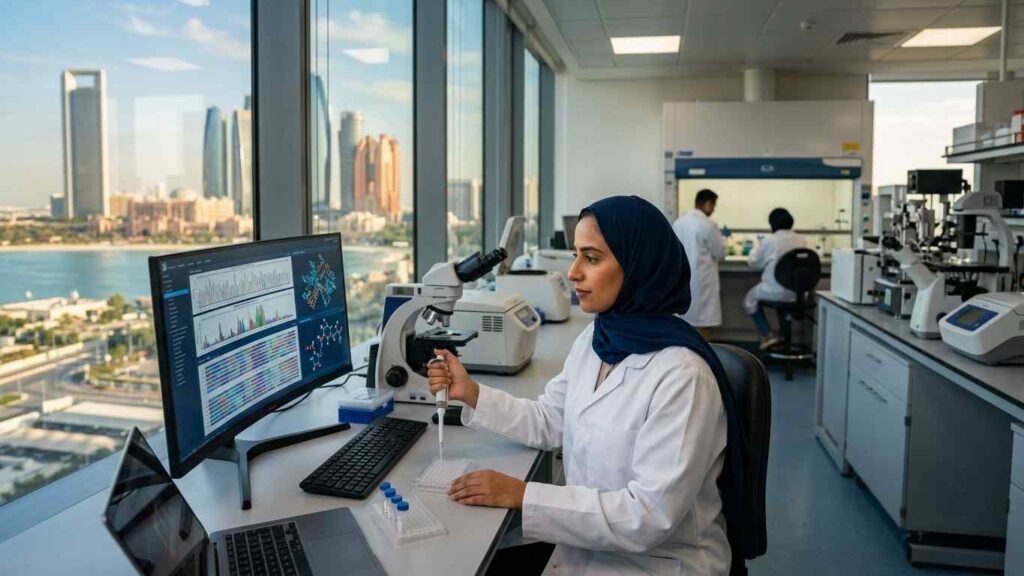
The genome database lets researchers find who might benefit. They search for specific genetic mutations. For persistent chylomicronemia, they look for the mutation that causes the inherited kind. They can compare that with people whose condition came from other stuff. Diet. Other diseases. Medications. That comparison helps figure out what’s genetic and what’s not.
This is already happening with other conditions. M42 started the UAE’s first genomics trial for Alzheimer’s prevention in June. They find people at higher genetic risk before they get sick. Those people get tested, counseled, and can join a treatment study.
The Biobank
Abu Dhabi also has a biobank. 100,000 cord blood samples. Five million other biological samples. These aren’t just stored. They’re connected to genetic data. Lifestyle stuff. Medical records. Researchers can see patterns. How diseases develop. How people respond to drugs. What lifestyle matters. Anyone following the UAE’s technology sector has probably noticed how quickly healthcare institutions are adopting advanced data systems. The same emphasis on responsible data management can also be seen in broader initiatives surrounding AI governance across the country, particularly in discussions about AI driven healthcare data management.
Shared Labs That Don’t Break the Bank
Biotech startups are expensive to launch. Equipment costs a fortune. Facilities need to meet safety rules. Regulatory stuff takes forever. Biosphere Labs helps. It’s a shared space at Masdar City. Companies rent lab space instead of building their own. They get equipment. They get support. They don’t hire people just to run the lab. Time to launch drops way down. Instead of a year or more, you’re looking at weeks. Anyone who has spent time watching Abu Dhabi’s development strategy unfold will recognise the same pattern here. The government has been investing heavily in artificial intelligence, automation, research, and infrastructure, creating what many now describe as Abu Dhabi’s wider technology ecosystem.
That matters. It’s the difference between an idea staying theoretical or actually starting. There’s also a HELM shared lab with 36 workbenches, offices, and spaces for safe biological work.
Tax Breaks and Money
The UAE started an R&D Tax Incentives Programme in March. Companies doing research get tax credits. Up to 50 percent on research spending. That’s real cash. For a biotech company spending millions on research, that’s huge. Changes the math. The government wants biotech companies here. These incentives help make that happen.
What’s Missing
Manufacturing. That’s the gap. Abu Dhabi has genomics. Has research. Has healthcare. But making treatments and research materials locally? Not really there yet. Most stuff gets made overseas. Money leaves. Supply chains are fragile. If something breaks internationally, the UAE gets hurt. Masdar City is working on it. Building manufacturing and cold storage capacity. M42 and Mammoth plan to make lipid nanoparticles locally. Those carry gene editing treatments into the body. It’s a start. More manufacturing could happen later, but no timeline.
Getting Workers
The sector needs people. Scientists. Lab technicians. Doctors trained in this stuff. Abu Dhabi uses long term visas and international hiring to get talent. Universities like Khalifa and Mohamed bin Zayed are training local researchers and tech workers. Takes time to build a workforce. But they’re investing now.
What Happens Next
The Emirati Genome Project is shifting how the region does healthcare. Instead of copying research from somewhere else, Abu Dhabi’s building its own thing. Patients get treatments made for their genetics. Researchers have real data. Companies run smoothly. Jobs get created. Economy grows. Government says the biotech sector could add 94 billion AED to Abu Dhabi’s GDP by 2045. Could bring in 42 billion AED in investment. Could create 30,000 jobs. Those are estimates. Not promises. But they show how big this could be.
Frequently Asked Questions
What’s the Emirati Genome Project? Abu Dhabi sequenced over 900,000 genomes. The idea is to have genetic info from the local Arab population, which hasn’t been studied much in global research. This lets doctors make treatments that actually work for these people.
How’s the new CRISPR different from older gene therapy? Old way: take cells out, edit them in a lab, put them back. New way: gene editing tools go straight into the body and edit cells where they are. Simpler. Faster. Fewer steps.
Why train local doctors instead of bringing in specialists? Builds expertise that stays in the region. Reduces costs long term. Makes the system independent. You can’t keep flying in experts every time you need to treat someone.
What does the Abu Dhabi Biobank store? 100,000 cord blood samples and five million other biological samples. Connected to genetic data, lifestyle info, and medical records. Researchers use this to understand disease and treatment responses in this population.
How do shared labs help startups? Startups rent space instead of building labs. They get expensive equipment and support. Cuts launch time from over a year to weeks. Reduces upfront costs massively.
What’s the main problem for biotech in Abu Dhabi? Manufacturing. Most treatments get made overseas. Money leaves the region. Supply chains are vulnerable. They’re working on local manufacturing but it’s not ready yet.
How does the government help biotech companies? Tax credits up to 50 percent on research spending. Shared lab space at lower costs. International recruitment for talent. Universities training local researchers.
Which diseases are they treating first? Persistent chylomicronemia is first. Rare inherited condition with very high blood fat and pancreatitis risk. Also planning treatments for sickle cell and beta-thalassemia, which are more common here.
When can patients actually get these treatments? First trial should start before end of 2026. But gene therapies take years through trials and approval. Patients probably won’t get access for several years.
How does biotech fit into Abu Dhabi’s bigger plan? They’re moving away from oil. Biotech is part of that. Could add 94 billion AED to GDP by 2045. Could attract 42 billion AED in investment. Could create 30,000 jobs. Long term economic strategy.
Is the Emirati Genome Project only for rare diseases? No. They’re using it for lots of conditions. Alzheimer’s prevention trials started in June. They’re identifying people at genetic risk before symptoms show up. Could eventually help with many diseases.
How many people have been sequenced so far? Over 900,000 genomes. That’s a lot of data from the local population. Enough to find patterns and identify people for specific treatments.
Can people outside the UAE use this research? The research is happening in Abu Dhabi but the findings could help Arab populations elsewhere. The genetic data is specific to this region but similar populations might benefit from the discoveries.
What’s the timeline for the biotech sector growth? Government is targeting 2045 for the $26 billion goal. That’s about 20 years away. They’re building infrastructure now. Trials starting soon. It’s a long term play.
Disclaimer
This article is provided for informational purposes only and should not be considered medical, legal, financial, or investment advice. Information regarding biotechnology, genomics, clinical research, and economic forecasts is based on publicly available sources available at the time of writing and may change over time. Readers should consult qualified professionals before making healthcare, investment, or business decisions.
With more than 15 years of experience in digital marketing, Abdul Raheem has helped businesses across different industries grow their online presence, increase visibility, and achieve measurable business goals. Abdul has been actively focused on evolving search technologies including GEO (Generative Engine Optimization), AEO (Answer Engine Optimization), AIO (AI Optimization), and AI driven search experiences.