Is Saudi Arabia's Economy Really Growing Stronger in 2026?
Standard Chartered expects Saudi Arabia's economy to strengthen in the second half of 2026, supported by resilient consumer spending, easing inflation, improving employment, and continued investment. With oil exports recovering as regional tensions ease, stronger domestic demand and diversification efforts are expected to boost business and investment confidence.
Standard Chartered dropped its mid-year Saudi research note in July, and the short version is this: the bank thinks Q3 will be better than H1. Not by miracles. By the boring stuff that actually matters, like people buying things, businesses hiring, and inflation cooling off enough for households to breathe.
I’ve read a lot of these bank notes. Most of them hedge everything into meaninglessness. This one hedges less than usual (which, honestly, is the interesting part). Take that as either interesting or as a warning sign, depending on your priors.
Here’s what the numbers say, what the bank’s regional CEO is willing to put his name to, and why the Strait of Hormuz situation deserves more attention than it’s getting in the Riyadh business press.
Why Saudi Arabia’s Economy Is Gaining Momentum Right Now
Start with what people actually spent. Point-of-sale transactions in May 2026 came in six percent higher than the same month last year. They also climbed back to January 2026 levels. That matters because Q1 was a strong quarter, and getting back there after the usual seasonal dip is a quiet signal that gets missed if you’re only watching oil headlines. Nobody talks about this enough.
Domestic demand didn’t collapse during the regional turbulence earlier this year. That’s the story. Everyone expected a bigger wobble given what was happening across the Gulf, and it didn’t come. Households kept spending. Businesses kept operating. The non-oil side of the economy did its job.
The regional picture is easing now. Standard Chartered’s read is that the pressure valve has been released just as the domestic engine was already ticking along fine. So H2 gets a tailwind instead of a headwind.
What the Standard Chartered Forecast Actually Says
The bank sees three specific things pushing Q3 activity higher.
Growth Driver
What It Does
Continued investment
Pushes money into infrastructure, tech, and non-oil businesses
Easing inflation
Gives families more buying power and helps businesses plan
Improving labor market
Creates jobs, which leads directly to more local spending
None of these are exotic. They’re the standard components of a growing consumer economy. What makes the note worth reading is that all three are moving in the same direction at once, and that combination is rare.
Here’s Mazen Bunyan, who runs Saudi Arabia coverage for Standard Chartered, on the record:
“Saudi Arabia’s economy has continued to demonstrate resilience through a period of heightened regional uncertainty, reflecting the strength of domestic demand and the progress of the Kingdom’s diversification agenda. As regional conditions continue to improve, we expect this resilience to translate into stronger business momentum, creating further opportunities for investment and private sector growth during the second half of the year.”
Read that carefully. He’s not selling a boom. He’s saying the base held during the hard part, and now the easier part is starting. If you’ve been in this market long enough, you know that’s a more useful call than a bullish one.
How the Strait of Hormuz Situation Changed the Trade Picture
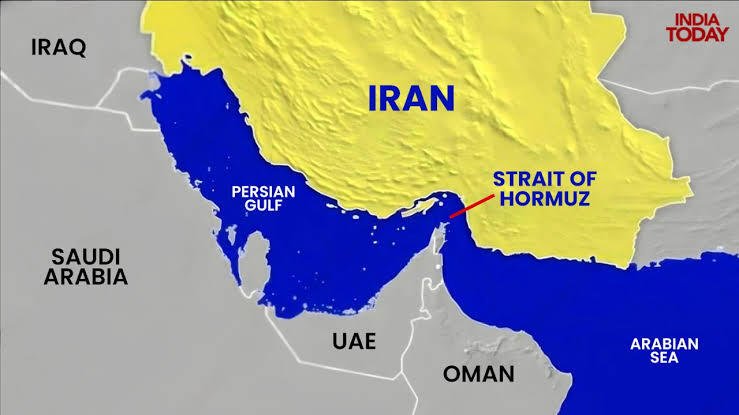
The partial reopening of the Strait of Hormuz is the piece most retail commentary is ignoring. Saudi oil exports have recovered close to full capacity as a result. That’s not a minor line item.
Look, the Kingdom has been talking about diversification for a decade, and progress is real. But oil revenue still funds a large chunk of the state’s spending, and state spending still funds a large chunk of the projects that create the private-sector jobs the labor market data is celebrating (not ideal, but that’s the reality). So when export flows normalize, the whole chain feels it, from the sovereign fund’s project pipeline down to the guy running a subcontracting firm in Dammam.
The regional risk premium isn’t gone. Anyone telling you otherwise is selling something. But the acute phase seems to have passed, and the export numbers back that up, at least so far.
Who This Growth Actually Benefits
Private sector operators in construction, retail, logistics, and financial services get the most direct lift from the setup Standard Chartered describes. Add investment flow to consumer spending and a functioning export sector, and you’ve got the playing field these businesses need.
Foreign investors weighing Saudi allocations get a data point they can actually use. The bank’s argument is that domestic demand proved sturdy under pressure, and for anyone doing due diligence that’s worth more than a dozen forecast upgrades issued in calm conditions. You learn about an economy from how it behaves during stress, not during victory laps. That’s the part that gets lost in the headline.
Saudi households benefit through the inflation and jobs channels. Cooling prices and a hiring labor market let middle-class families upgrade cars, book holidays, and pay for the private schools. That spending then loops back into the POS transaction data everyone’s watching.
The state benefits too, because every one of these threads reinforces the Vision 2030 story it’s been telling investors and citizens since 2016. Growth from non-oil sources during a regional shock is exactly the proof point the diversification agenda needs.
What This Means If You Are Watching Saudi Arabia
If you’re an investor, the signal isn’t “buy Saudi.” The signal is that the risk-reward has shifted slightly. Domestic consumption is holding, the regional overhang is lifting, and a major bank is willing to put its name on a stronger Q3 call. Do your own work on sectors, but the macro backdrop looks friendlier than it did in April.
If you’re running a business in the region, ask yourself whether you have capacity ready for the Q3 uptick Standard Chartered is forecasting. Because if the bank is right, the operators who were hiring and stocking during the quiet period will eat the ones who were waiting for certainty.
If you’re just watching, keep an eye on the POS transaction series and the monthly PMI (worth keeping an eye on). Those two numbers will tell you within weeks whether the H2 story is actually playing out or whether it’s another forecast that didn’t survive contact with reality.
I’m cautiously persuaded. Not because I trust bank research notes, but because the underlying data agrees with the narrative for once. And that’s rarer than you’d think…
Frequently Asked Questions
What is the Saudi Arabia economic growth forecast for 2026?
Standard Chartered’s July 2026 research expects stronger business activity in Q3 2026, driven by continued investment, easing inflation, and an improving labor market. The bank frames H2 as stronger than H1, with domestic demand carrying the base and regional conditions providing the additional lift.
Why is the Saudi economy growing despite regional uncertainty?
Honestly, domestic demand just held up better than most people expected. Point-of-sale transactions rose six percent year-on-year in May 2026, showing consumers kept spending through the harder months. The diversification agenda meant the economy wasn’t entirely dependent on export flows during the disruption.
How does the Strait of Hormuz affect Saudi Arabia’s economy?
The Strait is the primary route for Saudi oil exports. Its partial reopening allowed Saudi oil exports to recover close to full capacity, restoring a major revenue channel for the state and, indirectly, for the private sector projects it funds.
What sectors are driving Saudi Arabia’s economic diversification?
Investment continues to flow into infrastructure, technology, and non-oil businesses. Retail spending, financial services, logistics, and construction all benefit from the mix of state investment and rising consumer activity.
Is Saudi Arabia a good market for investment in 2026?
Good question, and the answer is more nuanced than it looks. Standard Chartered’s view is that steady domestic demand plus investment plus improving regional conditions positions the Kingdom as a leading growth market and creates further opportunities for private sector growth in H2. Any specific investment decision needs its own due diligence, but the macro setup has improved. And the sectors that will benefit first are the ones already positioned for it, which means the window for late entrants is narrower than the headlines suggest.
What is Vision 2030 and how does it connect to the current economic growth?
Vision 2030 is Saudi Arabia’s long-running plan to diversify its economy away from oil dependence. The 2026 growth story, especially the strength of domestic demand during a period of regional stress, is being read as evidence that the diversification agenda is producing real results.
What does point-of-sale transaction growth say about the Saudi economy?
POS growth is one of the cleanest available reads on household spending. The six percent year-on-year rise in May 2026, combined with a return to January 2026 levels, suggests consumer confidence and purchasing power held steady through a difficult regional period.
Aqib Ijaz is an SEO specialist with over 15 years of experience in digital marketing, focusing on cryptocurrency, forex, stocks, equities, and fintech. He has helped finance brands worldwide improve their online visibility through strategic on page SEO and high quality link building.
Aqib has secured authoritative backlinks for crypto and forex clients from trusted websites across the globe, strengthening their search rankings and domain authority. Passionate about financial markets and blockchain technology, he combines industry knowledge with SEO expertise to create valuable, search focused content that helps businesses and readers stay ahead in the fast changing world of finance.