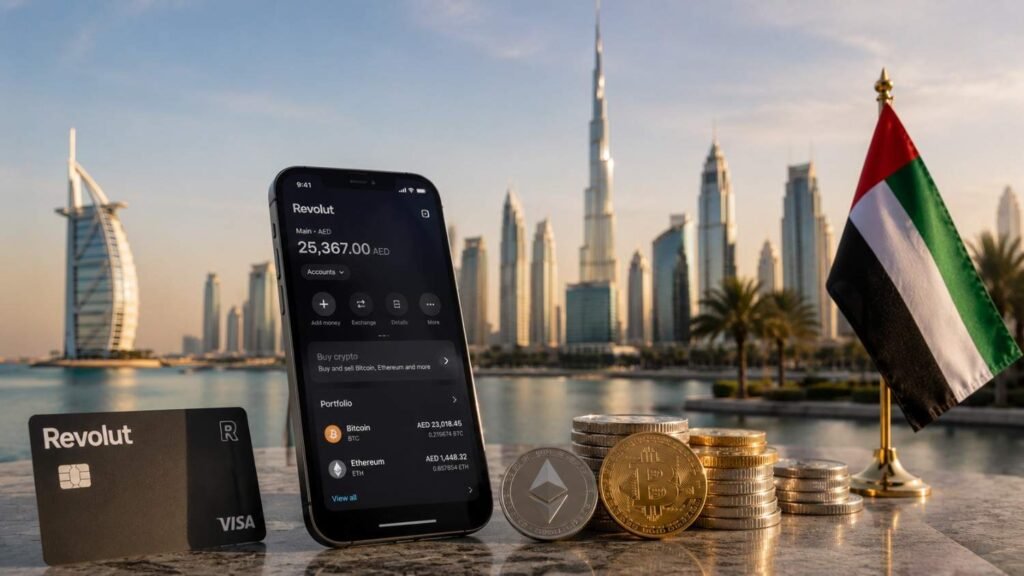
So I was scrolling through some fintech news the other day and saw that Revolut got the green light from VARA in Dubai. Not the full license yet, but the in-principle thing. And honestly, I thought it was worth talking about because it tells you something about what’s happening in the Middle East right now. If you’ve been following fintech developments in the UAE, you know this is part of a bigger trend.
Revolut is the app most people use for sending money and getting paid. You know the one. Anyway, they just got what VARA calls in-principle approval to start offering crypto trading in the UAE. Basically VARA looked at their application and was like “yeah, we’re okay with this” but there’s still some stuff Revolut needs to finish before they get the actual license.
Why should you care? Well if you’re doing business here or thinking about getting into crypto, this shows the regulatory environment is actually getting real. Dubai’s been trying to become this big crypto hub for a while now. And when you see major companies like Revolut going through the whole licensing process, you know they’re serious about it. They’re not just throwing money at something and hoping it works.
I remember a couple years ago everyone was like “oh Dubai’s crypto thing is just hype, nothing’s actually going to happen.” But now VARA is actually licensing companies. They’re setting rules. The big players are moving in. That’s when you know something’s legit.
What Does In-Principle Approval Actually Mean?
Okay so basically VARA is saying “we looked at your business, your team, your systems, and we think you’re probably okay.” But they still want to see more stuff. More compliance details, proof you can handle money properly, all that.
It’s like when you apply for a mortgage. The bank doesn’t just say yes right away. They say “cool, we like your income and credit score, but we need to verify everything.” That’s basically what this is.
Revolut already has licenses from the UAE Central Bank for payments and stored value. So they can already do payments, cards, transfers. But crypto is different. It needs its own approval from VARA. Getting in-principle approval means they can now work on finishing whatever else VARA wants to see.
Here’s the thing though – a lot of people don’t get how separate these things are. You could have a perfect payment license and still fail at getting a crypto license. They’re looking at totally different stuff. With payments, VARA cares about whether you can move money safely. With crypto, they’re worried about market manipulation, whether you actually understand blockchain, whether you can handle how crazy the prices get.
VARA doesn’t just rubber stamp this stuff. They look at how you’re going to handle customer money. They check your risk management. Do you have systems to catch fraud? What about your team – do they actually know what they’re doing? Is your tech solid?
In Revolut’s case, they probably had an advantage because they already run a regulated payment business here. VARA could see they know how to operate in the UAE, they know the rules, they’ve got the infrastructure. That probably helped things move faster. It’s like hiring someone who’s already worked in your industry – you’re way more confident they’ll figure it out.
What This Means for Dubai’s Crypto Market
Dubai’s been trying to build itself up as a global crypto hub. They’ve got VARA as their regulator, they’ve got rules, they want to be the place where crypto companies want to set up. When Revolut gets approved, even just in-principle, it validates that whole strategy. It’s like saying “okay, this isn’t just hype, real companies are actually moving here.” This ties into broader business trends in the UAE.
People in the industry are actually impressed with how VARA has handled this. They could have gone crazy with regulations and scared everyone away. Or they could have been too loose and ended up with a bunch of sketchy operations. Instead they found a middle ground. Strict enough to matter, but not so strict that real companies won’t bother.
Right now you’ve got Binance in Dubai. Crypto.com too. Soon Revolut. VARA has licensed about 50 companies already. That’s a ton of players in one market. People have options. There’s competition. And competition is usually good for customers – better services, lower fees, better support.
Having multiple licensed operators also makes the market more stable. If one exchange has problems, the whole thing doesn’t fall apart. The market is more resilient. That matters for long-term growth.
When Will Revolut Actually Launch?
Everyone’s asking when Revolut can actually start offering crypto services. From what I’ve read, VARA is expecting them to finish the remaining requirements by late August or September 2026. That’s pretty soon.
During this time, Revolut needs to prove they’re following VARA’s anti-money laundering and counter-terrorism financing rules. They need monitoring systems that can spot weird trading patterns. They need procedures for reporting suspicious activity. Staff training. All the compliance stuff.
The good news is Revolut probably already has a lot of this from their payment business. They can adapt it for crypto. So it shouldn’t take forever. Revolut’s got the resources and the experience. They’re not some startup trying to figure this out for the first time.
Who Actually Benefits From This?
Let me be honest with you. If you’re an individual user, regulated platforms matter. Your money is protected. VARA requires licensed platforms to keep customer funds separate from company money. So if Revolut has financial problems, your crypto is still safe. They also have to carry insurance. You’re trading on an app that’s actually following real rules.
If you run a business and want to accept crypto, this is good news. You can use a regulated platform without worrying about getting shut down or dealing with regulatory headaches. You know the platform isn’t going to disappear. I’ve seen too many businesses get burned by using unregulated exchanges. They get shut down, funds get frozen, it’s a nightmare. With Revolut, that’s not going to happen.
For institutional investors, it’s about having a real market. Multiple exchanges, actual regulation, real oversight. That attracts serious money. Pension funds, insurance companies, family offices – these guys won’t touch crypto unless it’s regulated. Revolut’s approval helps bring that kind of capital into the market.
Why Regulations Actually Matter
I know regulations can seem like they just slow everything down. But honestly, they’re important. They keep bad people out. They protect regular people. They build trust.
The UAE actually cares about this stuff. They got off the Financial Action Task Force’s grey list in early 2024. That was a big deal. Being on that list meant higher costs and problems moving money internationally. Getting off it meant international banks would work with them again, transactions would move faster, the whole financial system could operate better.
VARA’s basically saying: crypto can grow here, but it has to be done right. Know your customers. Watch for suspicious activity. Follow the rules. It might seem strict, but it actually attracts money that sticks around. Institutional investors want platforms that are being watched. They don’t want to wake up one day and find out their exchange got shut down by regulators.
Questions People Ask About This
What exactly is the Revolut UAE crypto licence?
It’s the approval Revolut is getting from VARA to offer crypto trading in the UAE.
How does VARA actually approve crypto companies?
They do a review, give in-principle approval if they like what they see, then do a detailed check of compliance and risk management. Full license comes after that.
Can I use Revolut for crypto right now?
Not yet. They need to finish the licensing process. Should be late 2026.
Why does Revolut need a separate crypto license?
The Central Bank handles regular financial services. VARA handles crypto. Different regulators, different rules.
What do companies need for a VASP license?
Solid business model, good anti-money laundering systems, proper governance, risk management.
How long does approval take?
Usually several months. Revolut already has in-principle approval so they’re almost there. Late August or September 2026 is the target.
Why is Dubai becoming a crypto hub?
Clear rules, a dedicated regulator, and they actually enforce compliance. Competing with Singapore and Hong Kong.
What protections do customers get?
Money is kept separate from company funds. Platforms have insurance. Real-time monitoring. Anti-money laundering controls. Pretty solid protections.
Does Revolut’s existing business help?
Definitely. They already have payment licenses in the UAE. Shows they know how to run a regulated business here. Helps their crypto application.
What happens when Revolut launches?
More competition. Better services. Lower fees. Innovation speeds up. Dubai’s crypto reputation gets stronger.
When can I trade crypto on Revolut in the UAE?
No exact date yet. They’re targeting late 2026 for the license. Services should follow pretty quickly after. Stay tuned to DigiFlow’s crypto news for announcements.