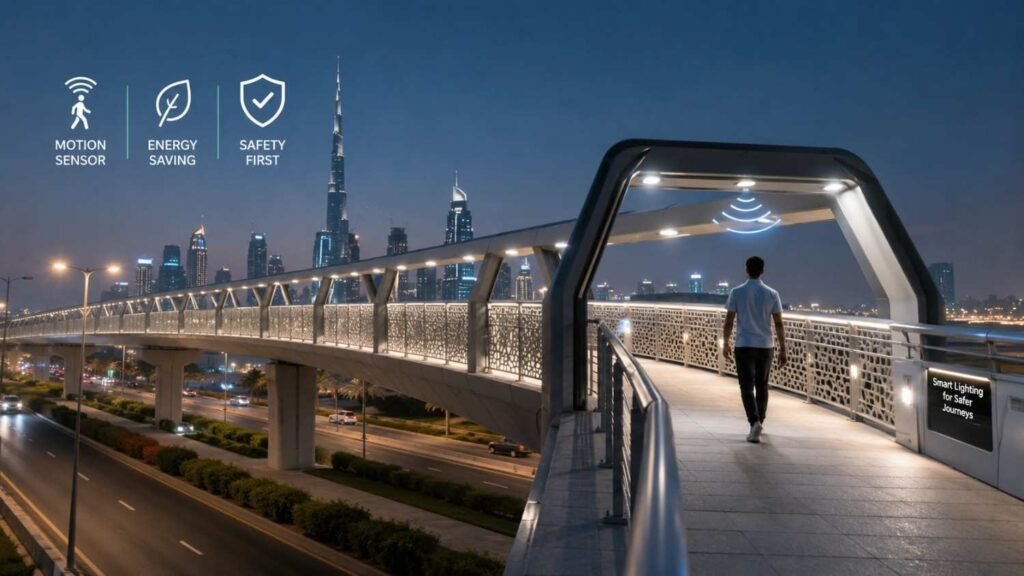
So Dubai’s Roads and Transport Authority just figured out something pretty clever. They’re putting motion sensor lights on 30 pedestrian bridges across the city. The idea is simple – lights turn on when you walk across, then turn off when you’re gone. No more wasting electricity all night long on empty bridges.
This whole thing is part of their People Happiness program. Yeah, I know it sounds like corporate speak, but basically they want people to feel safe and comfortable getting around the city. And they’re serious about the sustainability angle too. You’re seeing this kind of smart tech pop up everywhere now; it actually works when it’s done right. The RTA ditched the old “always on or always off” approach and went with something that actually responds to what’s happening.
How Does Motion Sensor LED Lighting Work on Pedestrian Bridges?
It’s pretty straightforward. You walk onto the bridge, sensors pick it up, boom – lights come on. Nobody’s there, lights dim down or shut off. That’s really it.
The sensors use infrared or microwave tech to detect movement. They’re placed along the bridge so they catch everything. When they sense someone, they tell the lights to go full brightness. Then if nothing happens for like five to fifteen minutes, the lights just fade out. Happens all night long, over and over.
Why the RTA Tested the System Before Installation
Before rolling this out, the RTA actually did their homework. They sent teams with light meters to measure how bright each bridge already was and figure out what was needed. Not just guessing; they made sure the new setup would be safe and not waste power. Plus they picked equipment that can handle Dubai’s crazy weather. The heat, the dust, all of it. This stuff isn’t going to break down on you.
What Are the Main Benefits of Upgrading to Smart Bridge Lighting?
Energy savings, obviously. You’re not running lights 24/7 anymore. That cuts costs way down. Think about it – if a bridge gets used a few hours a day, why light it up all 24 hours? It doesn’t make sense.
Safety is the other big one. People feel way better when they’re crossing at night and the lights actually respond. It’s not some pitch black bridge. Drivers also see the light and know someone’s up there. Everyone benefits. Plus less energy means less carbon footprint, which is what Dubai’s pushing for anyway. If you’ve been following Dubai’s 2040 Urban Master Plan, you’ll notice this fits right into the city’s bigger goal of building smarter, more walkable, and more sustainable public spaces rather than just adding more infrastructure.
When Will This Get Done?
They’re aiming for the end of 2026. They’re not rushing it, which is honestly nice to see. A lot of government projects move too fast and then something goes wrong.
Right now they’re working on 21 bridges; that’s most of it. Then they’ll do the rest. The RTA wants to keep upgrading lights all over the city with tech that actually works in Dubai’s climate. Doing it in phases lets them see what’s working, get feedback, and make changes before finishing the rest.
Why This Matters for Sustainability
If you want to actually hit environmental targets, you need projects like this. A growing city needs to figure out how to build stuff without destroying the environment.
Being smart about energy on public infrastructure just makes sense. Less power used overall. Tech upgrades can make things better for people and better for the planet at the same time. When people see the government actually doing something instead of just talking about it, it gets other people thinking too.
Smart Infrastructure Without Changing Daily Habits
What’s cool is this doesn’t ask people to change anything. You don’t have to learn a new system or adjust your habits. You just walk across the bridge and the lights work. That’s good infrastructure; it just works.
Why Pedestrian Bridges Matter
These bridges are important. They let people cross big roads safely without messing up traffic. More people use them as the city grows. If they’re dark and feel unsafe, people avoid them and try crossing somewhere worse. I’ve noticed that many of Dubai’s recent public transport upgrades aren’t just about moving people faster. They’re also about making every part of the journey, including walking to and from stations, feel safer and more comfortable.
Good lighting makes people actually want to use the bridges. It makes the whole system work better and safer. If you’re commuting every day or just trying to cross a busy road, this stuff actually affects you.
Frequently Asked Questions
What are motion sensor LED lights on Dubai bridges?
They’re smart lights that turn on when someone walks on the bridge and turn off when nobody’s there.
Why is the RTA upgrading the bridge lighting?
They want people to feel safe crossing at night and they want to save money on electricity. Plus it fits with Dubai’s sustainability goals.
How many bridges are getting these lights?
30 total. They’re doing 21 right now and finishing the rest after.
When will this be done?
By the end of 2026. They’re taking their time to do it right.
Does this actually save money?
Yeah. You’re not paying to run lights all night when nobody’s using them.
How do the sensors know someone’s there?
They use infrared or microwave sensors to detect movement. When they sense something, the lights come on.
Will people still be able to see properly?
Of course. The lights go to full brightness when someone’s there. You get the same amount of light as before, just only when you need it.