Sat in traffic on Al Khail Road lately? Then you already know the problem this project is trying to solve. The RTA just awarded the contract for a Dh2 billion road, the Latifa bint Hamdan Corridor, and the number they’re promising is hard to ignore: the drive from Umm Al Sheif Street to Emirates Road, currently around 33 minutes, should drop to about 15 once it’s done.
Here’s what’s actually going into it, and who’s going to notice the difference.
The Project, In Plain Terms
It’s a 12-km stretch that ties together six roads Dubai already has: Sheikh Zayed Road, Al Khail Road, Al Meydan Street, Sheikh Mohammed bin Zayed Road, Sheikh Zayed bin Hamdan Al Nahyan Street, and Emirates Road.
Right now, crossing the city means bouncing between a couple of these, catching every light and merge point on the way. This gives drivers one straight shot instead.
It also comes with 12.5 km of new cycling track, linking into what’s already there, running from Al Qudra to Jumeirah. Most road projects don’t bother with that part. This one did.
Who This Is Actually For
Daily commuters, first and foremost. If you’re crossing Sheikh Zayed Road or Al Khail Road during rush hour on a regular basis, you’ll feel this.
People living in Nad Al Sheba, Al Barari, Dubai Hills, District One, Mohammed Bin Rashid Gardens, Living Legends, Majan, and Global Village get better roads into the rest of the city. These are areas that grew quickly, and the connections into them haven’t always kept up.
Property buyers, too, and this one’s easy to underestimate. Shorter commutes tend to make an area more attractive than it was, sometimes a lot more.
Businesses shuttling people or stock across town on a schedule get something out of it too. Predictable roads mean fewer late deliveries, fewer staff stuck explaining why they missed a meeting.
Cyclists get a route that actually goes somewhere, not a lane painted along a shoulder and forgotten.
How They’re Actually Getting to 15 Minutes
Nothing mysterious about it. It’s removing the specific things currently causing delays.
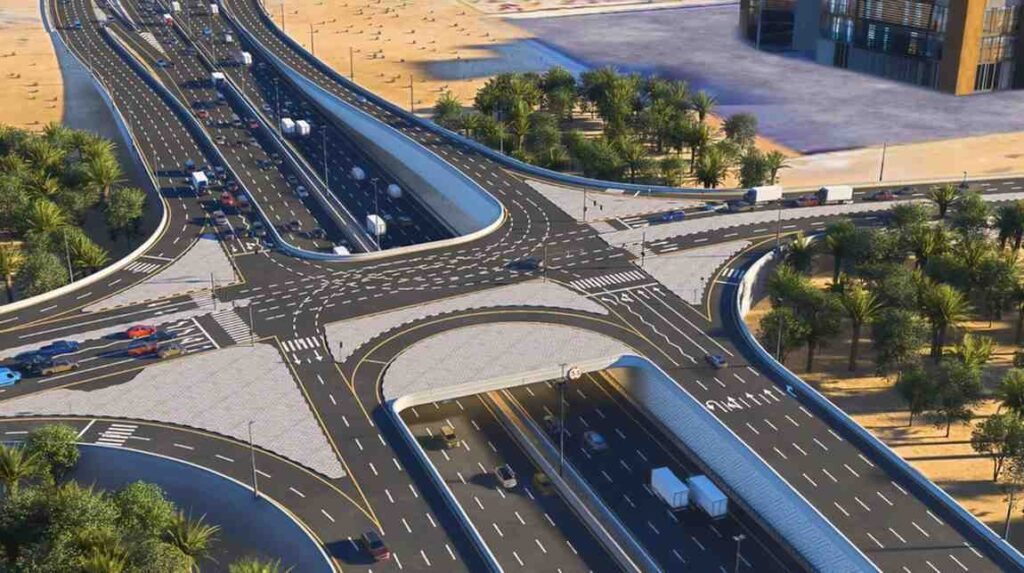
Latifa bint Hamdan Street gets widened, four lanes each direction. On its own that’s useful, but the real gain sits in the interchanges. They’re free-flow, so bridges and loop ramps let cars merge without stopping at a light. Lights are where most of the current wait actually happens, not the driving.
There’s a new connector too, joining Al Khail Road directly to the extended Latifa bint Hamdan Street. That cuts out a detour drivers are currently forced through at slower junctions.
Seven bridges. Eight tunnels. A road built for around 16,000 vehicles an hour, both directions. That’s not a small adjustment, that’s enough capacity to actually move the number on a stopwatch.
The Roads That Get Some Room to Breathe
Al Khail Road, Dubai-Al Ain Road, Umm Suqeim Street, and Sheikh Mohammed bin Zayed Road are under the most pressure right now, and they’re the ones expected to ease up once drivers have somewhere else to go.
Newer communities get access differently, direct entry and exit points onto the main network instead of routing through secondary roads. Weighing a few areas against each other before buying? Our Dubai neighbourhood comparison guide breaks down commute times by area.
Timing
End of 2028 is what the RTA is targeting. Once open, they expect north of 130,000 trips a day on it.
If a property purchase, business relocation, or long lease is on your mind near this route, that date matters more than it might feel right now. Areas like this usually see interest climb well before the road is finished, because the commute time is already known.
What It Means If You’re Buying or Running a Business Nearby
Shorter commutes usually pull demand upward. Dubai Hills, District One, Al Barari, Living Legends, people already know these names, and a faster route to the main business districts widens who’s interested in buying or renting there.
Running operations through Al Khail Road or Sheikh Mohammed bin Zayed Road? Worth factoring into how you plan 2027 and 2028, rather than waiting until the road’s actually open to think about it.
Not sure if a location is worth committing to given a project like this? That’s a question we field fairly often. There’s more on how we approach it on our Dubai property advisory services page.
Quick Recap
Dh2 billion, 12 km, six highways tied together. Umm Al Sheif Street to Emirates Road drops from 33 minutes to 15. About 650,000 people served, finished by end of 2028. Commuters, residents in the newer communities, cyclists, and cross-city businesses all get something out of it. If property near this route is on your radar, better to think about it now than after prices have already moved.
RELATED INFORMATION: Dubai-Sharjah Traffic Relief Is Coming: Al Nahda Intersection Upgrade
Questions People Actually Ask About This
What is the Latifa bint Hamdan Corridor? A Dh2 billion project linking six major Dubai roads, Sheikh Zayed Road and Emirates Road among them, into one route built to cut cross-city travel time.
When does it open?
End of 2028, per the RTA’s timeline.
How much time does it actually save?
The Umm Al Sheif Street to Emirates Road drive goes from roughly 33 minutes to 15, about a 54% cut.
Which neighborhoods benefit most?
Nad Al Sheba, Al Barari, Dubai Hills, District One, Mohammed Bin Rashid Gardens, Living Legends, Majan, and Global Village.
Is there a cycling element?
Yes, 12.5 km of new track connecting into the existing network between Al Qudra and Jumeirah.
Will this push up property prices nearby?
Demand tends to rise in areas like this before the road even finishes, once the future commute becomes common knowledge.
How much traffic is the road designed for?
Around 16,000 vehicles an hour across both directions.
Who’s building it?
Dubai’s Roads and Transport Authority (RTA) awarded the contract and is overseeing construction.