How AI Classroom Tools Help Teachers Identify Learning Gaps in Real Time
AI classroom tools help teachers identify learning gaps as lessons happen, not days later. By providing real time student insights, they enable faster intervention, improve engagement, support personalized learning, and give educators the information they need to keep every student on track.
Most people think AI in schools is just… you know, grading tests faster or whatever. But that’s not really what’s happening. Alef Education built something different. Teachers can actually see who’s struggling while they’re teaching. This breaks down how it works and why it matters.
What Problem Do AI Classroom Tools Actually Solve?
Ok so here’s the thing. You teach on Tuesday. Friday comes and you give a quiz. Then it’s Sunday night and you’re sitting there with like, a hundred papers and you finally figure out that half the class didn’t understand anything. But then Monday rolls around and you gotta move on to the next chapter because that’s what the curriculum says. It’s… it’s really frustrating honestly.
And like, you’ve got 30 kids in a room. Some get it right away. Some need more time. And then there’s the quiet kids. The ones in the back who never say anything. You literally cannot see inside their heads. You don’t know if they’re confused or if they’re just shy or if they’re on their phone. You can’t tell.
Teachers have dealt with this forever. You do your best but you can’t be everywhere. You can’t check on every single student while you’re teaching. It’s impossible. That’s just… that’s the reality of teaching.
Then Alef Education came up with something that actually helps. You get feedback while you’re talking. Not after. While. If something isn’t working, you know it right then. You can stop and explain it differently. You can move on. No more waiting until Friday to find out you messed up the whole lesson.
This is kind of what’s happening across the region too with AI digital transformation across the GCC. Companies are figuring out that when you give people better information, they make better decisions. Same thing here.
How Do AI-Powered Classroom Tools Work in Practice?
So the software… it collects data while you’re teaching. Not after. During. This is the important part.
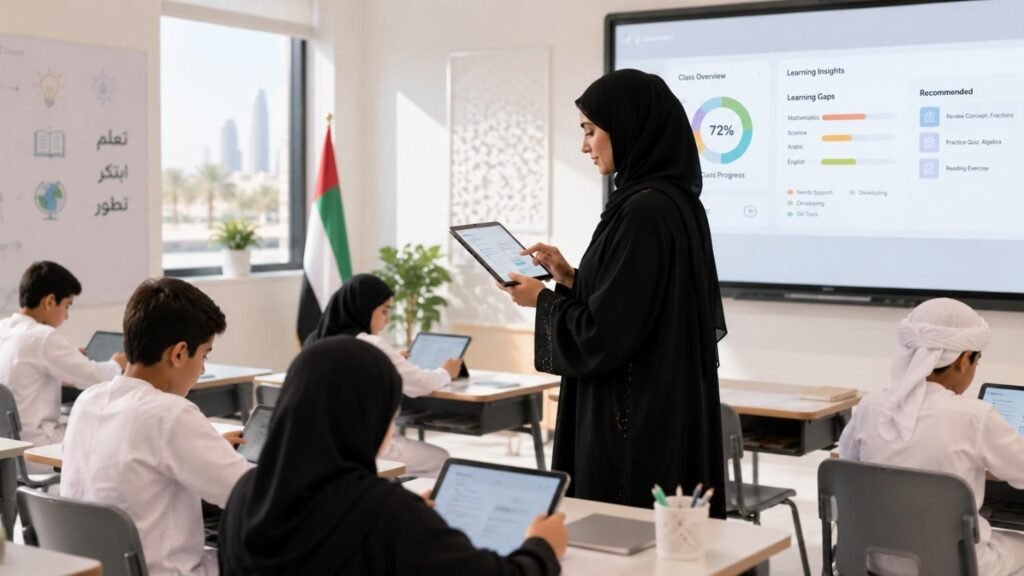
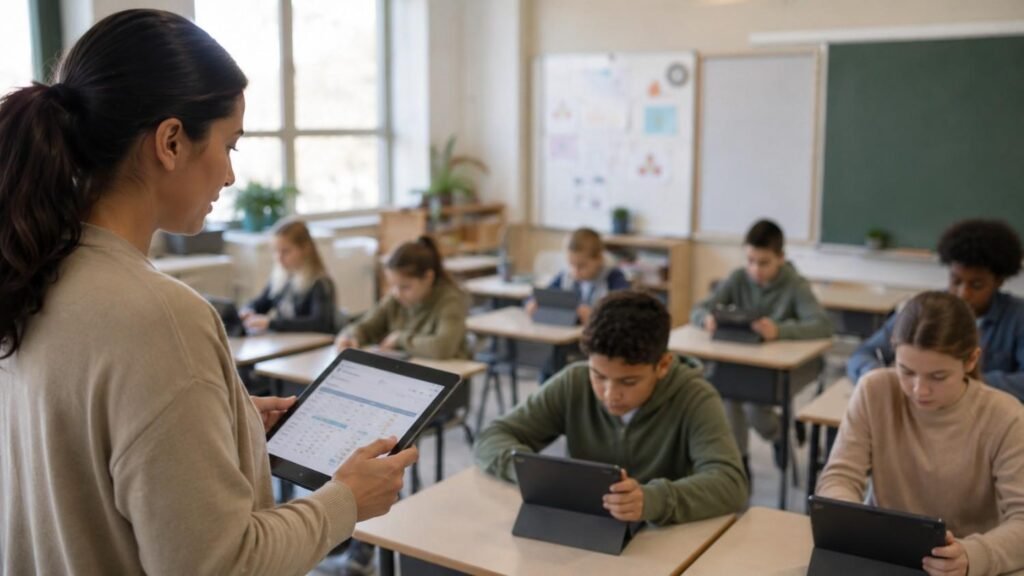
You’re up there teaching. Kids are on tablets or laptops or whatever device they have. You present something. Then you ask a question. Everyone answers on their device. The software processes all 30 answers instantly and shows you what happened. 20 kids got it right? Good. 5 kids are close? Ok you can work with that. 5 kids completely lost? Now you know who needs help.
And here’s the cool part… you can actually do something about it right then. The software lets you split the class. Kids who understand can move to harder stuff. Kids struggling get something easier. The whole time it’s tracking everything. Geoffrey Alphonso runs Alef Education and he said something that made sense… he said the platform finally shows teachers what the quiet kids know. Usually you only see the kids who raise their hands. This changes that. You see everyone.
There’s polls and game stuff and open ended questions. All kinds of ways for kids to show what they know. The data just… builds up. You’re not sitting there manually grading anything. It’s automatic. Which is honestly… that’s the whole point. You don’t have to do the grading.
Who Benefits Most from AI Classroom Technology?
Teachers obviously. You stop wasting time trying to figure out who knows what. Instead of Sunday grading for hours you get instant feedback during the lesson. You can actually teach instead of… you know… doing admin work.
Kids benefit too. Especially the shy ones. A lot of kids hate speaking up in class. They’re terrified of being wrong in front of everyone. When they can answer on a device? That fear goes away. They participate more. Schools are seeing this happen. Classrooms get more inclusive because everyone’s participating. Not just the three kids who always raise their hands.
School leaders get something useful. They can see what’s working in different classrooms. They know where to spend money on training. If we want to build the UAE AI and STEM talent pipeline, we need better tools in classrooms. Better tools means better students coming out.
What Features Should Schools Look For in AI Teaching Tools?
Live data. That’s it. That’s the main thing. If you can’t see what students are thinking right now… don’t buy it. A tool that only shows you data after class is basically useless. You need to see it happening.
Variety matters. Multiple choice gets boring. Look for something that lets kids answer in different ways. Short answers, problem solving, games, whatever. Kids learn when they’re doing something. Not just staring at a screen.
The tool needs to be flexible. If you see the class is confused you need to change things fast. The software shouldn’t force you to follow some script. It should feel like you’ve got someone helping you teach. That’s what companies learned about enterprise AI deployment strategies. The tools that work are the ones that help people make better decisions. Not the ones that take over.
How Should Schools Actually Implement This
Don’t just email teachers a login and tell them to figure it out. That doesn’t work. Teachers are busy. You have to show them how this saves time.
Start simple. Get them comfortable with the presentation mode and a few polls. Once they see how helpful the instant feedback is they’ll want to try more stuff. Don’t try to teach them everything at once. That’s just… that’s too much.
Data privacy is a big deal. Schools have really sensitive information about kids. You need to know where that data lives and who can see it. Working with a local provider like a UAE company usually makes this easier because they already know the local rules. Get that right before you put anything in front of students.
Frequently Asked Questions
How do AI classroom tools help teachers identify learning gaps?
They show you exactly who’s confused while you’re teaching. Instead of waiting to grade a quiz on the weekend you see a dashboard of live answers. If a kid doesn’t understand you can fix it right then. That’s the whole thing.
Can AI replace teachers in the classroom?
No. The technology helps teachers make better decisions. The AI tracks who answered what but the teacher still builds relationships and explains things and runs the room. Teachers aren’t going anywhere.
What are the benefits of real-time student analytics?
You stop guessing. You know if your teaching method is working today for this specific group. If the data shows they’re lost you change your approach immediately. Nobody falls behind.
How does AI improve student engagement?
Every kid gets a safe way to participate. When you ask a question out loud one kid answers. With these tools everyone answers on their device. The quiet kids get involved because they don’t have to speak in front of the whole class. It’s that simple.
Are AI teaching tools difficult to learn?
Takes a little practice. Good tools are built to be intuitive. Once you run a few polls and see how much time the automatic grading saves you, most teachers adapt pretty quickly. It’s not complicated.
What is Alef Education’s approach to classroom AI?
They keep the teacher in charge. Their tools give teachers better information about their students without getting in the way of actual teaching. That’s the philosophy.
How do schools protect student data when using AI tools?
Buy from providers who follow local privacy laws. Administrators have to check that the software stores data securely and doesn’t share it with third parties before students log in. That’s non-negotiable.
Does AI technology work for all grade levels?
Yeah it works differently depending on age. Little kids might use it for simple games. High schoolers might submit essays or solve complex problems. The core idea works for everyone though.
With more than 15 years of experience in digital marketing, Abdul Raheem has helped businesses across different industries grow their online presence, increase visibility, and achieve measurable business goals. Abdul has been actively focused on evolving search technologies including GEO (Generative Engine Optimization), AEO (Answer Engine Optimization), AIO (AI Optimization), and AI driven search experiences.