Shuweihat Island offers dramatic coastal scenery, but access restrictions have changed the visitor experience. Discover what you can still see, how to reach the island, what to expect on arrival, and how to prepare for a smooth trip.

UAE
--:--:--
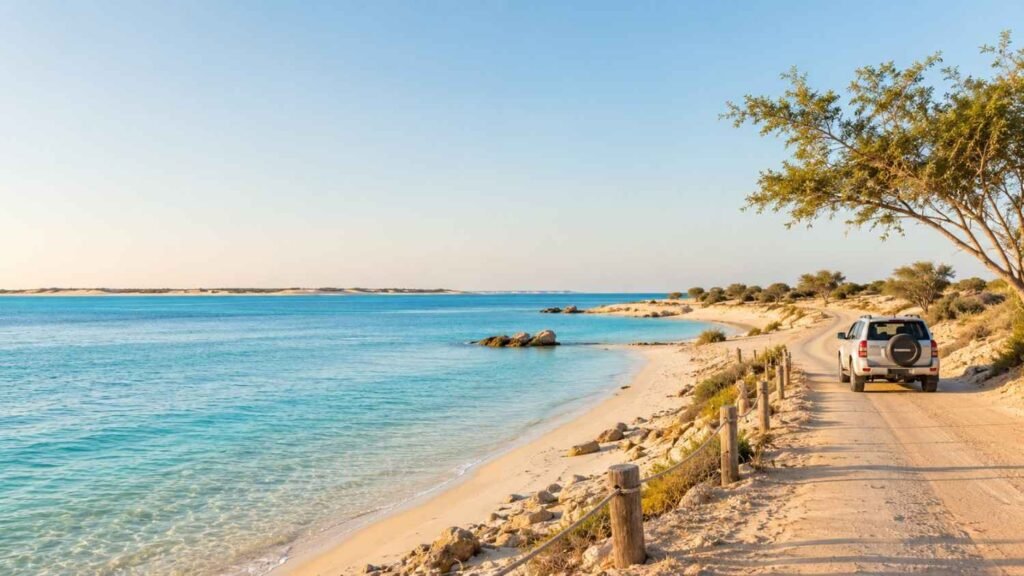
Drive far enough west in Abu Dhabi, past Ruwais, almost close enough to wave at Saudi Arabia, and you hit an island that frankly doesn’t feel like the UAE at all. Shuweihat Island is rust-orange rock, pale sand that goes on and on, and water so shallow and still it looks painted. Come nightfall you get stars. A ridiculous number of them, since there’s nothing bright for miles to wash them out.
But here’s what most guides skip. A good chunk of the island is closed off these days, and plenty of the articles you’ll find were written back when you could roam the entire thing. So before you burn half a day driving, read this bit. It might spare you a very long trip to a locked gate.
Sort of, and that’s the honest answer. The road onto the island still works, but the prettiest stretch, the rocky viewpoint that ends up on everyone’s Instagram, got fenced off a while ago. A military area sits nearby as well, and they keep entry near it locked down. Ask anyone who’s been lately and you’ll hear the same story. Fences across the best beaches. Signs telling you to keep out.
So play it straight. Drive out, wander the open sections, walk whatever shoreline you can get to, enjoy the scenery even if part of it is behind wire. What you won’t get is the free run of the place. A no-entry sign means no entry, and those private cottages and fenced patches belong to somebody, so steer clear. One more thing, because access here has a habit of changing: glance through the newest Google or Tripadvisor reviews a few days before you set off.
Roughly 200 to 250 km west of Abu Dhabi city, tucked just past the refinery town of Ruwais out in the Al Dhafra region. No boat needed, which trips people up, because most UAE islands mean a ferry. Here a causeway does the job and you simply drive over.
Whether it’s worth your weekend really comes down to what you’re after. Big quiet landscapes, a proper road trip, a camera, a picnic, a night of stargazing with no crowd, this place delivers all of that. Want beach clubs, sun beds, a clean loo, or somewhere to grab lunch? You’ll hate it. There is genuinely nothing out here, and weirdly, that’s the point of coming.
Head west on the E11 toward Ruwais, then start looking for the Al Hamra airport signs, which curl you back around to the causeway. From Abu Dhabi you’re looking at about two and a half hours. From Dubai, closer to three and a half or four, and that depends on your starting point and how kind the early traffic feels like being.
Few pointers that’ll help. Leave the GPS running the entire way, since the signs out there thin out and guessing gets you lost. The highway climbs to 160 in places and you’re sharing it with a lot of trucks, so keep your wits about you. And if you actually enjoy driving, watch for the Etihad Rail freight trains rumbling along beside the road, a nice little sign of how quickly the country keeps building out its road and rail network.
Not really, though it does make things smoother. A regular sedan gets you to the island and to the parking near the shore, no heroics required, and loads of people do exactly that. The final stretch drops to gravel and firm sand, and an ordinary car copes fine as long as you ease off the pedal.
Where the 4×4 earns its money is on the softer, sandier tracks nearer the water. Two warnings you should tattoo somewhere. Do not, ever, drive onto the salt flats, the sabkha, running along the route. They look bone solid, almost like a crust of snow, right up until they aren’t. Underneath it’s wet mud, and cars sink into it faster than you’d believe. Then there’s the rain rule: after a heavy downpour, don’t bother, because even a capable vehicle can get stuck in the loosened sand.
Pack it all, whatever it is, because the island has no shop, no cafe, no toilet, no anything. Your last dependable stops are Ruwais, where the mall covers you, and a small ADNOC station just before the turn, good for fuel and a bathroom and pretty much zero else.
Which means water and food, obviously, and more petrol than you think you’ll need. Add something to keep the sun off, because shade out here is a fantasy, plus shoes with grip if you plan on clambering over the rocks by the sea. And I’ll say this one plainly: bring bin bags and take your rubbish home. The litter left by careless campers is the single loudest complaint about the island, so please don’t add to the pile.
Mostly you come for the views, the walking, and the quiet. Photographers go a bit mad over the orange rock set against that turquoise shallow water, and the weathered cliffs hide little caves and ledges that make a cracking picnic spot when the tide’s out. After dark, with no city light bleeding in, the stargazing beats almost anywhere within reach of Abu Dhabi.
Quick word on safety and then you’re good. The water’s shallow and hides sharp stones, so wade in slowly. Those cliffs fall away steep with no railings whatsoever, so watch the kids near any edge. On timing, October through April is the window you want. And if the plan involves getting in the water, push it toward March when things warm up.
Is Shuweihat Island open to the public?
The road onto the island still works, but the best rocky beaches and the main viewpoint are fenced off, and there’s a restricted military area nearby. The open parts are worth seeing. Still, check recent reviews before committing to the drive.
How far is Shuweihat Island from Dubai?
Around 250 to 300 km, so budget three and a half to four hours of driving, almost entirely on the E11 running west past Ruwais.
Do you need a 4×4 to visit Shuweihat Island?
Nope. A sedan gets you to the island and the parking areas without any fuss, though an SUV handles the sandy beach tracks more happily. Whatever you’re in, keep off the salt flats.
Is there an entrance fee for Shuweihat Island?
None. It’s free. Fuel and whatever supplies you carry in are your only real costs.
Can you camp on Shuweihat Island?
Bit murky, this. Camping used to be a regular thing here, but signs now forbid it in spots and access has tightened overall. Dead set on it? Confirm what’s currently allowed, and line up somewhere near Ruwais or Al Dhafra as plan B.
What is the best time to visit Shuweihat Island?
October to April, before the heat turns nasty. For a swim, aim at the warmer end around March.


The journal of record for technology decisions in the UAE. Trusted reporting, in-depth analysis, and expert insights connecting business leaders, innovators, and technology professionals with the trends shaping digital transformation.
© 2026 Eyes On Solution. All rights reserved.