Dubai’s public transport carried 348.1 million riders in the first half of 2026, per RTA’s own numbers. Nearly 1.9 million trips happened every single day. Metro took 39.2% of all rides. Taxis followed at 25.5%. Buses took 24.4%. Public transport already carries most of the city.
The numbers behind the 348 million
Metro and Tram carried close to 140 million riders combined between January and June. Buses moved 85.1 million people. Taxis carried 88.9 million, plus another 5.7 million on limousines. Shared mobility, the app-based cars, hourly rentals, and on-demand buses, carried 25.7 million. Marine transport carried 8.1 million.
January was the heaviest month. It logged 73.4 million riders. Every other month landed between 49 million and 66 million. RTA Director General Mattar Al Tayer shared one more figure. Public and shared transport’s share of total trips sat at 6% back in 2006. By 2025 it reached 22.3%.
THE NUMBERS BEHIND THE 348 MILLION
Metro and Tram carried close to 140 million riders combined between January and June. Buses moved 85.1 million people. Taxis carried 88.9 million, plus another 5.7 million on limousines. Shared mobility, the app based cars, hourly rentals, and on demand buses, carried 25.7 million. Marine transport carried 8.1 million.
HOW DUBAI’S TRAVEL HABITS HAVE CHANGED
January was the heaviest month. It logged 73.4 million riders. Every other month landed between 49 million and 66 million. RTA Director General Mattar Al Tayer shared one more figure. Public and shared transport’s share of total trips sat at 6% back in 2006. By 2025 it reached 22.3%.
Who’s Actually Filling these Trains and Buses
Most riders don’t own a car and need to get to work on time. Commuters heading into Business Bay, DIFC, or Downtown lean on the Metro daily, since it skips the traffic on those roads completely. Tourists use it too. They pair Metro rides with the odd taxi. The Dubai Metro map already connects the airport, Burj Khalifa, and Dubai Marina, no rental car needed. Residents further out use buses or shared mobility more. Their communities aren’t on the rail line yet.
How the Pieces Fit Together
All six modes fall under one authority. That’s the reason they connect rather than compete. Red and Green Metro lines cross at two stations, BurJuman and Union. Riders switch lines there without leaving the platform. Buses handle the gaps the rail misses. The Tram links Dubai Marina and Al Sufouh into the Red Line. Taxis and shared mobility pick up whatever’s left over.
All of it runs on one Nol card. Bus, then Metro, then a short taxi ride, on a single ticket.
The Stations Carrying the Most Weight
BurJuman and Union sit at the top, which makes sense since both are interchange stations between the Red and Green Lines. BurJuman recorded 8.4 million riders in the first half of the year. Union recorded 6.5 million.
Al Rigga led the Red Line with 6.4 million riders, followed by Mall of the Emirates at 5.2 million. Business Bay came in at 5 million. On the Green Line, Sharaf DG topped the list with 4.9 million. Baniyas Square followed at 3.8 million. Stadium Station came in at roughly 3.7 million. Commute through any of these and expect the platform to be busier than most, especially during rush hour.
What’s Coming Next for Commuters
Two new Metro lines are already under construction. The Blue Line adds 30 kilometres of track. It has 14 stations across nine districts. Around a million residents live in the area it covers. The Gold Line goes even further. It runs 42 kilometres across 18 stations. It will be Dubai’s first fully underground line. It connects to the Red Line, the Green Line, and Etihad Rail. Price tag: Dh34 billion.
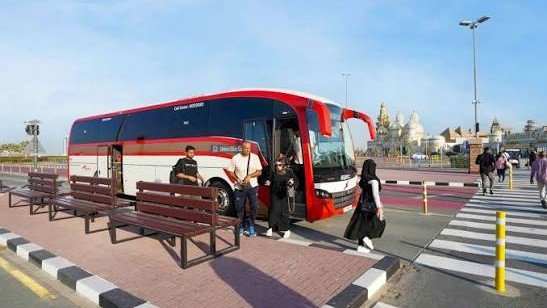
RTA is also rolling out 637 new buses built to Euro 6 standards, 40 of them electric, part of a longer plan to run the whole fleet on electric or hydrogen power by 2050. It’s the same direction the JLT Link electric bus network took when it launched in Jumeirah Lakes Towers earlier this year.
Driverless taxis already run on Dubai’s roads, and commercial air taxi flights should start before the end of 2026. RTA has set a target too, 25% of all trips on public and shared transport by 2030.
Which Mode Fits your Commute
A commute along the Red or Green Line usually runs faster on the Metro than in a car stuck on Sheikh Zayed Road during peak hours. Near JLT, the new electric bus link covers ground the Metro still doesn’t reach. Where neither reaches, a taxi or shared mobility ride fills the gap. It costs more per trip than rail though.
Driving still makes sense for odd routes or late nights. It comes with Salik toll charges on the main roads. Parking adds another cost the other options don’t have. Add that up over a five-day work week and it’s a real difference.
FAQs
How many people used Dubai’s public transport in 2026?
348.1 million riders in the first half of 2026 alone, across public transport, shared mobility, and taxis. Averages out to almost 1.9 million a day.
Which is the busiest Dubai Metro station?
BurJuman, with 8.4 million riders in the first half of 2026. Union comes second at 6.5 million. Both sit at the interchange between the Red and Green Lines.
What percentage of Dubai’s transport trips use the Metro?
39.2% of total ridership in the first half of 2026, the largest share of any mode. Taxis followed at 25.5%. Buses took 24.4%.
Are there new Dubai Metro lines coming?
Yes. The Blue Line is under construction, 30 km across 14 stations. The Gold Line is coming too, 42 km across 18 stations, fully underground. RTA is adding 637 new buses too, plus expanding driverless taxi and air taxi services.
Is the Dubai Metro cheaper than taking a taxi?
Usually, yes. Metro fares are fixed by zone and distance. Taxi fares add a base charge plus distance and time. For regular commuting on routes the Metro covers, it’s usually the cheaper option.